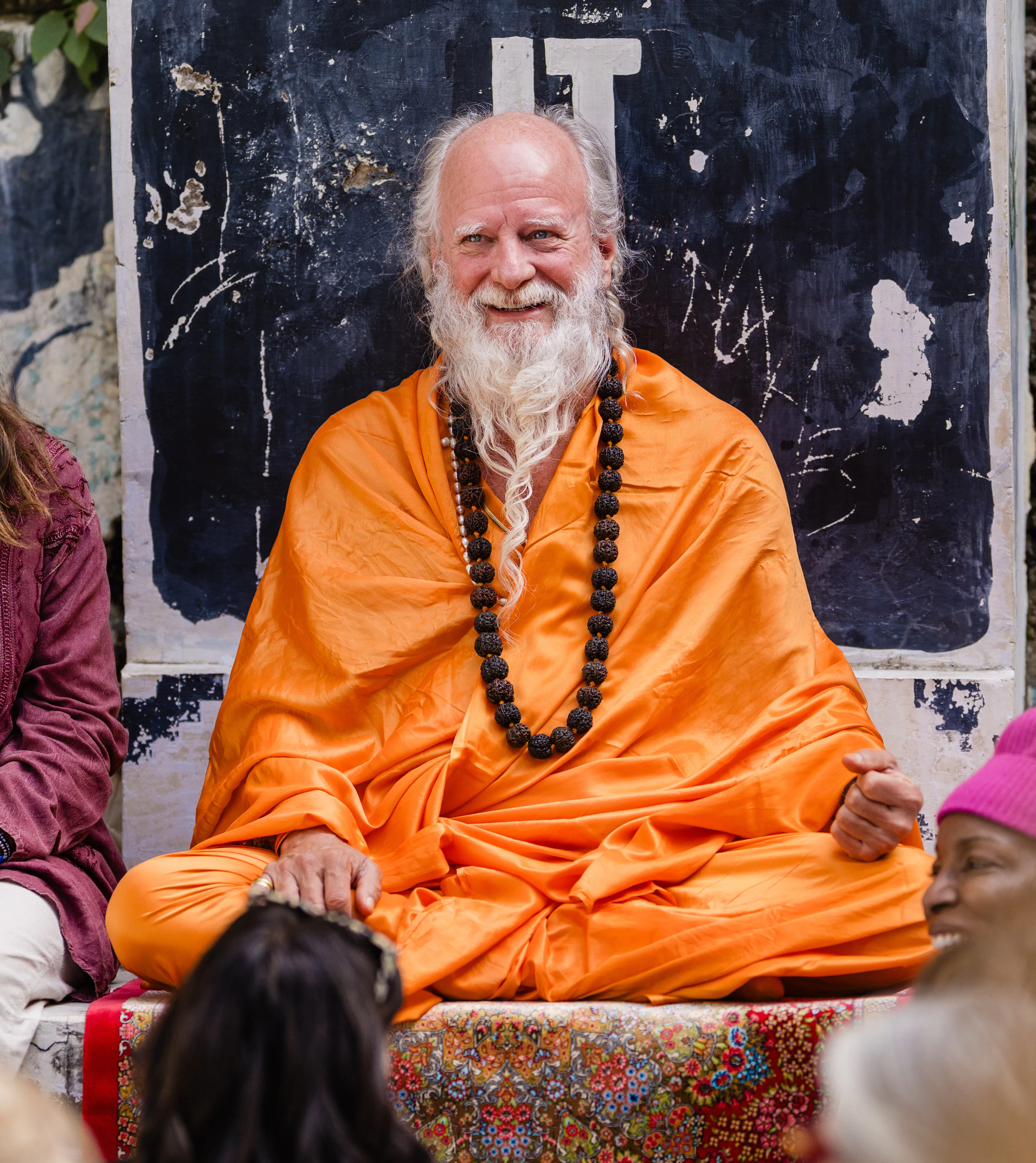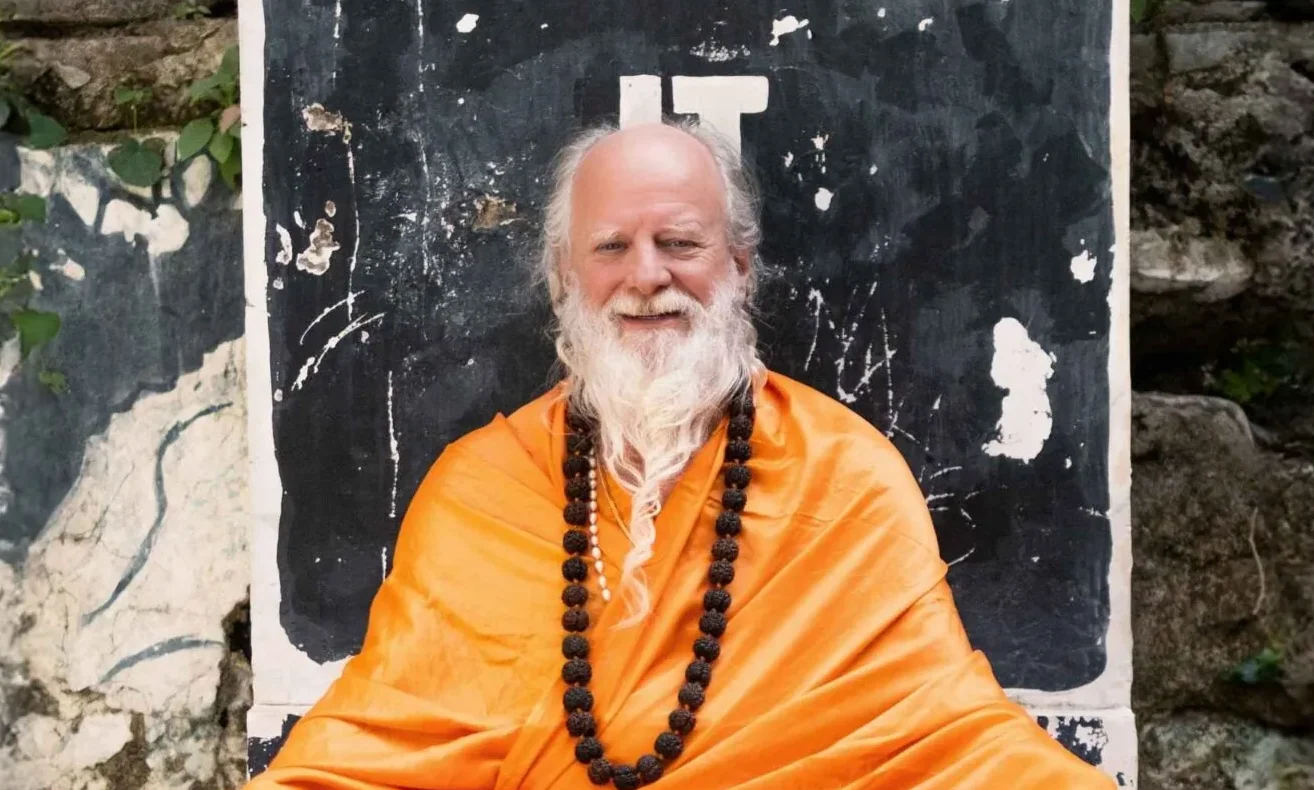
“Prison is a great environment in which to learn to meditate, because people have reached rock bottom, they’re desperate, and they’re open to wanting to learn something.”
Thom Knoles
What can Vedic Meditation offer in a place most people only imagine from the outside? In Part Two of this two-part series, Thom Knoles and Joh Jarvis trace Joh’s work teaching meditation in prisons, from her early efforts in New York to The Light Inside’s programs with incarcerated people and corrections officers in prisons and jails across the United States.
Joh reflects on the challenges people face inside and after release, and on why this work matters to the wider community. If you haven’t heard Part One, start with Part One, then listen to or watch this conversation.
You can find out more about The Light Inside here: https://the-lightinside.org
And you can find out more about Joh Jarvis at https://johjarvis.com/
You can also watch this episode on YouTube here: https://youtu.be/TSZA3I4pH5k
Episode Highlights
01.
What Drew Joh to Prison Work
(00:45)
02.
Getting In: Goulburn Gaol and Brooklyn Jail
(05:16)
03.
Rikers Island: Remand and First Impressions
(10:48)
04.
Teaching the First Students
(17:57)
05.
The First Course in 2020
(22:17)
06.
Joh Finds Herself in North Dakota
(26:23)
07.
Jamestown and James River
(32:36)
08.
After Prison
(37:07)
09.
Research on Wellbeing and Sleep
(40:48)
10.
How to Support The Light Inside
(46:00)
11.
Working with Prison Officers
(49:31)
12.
Old Colleagues and Friends React
(55:47)
13.
Thom’s View of the Future of Vedic Meditation in the Prison System
(58:11)
Jai Guru Deva
Transcript
Vedic Meditation in Prison: Joh Jarvis and The Light Inside. Part 2
00:45 What Drew Joh to Prison Work
JOH JARVIS:
Jai Guru Deva.
PRODUCER:
This episode is the second part of a two-part series. If you haven’t listened to or watched the first episode, we encourage you to do that first. You’ll find a link to that in the show notes below.
THOM KNOLES:
Now, at some stage, you and I had had a number of conversations about the work that I had done teaching Vedic Meditation in incarcerated settings. I started off in Australia. My modus operandi back in those days was to plead with the prison governor, as they were referred to, to actually incarcerate me, to have me locked in with the inmates, because I figured that other consultants who went and taught in there or who counseled people in there all left at 5 p.m. I got kind of famous for the fact that I would stay a week, 10 days, or even two weeks in these incarcerated settings, jails and prisons, then I moved my work to the United States and began doing the same here in the U.S. Something about that really caught your imagination, because actually you’ve extended whatever marginal amount of work I started with in that area, and you’ve taken things to a completely new height in that kind of work of places that you can offer Vedic Meditation as a technique.
Give me a little bit of the history of how you heard my stories and then you got bitten by the bug somehow. How did all that happen?
JOH JARVIS:
I was captivated by your stories. Your stories were certainly very compelling. I guess I would say I was interested in social justice, if you like. It seemed to me that it would be great to be able to take this tool that had turned my life around. I had begun teaching everyday people to meditate and I had seen the impact it had on them.
I thought, “What about if I could take it to people who would otherwise never get an opportunity to learn it?” I thought, “If I was in prison, this is what I would want.” I’d heard you talk about it so much and I thought, “Well, that must be possible,” but I didn’t really do much about it. It seemed to me to be something that you would do once you were well established as a Vedic Meditation teacher.
In fact, I talked to you about it. I don’t know if you remember, but I brought it to you. I said to you, I’d moved to New York. I didn’t have very many contacts in New York. It’s a challenge to establish yourself in a new city.
I had got married though. That had worked out very well for me. I’m still happily married and it’s been wonderful. I just love living here. Establishing myself as a teacher took some time.
I came to you and I said, “Can you offer, have you got some advice? How should I do this, basically?” You said, “If there’s one cohort you would like to teach, who would it be?” I said, without missing a beat, “Incarcerated people.” You said, in your typical way, sometimes you talk a lot and then sometimes it’s just very few words and you don’t have much more to say at all.
You know when you get that directive, it’s like, “Okay, that’s going to be it.” In this instance, I said, “I’d like to teach incarcerated people,” and you said, “Do that.” I said, “Oh, surely this is…” and you didn’t really want to talk that much more about it. You were like, “It came to you so easily. It’s coming from deep within you. It’s charming to you. Go and do it.”
I did. The first place I went to the New York Department of Correction and said, “I’d like to volunteer to teach.” As it turns out, it’s very hard to get into prisons and jails to teach people meditation, to volunteer. They just don’t let people in the door. I thought they would.
I thought they’d love to have me, but no, it is actually quite a difficult thing to do. I’ve never asked you, “Did you find it difficult getting into the prison system?”
05:16 Getting In: Goulburn Gaol and Brooklyn Jail
THOM KNOLES:
I was very fortunate because in Australia at the time, the Commissioner of Corrective Services who worked under Premier Neville Wran, Tony, and I’m forgetting Tony’s surname, you might remember it, Tony Vinson. Tony Vinson was the newly appointed Commissioner of Corrective Services under a Labor government. He had heard about me from the Premier, from his boss basically, who had heard about me from, Neville Wran, the Premier had heard about me from Lionel Murphy, who was one of his best mates.
The Premier gave a nudge to the Commissioner and said, “We’re having these riots at Goulburn Gaol and other jails where the prisoners will go out into the yard and then they’ll refuse to go back to their cells when it’s time because they’re on strike for better conditions.” Some of the riots were turning violent. Maybe it’s time that we look into some way of giving them something unexpected besides perhaps different foods or whatever else they were really striking over.
I got a call from the Commissioner of Corrective Services, that was magical, who said, “Would you come in and talk to me?” I did. He said, “The first thing that has to happen is I have to learn it because I can’t recommend this to anybody if I haven’t learned it myself.” I taught Professor Vinson. He was a professor from the University of New South Wales formerly, the Professor of Social Work.
He was taking a sabbatical to work for the government. I taught him meditation. He just thought it was wonderful. He sent me immediately to Goulburn Jail and I spoke with the governor of the jail, Mr. Routley. He had an amused look on his face, Mr. Routley, and told me if there was one particular inmate that they had who lived inside of a hole in the ground with a glass ceiling over it, and that that particular inmate who had killed a few prison officers was in for life, if I could descend the ladder into his cell and convince him to meditate, that I’d have a free, open slather to teach anybody else in the jail that I wanted, and I could pretty much have my way, so I did that.
I descended the ladder and taught Peter Schneidas to meditate. After that, everything just went from boom, boom, boom, from one thing to the next. I had the Commissioner of Corrective Services on side, and what Americans would refer to as the governor of the state, we call them premiers in Australia, kind of going to bat for me, and you didn’t. You had none of that. So what did you do?
JOH JARVIS:
I mean, I wanted that, and no, I didn’t. I just really knocked on the door. I did the equivalent of knocking on the door, but rang them, pestered them a little bit at the volunteer place, and eventually I found that essentially being a journalist, you learn to be persistent. One day I rang them, and they said, “Oh, your application is with the volunteer, the person who’s head of the volunteer section,” so I said, “Who is that person, by the way?”
They said, “It’s George.” I said, “Well, put me through to George,” so I got put through to this guy called George, and he said, “Oh, yes, I’ve got your application.” I could hear him kind of like flicking through the papers. “I’ve got your application,” and he said, “Oh, it says here that you want to teach women to meditate,” and I said, “That’s right,” and he said, “Well, you’ve come through to men. I’m responsible for people who want to work with men,” and he said, “I’ll send it,” and I said, “No, George, please just leave it right there. I will teach men. I’m very happy to work with men,” and he said, “All right,” so the next thing, I ended up out at Brooklyn Jail, and I arranged to start working in Brooklyn Jail.
This is a place, actually, probably like back in Goulburn, but this is like contemporary United States. They were using those massive keys to open the door, so it was really quite old and decaying, hence, a few weeks after I first went to that place, they closed it, and the person who I’d been working with, the intermediary, if you like, said, “Why don’t you come out with me to Rikers Island Jail? You know, you’re doing well here. Come out to Rikers Island,” and I was like, “Sure, okay,” so, you know, Rikers Island is a notorious, Rikers Island Jail is a notorious jail.
In the US, a jail is, in Australia, they call it a remand center. Basically, it’s the place that you go before you’re convicted of a crime, and you can spend a long time in these places, and they’re not set up…
10:48 Rikers Island: Remand and First Impressions
THOM KNOLES:
The inmates have been charged. They have been denied their liberty. They are incarcerated while waiting to answer the charges in court, and so they’re really, what we would say, on remand, and so that’s a very interesting setting, because unlike other incarcerated settings where people have already been prosecuted and sentenced, these people are awaiting their fate to see whether or not, how they’re going to do when they finally get their day in court, or they’re having to make difficult decisions about plea deals that are being put to them by prosecutors, and in fact, they haven’t been prosecuted yet.
They haven’t been convicted, and so they’re in the process of being prosecuted, but they haven’t been convicted. That’s a completely different mindset to an incarcerated setting in which inmates have already been convicted, they’ve been sentenced, and they have a fair amount of idea about how much time they’re going to be doing, so you must have found that very fascinating, you know, just the mindset was different at Rikers.
JOH JARVIS:
Well, you’re exactly right about the mindset. I didn’t know how different it was until I later started working in a prison where people do have a more settled life. They know how long their sentence is, and they plan for that, and like you say, in this environment, I would describe it as unsettled, unruly. I mean, Rikers Island is renowned for the level of violence within the prison itself.
It’s considered one of the most violent jails, I should say, in the United States. That’s got something to do with the fact that people are so unsettled. It’s got something to do with historically, the way the place is run, but it is not necessarily a place where people are… they’re not there waiting to change their life. They’re really trying very hard to get out of there, so they’re always annoyed with their lawyers because they don’t think their lawyers are doing a good enough job, so they’re just like, “The main thing for me is to get out of here.”
On their mind is, “Is my partner, my wife or girlfriend sleeping with someone else?” They’re concerned about that. They’ve completely lost control, and it is not an environment where they’re going, “Oh, I should really think about my education, or I should really… there should be something… there may be something that could make me feel better.” That’s generally not how I find people to be, but nevertheless, it’s the program in Rikers Island, the Vedic Meditation program, has been really quite successful.
THOM KNOLES:
So I’m just going to get you to kind of play it out to us a little bit, because I happen to remember, it wasn’t easy even getting to the place from where you lived. I mean, you had to go in public transport. Am I right?
JOH JARVIS:
That’s right.
THOM KNOLES:
And it was a trek just to get out there, and give me your first impressions, first time you ever walked in through the gates.
JOH JARVIS:
So it takes me about two hours either way to get to Rikers Island, I’d catch two subway, two trains, then I get on a bus, and the bus says on it, Rikers Island, and that’s the bus that takes you on to the island, so you’re not allowed, even if I had a car, I couldn’t drive on there. You have to have special permission to do that, but this bus is allowed to take you on there, so you go over a bridge, which is going over the East River, it’s right next to LaGuardia Airport. It’s kind of in the juncture between Queens, Brooklyn, Queens and Brooklyn, and you go over the bridge and you see this kind of looming razor wire, essentially, and then it’s, you know, I think there are around 10 facilities.
It’s a pretty big island. It was, it’s, yeah. So anyway, so you would go and you would see all the razor wire and you go into the reception area, and back then, I mean, it’s funny thinking back, as a journalist, you go into environments in which people don’t really want you, and so in some ways I was not intimidated by that, but it wasn’t a welcoming environment, and, you know, because essentially what they’re thinking is, “Can I trust you? Who are you? Can I trust you? And you seem a little like you don’t know what you’re doing,” and I quickly learned that it was really important to look like you know what you’re doing, like appear confident.
I learned that pretty quickly. Don’t ask a lot of questions, just walk straight ahead and look like you know what you’re doing, and so anyway, in the beginning I didn’t, and so it, you know, there were a number of times that I would get turned back for some reason, so I would arrive and I wouldn’t have my pass, or my pass would say the wrong time and I would be 10 minutes early or 20 minutes late or there’s a lot of you’ve got to get the security is very tight and they take it very, very seriously, so all of those little things were difficult when I started off, and also you’re going into an environment, I mean, I had spent no time in a jail or prison before.
I think I’d walked into one once in Melbourne as a reporter, and so I didn’t know what to expect. I didn’t feel scared. I didn’t think anyone was going to attack me. I remember asking you about that. I said, “Do you think I’m in danger?”
And you said, “No, I don’t think so. You’re there to help people and they’ll know that,” and that certainly turned out to be the case. That first time I arrived there and they took me into a housing unit, so I’m in maximum security, but they kept saying to me, “This is the worst of the worst,” and so I went kind of like, “I wonder what that means,” and so when I first arrived, they took me to a housing unit just to see what it was like.
A housing unit in GRVC, it’s called on Rikers Island. It’s a maximum security centre, houses 2000 men, there are 40 people that are housed in the unit, 20 in the cells, they’re all single cells on the ground and 20 cells all above, and so they took me into this place, and of course, everybody’s staring, because… who is this person? I don’t look like the people who are usually there, and so, you know, I was some object of fascination for the moment, and I generally found that people were kind of welcoming, actually, welcoming, polite, friendly, and I, strangely, immediately, I felt quite comfortable. I quite liked it.
17:57 Teaching the First Students
THOM KNOLES:
And can you remember your first student or two or three, what it was like to actually start the process of teaching them to meditate?
JOH JARVIS:
Yes, I’ll never forget it, so I mean, I’m full, I’m hearing, I’ve heard all of your stories, and so I knew that there was a potential for the program to work for people to want to learn meditation, but it’s very different experiencing that yourself, so the first time I did an intro talk, so before every course, you go into a housing unit and you give a talk about what the course is about, what they can expect, what my expectations of them are, that sort of thing.
THOM KNOLES:
How many men are in the room listening to you?
JOH JARVIS:
So these housing units house 40 men, and maybe 20 will crowd around you. Yeah. And so the room is made of cement and everything is either steel or cement, meaning every, so other people are not just immediately quiet because I’m talking, so I’m really, you know, the loudest intro talks that I ever give, you know, my voice is raised, and there’ll be men standing above me and men standing around me, and, you know, sometimes they’ll kind of tease me, you know, they’ll pull on my bag or something.
I mean, nothing bad has ever happened, but I think there’s a kind of a, I don’t know, it’s funny because you know that you’re in a place where people who are there are accused of doing something really bad and it should be scary, but yet it doesn’t feel scary. Anyway, so you do this talk and the men are standing around you and they’re very respectful, and they’ll ask often some very good questions, something like, I remember one day just there was a guy, as I was giving the talk, this is right in the beginning, he was, he had his feet up on a bench and his hands on the ground and he was doing a push-up, push-ups, like multiple push-ups as I’m giving the intro talk, and he’s asking questions as he’s doing the push-ups, as I’m doing the intro talk, and he said, “How’s this going to help me on the street?”
And I said, “Well, interesting. It will help you on the street because if you’re stressed, your capacities are, you know, entirely dimmed by stress, so for a start, your peripheral vision improves. You’ll be able, you’ll be, have much greater situational awareness. Your clarity, you’re just going to be so much sharper. You’re going to be quicker. You’re going to not react at the wrong times. You’ll react at the right times. You’re much better able to defend yourself,” and that was enough for him.
He was like, “Okay, where do I sign?” And then on that same day, I remember there was also a man who was standing above me, so I’m sort of talking to these men who are very, standing very close to me, and then looking at men who are also listening, but they’re standing above, and some of them, at the end of the talk, there was this guy and he just kept staring, and I said, “You know, are you interested in learning meditation?” And he said, “Yes,” and I said, “Well, you’ve got to come down here and sign up if you want to learn meditation,” and he came down the stair and he signed up.
I do remember at that time thinking he looked angry. He looked, and I remember feeling a slight degree of trepidation, and then he was so warm and friendly. It was really just curiosity. He just had an intense look because he was very curious about what I’m saying, and I find, well, you know, everybody wants, if they have an option for suffering to be reduced, a lot of people are interested in that, and that’s how I pitch it to them and say, “You know, this is going to make you feel better,” which is actually a statement that I got from you, because in that story you told us earlier, you mentioned earlier, when you were talking to Peter Schneidas, I think it was, in the hole in the ground in Goulburn, you said to him, “Would you like to feel better or I can teach you something that will feel better and that will make you feel better,” and that’s often what I use, you know, because I don’t have a lot of time.
You know, if I’m giving an intro talk outside of prison, I might take 40, 45 minutes, an hour. In that environment, I’m doing it in 10 minutes and I’ve got to cover, you know, and so I just try to make the biggest impact very quickly.
22:17 The First Course in 2020
THOM KNOLES:
Yeah. Fantastic. How long ago was that?
JOH JARVIS:
That was in 2020, just before the pandemic swept in actually, and I ended up teaching about, I don’t know, 40 men over the few weeks just before the pandemic, and what impressed me immediately I made, and it was like, okay, I’m definitely going to keep doing this because I’m not a proselytizer, so if people don’t want to, I’m not interested, and I guess I had a criteria in my mind, and one was that they would, that people would want to do it. I wouldn’t have to convince them hard that there would be a degree of interest because I decided if there was interest, then I was going to meet that demand.
That felt to me like that’s a worthy, that’s what I wanted really, and so I wanted my enthusiasm to be met on the other side, and that’s what I got immediately, but I had other criteria. They had to come every day to class and that they had to practice meditating in their cells on their own, and you can tell, as you would know very well, you can tell if somebody, when they’re describing their meditation experience, if they’re actually meditating and they were all meditating, and so there I was teaching five at a time to start off with, and they were meditating, there was an impact from the meditation.
They were describing that they were sleeping better. They were one, one particular man. It’s always fascinated me, actually, you know, this is a guy who lived on the street in, in Brooklyn, and he was in there for second degree murder, and he told me, you know, he’d been around guns his whole life since he was a kid, you know, he said he’s had his first gun at seven years old, and he loved meditating, and he said on about the third session, he said, “Oh,” he said, “I feel softer, I’m feeling softer,” which, of course, I thought was wonderful, because I know that in myself what that feels like to go from being kind of an element of toughness and hardness to feeling that wall coming down and really feeling deeply connected to yourself, and he was describing that.
But he wasn’t happy about it, because for him, what it indicated was that he was would no longer be able to defend himself, and he, so this kind of guard that he’d had to build up since a very young kid was coming down, and so this and I’ve since ended up teaching a lot of men who say similar sorts of things, and prisons are, he had grown up in that environment where he had to be tough, you get into a prison or a jail, and you have to be very tough, and so well, they think they do in order to defend themselves, so, you know, I work with a lot of people kind of dealing with that, and they end up understanding that, in fact, it’s their strength, that softness is their strength, because they’re more deeply in touch with themselves. If they have to defend themselves, they can still do that.
THOM KNOLES:
Yeah. Since those halcyon days in Rikers, and up to today, I mean, the vast variety of experiences you’ve had in a vast variety of settings, in incarcerated settings, is just mind-boggling. And now you’ve formed a foundation, am I right in calling it a foundation?
JOH JARVIS:
Yes, it’s a non-profit.
26:23 Joh Finds Herself in North Dakota
THOM KNOLES:
Non-profit called The Light Inside. We abbreviate it TLI when we’re talking about it amongst friends, and you’ve been doing your initial fundraisers and some intermediate fundraisers, and you’ve been drawn into the most incredible environment. Something, once again, I mean, your life in the last 18 years seems to be peppered with you couldn’t possibly have predicted what came next, and so you end up in the Dakotas, in the far north of the American West.
Tell me about that. What happened there? And is that still going on? And if so, what are you doing up there?
JOH JARVIS:
Yeah, we’ve got a vibrant program in North Dakota, of all places, which I didn’t even know it exists. I mean, of course I knew of it, but I didn’t know where it was. I had to get a map out before I went there. Look, I was really fortunate there that like you in New South Wales, where you had support at the very senior levels, I have that in North Dakota, so, and that makes all the difference.
How’d that come about? This is a wild story, actually. So how does, you know, an Australian woman who barely knows New York, how do they end up in North Dakota in the prison system? It’s strange.
THOM KNOLES:
And this is what we’re all here to hear about.
JOH JARVIS:
I thought. Okay. It’s very odd. I know. This seems so normal to me now, but what happened was, so I had this experience in Rikers Island, where I was teaching quite a few people and getting these great results, and so I had this experience teaching men in maximum security, and then along came the pandemic, and as most people, we’re all sitting in our homes, just deciding what we’re going to do, you know, what the next steps are going to be, and one day I was on the phone to a close friend of mine, a guy called Nicho Plowman.
Nicho is a colleague of mine, a teacher of Vedic Meditation. He’s an Australian, and he was really enamored. He loved The Light Inside. He loved the stories I was telling him and, you know, he couldn’t get enough of it, and so I’d be telling him this and that, and so this conversation on this particular day was, “What am I going to do now? It seems like none of us are doing anything, and this program, we really had some momentum and I thought it was going to be great, but it looks like…”
And he said, “You know, I have a contact who used to be a prison warden in North Dakota.” This is Nicho saying it in Sydney. I’m like, “Really? That sounds odd,” and he said, “Yes, let’s just see if I can find him,” and he’s Googling him. He goes, “There he is, Winston Satran.”
He said, “Winston would be an old guy now, must be 80 or something, but he’s absolutely… He’s a fantastic human, Joh. I’ve got to connect you two. Here’s his phone number. I’m going to ring him,” so he rings Winston, introduced. It turned out that Nicho had spent some time in North Dakota because he had a business that he was trying to sell into that state, and he was trying to do that because they had some particular laws, which meant that if you brought it in North Dakota, it will kind of be an opening to the United States, and so he had been in North Dakota on this one time and had met Winston Satran.
He then rang Winston, reacquainted himself, connected me with Winston, and Winston and I then ended up getting on like a house on fire. You know, he and I would spend a lot of the time on the phone and him telling me these fantastic stories about being a prison warden. He ran the prison in North Dakota in the 1980s, and he was a progressive thinking person. He didn’t think… So what he had done was he’d set up a prison rodeo, or rodeo, I always forget the best way to pronounce it.
THOM KNOLES:
They would say rodeo in North Dakota.
JOH JARVIS:
Rodeo. Okay, North Dakota. He’d set up a prison rodeo and it had this really incredibly galvanizing effect on the prisoners, incarcerated people, and had really helped drop a lot of the friction in the prison because people were working together to have this incredible event where they would not only learn skills, people from outside the prison, the community would come in and watch them, and Winston knew nothing about rodeo.
He didn’t know how to ride a bull, but he taught himself. He’s a remarkable individual, so he was progressive in his thinking. He was interested in what I was doing in Rikers Island, but he taught me what it was to run a prison, and of course, I didn’t have that sort of insight. I had the insight that you get from, I suppose, activists, because you read their thinking in newspapers, but to really hear about it from the perspective of those who run it was very useful, and he taught me a lot about, “You’re a danger to us if you come in and you don’t know how to handle yourself,” and so therefore, he taught me about boundary setting, situational awareness, just being aware of what’s going on around me, how to talk to people, what to do when people, because I hadn’t really received any training in Rikers Island.
I really just went in and just started teaching, but Winston really started, he taught me how you conduct yourself in a prison safely for your own safety and for the prison’s safety. Their greatest concern is that no one breaks out of prison, and they want to know that you’re an emotionally healthy person and not going to essentially, you know, as has happened, I think even in that prison, somebody comes in, falls in love with a prisoner and then works on getting them out of there, that sort of stuff happens, and so he wanted to make sure…
I assured him that was never going to happen, but anyway, so I learned so much from Winston, and then, without me knowing, he went to the head of North Dakota prison, because he’s got a very, he still holds a lot of weight in that city, in that state, and they listen to him, because he was a very successful warden, and they still talk about him today.
And he went to the head of the prison system and said, “I’ve got something for you. I think you should consider bringing this woman into North Dakota,” and next thing, I didn’t even know this was happening, I get a call from the head of the North Dakota prison system, head of the North Dakota prison system, so he ran, because there are a few prisons in the state, and he said, “We want you to come into the state penitentiary, and to teach both the incarcerated people, but I really want you to start with the corrections officers, because we’ve, you know, these are people like the life expectancy for prison officers in the United States is 59 years old.”
Not a very healthy group of people. Yeah. So that’s how I ended up in North Dakota.
32:36 Jamestown and James River
THOM KNOLES:
Oh, how frequently do you go? And when’s your next trip?
JOH JARVIS:
Okay, I go a few times a year. My last trip was just in May, and we taught in a place called Jamestown. Jamestown is, the Jamestown prisoner program has really taken off, and the reason for that is there’s a guy in there who’s incarcerated, a guy called Mike. He’s in there. He’s going to be in there for a very long time, and he, he just got the bug.
You know, he, he learned to meditate. I remember the first time I met him, I met him in the state penitentiary, so I taught him probably two years ago in the state penitentiary, and I remember him at the time, because he’s kind of a charismatic man, you know, you do notice him, but he was like a dark cloud was over him. He was kind of this simmering anger, and he came in and he was and he came in because somebody else I had taught, and this is one of the things you taught me to say to, to the people that I’m teaching.
You ask them, you say to them, “If you’re going to receive this thing of great value, then you need to give me something of great value, and that’s your attention, and you become my advocate,” and that has been this excellent thing, because it has meant what’s better than word of mouth, and so this guy, Mike was there because another guy, Ben, who’s who is an incarcerated man who is now out of prison, still meditating, and I’m still in contact with him, I might get to talk about Ben later, but he got this guy, Mike, and a number of people to come to this class.
Now, Mike was, talk about skeptic. He was just like, eye rolling, and, “I’ve learned meditation before, but Ben said, I’ve got to be here,” and he couldn’t believe that it was that easy. There’s a lot of people who learn Vedic Meditation, they can’t believe how easy it actually is. There’s no concentration or control of the mind. Now, a lot of people in prison have things like dyslexia, or they have learning difficulties, ADHD, or things like this, and as a result, they think that their mind is busy, and they think that they can’t meditate, like meditation is gonna be the last thing they can do.
Actually, they’re very good at it, and they, you know, we show them how to think the mantra, and they do that easily and effortlessly, and he felt effects very quickly. I remember his sleep started to work really quickly, and that’s like the low-hanging fruit to me, sleep. If you can clean up somebody’s sleep, then really life does begin to change, and then all these other attendant benefits occur as well.
That guy, Mike, then moved to James River, and he’d been just talking about the program far and wide, and so he gets these really large groups for us in the James River Correction Center, and so I was there in May with my colleague, Mike Rosenfeld, who works with me, and we taught, I think, around 40 people this time, and we also, the other thing is that because we have this help of the prison administration, that just means everything runs smoothly, so it’s really common in a prison, as you would know, for there to be lockdowns, so there’s some violence somewhere, and so they shut down the whole prison so that they can do a count to make sure that everybody is there, but that really messes it up if you’re running a program, so you’ve flown all this way, it takes me eight hours or so.
It takes almost like 10 hours to get to this prison itself. I have to fly, there’s two stops. I stop in Minneapolis, then I get to Bismarck, North Dakota, then from Bismarck, we drive two hours to this prison, James River, and so if you have your program interrupted because of lockdown, that’s expensive apart from anything, and so the prison authorities now allow me to work around that, so I’ll have a corrections officer who will work around all of that, and that’s been absolutely critical for this program, so we have this help in there.
We have advocates from the incarcerated people, advocates in the professional side, the staff, and it’s kind of like everybody’s in there rooting for us, the Americans would say. We’d never say that in Australia, by the way, and they’re really supportive and helpful, and so this program is burgeoning, and we do follow up meetings with people. We can’t be on the ground, but we do online meetings, and we’re getting 20, 30 people to these online meetings. It’s really wonderful.
37:07 After Prison
THOM KNOLES:
Wow. I mean, what an amazing progression. Okay, I want to hear about Ben.
JOH JARVIS:
Ben. Ben’s a young guy who I met probably two and a half years ago in the North Dakota State Penitentiary. He was, I’d say, 29 at the time. He’d been in and out of prison most of his life. He was a methamphetamine dealer, very good at it, and made quite a bit of money in his time, and he’s very bright, and he came and sat at the front of the class, and he looked like he was fascinated right from the start.
It’s hard not to notice someone who’s sitting there looking at you so intently, and he immediately took to meditation, and he was, you know, he would meditate in the class, meditate when he went back to his cell, and then would come in and always had just these great questions, so in the follow-up meetings, he was always at the follow-up meetings, also just very engaged, asking great questions, and then he got out of prison, and so I was having more contact with him when he was out of prison because he contacted me to say, “Hey, I’m out. You know, I want to keep meditating. Can you support me?”
And so I would have calls with him, and he was in a halfway house. I went to him, visited him, and, you know, I mean, my attitude assists. If you’re going to meditate, if you’re going to do it, I’ve got all the time in the world for you, and it really taught me a lot about how difficult it is, even when you’re someone like him who is bright and young, very intelligent, how hard it is when you get out of prison, you know, especially if you’ve had a life where you’ve been using drugs your whole life.
Now, he had stopped taking drugs. He’d had a treatment program in the prison. But still getting out of prison for a start, who are you going to mix with? Because all of your friends were doing the same things that you were doing, so there’s that. You have to get yourself accommodation.
You have to get yourself a job. People don’t want to employ people who’ve been incarcerated. It’s incredibly difficult, but I think the thing that really struck me the most with him was his loneliness. He was terribly lonely, and as a result, he and I laugh about this because this is not funny that he ended up back in prison, but he did end up back in prison, and I said to him, “Ben, you must be the only person that ever learned to meditate, kept meditating, left prison, kept meditating, kept meditating, ended up back in prison,” and he said, “I don’t know anyone else who’s done that either,” but he’s out again, and now it’s been a year since he’s out, and he’s doing really well.
He’s repaired his relationship with his family, and he is now a hairdresser, and he comes to this group that we’ve set up that’s called The Light Inside, which is the foundation saying, so The Light Inside, Outside, so we call it The Light Inside, Outside, and he comes to that group, and he’s a tremendous sort of support for other men who get out of prison and want to keep meditating. I think in some ways, I think that prison is a great environment in which to learn to meditate, because people have reached rock bottom, they’re desperate, and they’re open to wanting to learn something.
I say to people when they’re in there, I say, “Listen, this is your moment. This is really your moment, because once you’re out, you’ve got to pay your rent, you’ve got to look after your kids, you’ve got to get a job. It’s really hard, and you’re not going to have it. Establishing a meditation routine at that point, very difficult thing to do. When you’re inside, it’s the moment.” Yeah.
40:48 Research on Wellbeing and Sleep
THOM KNOLES:
Wow. What great logic. Fantastic logic. Tell me about, I remember hearing some smatterings of details of some scientific follow-up, some doing some research on the impact that The Light Inside has had in the prisons. How is that going?
What is it? And what’s the future with that?
JOH JARVIS:
So as one of the people who works with me, he’s our director of research. He’s a guy called Tom O’Connor, and Tom O’Connor, he used to be a professor of law, but he worked extensively in the Oregon prison system. He was actually the chaplain in the Oregon prison system, and as part of that, he oversaw some seminal research into the effect of meditation on incarcerated people, incarcerated men and incarcerated women, and he had left that position and he still works with organizations which are working in the prison system, and his specialty is evaluation.
So he came to work with me and he basically set up a program or process by which we ask a series of questions of first-time meditators, so the meditation course runs for four days, so on day one, when just before people have received their mantras, we ask them three questions that are part of this study, which has been practiced for around 20 years, and it was first set up by a psychotherapist to basically measure the efficacy of their process with their patients, with their clients, so we ask the same wellbeing questions that they ask, and then we measure it against their results, so this is a scale of one to 40. 25 is considered wellbeing, you’re in wellbeing if you’re above 25.
If you’re below 25, you’re considered not in wellbeing. If you’re down at around 13, you’re considered suicidal. So we ask these three questions, and the questions are to do with how do you feel individually? How do you feel about your family and your relationships, your work environment? Because a lot of people in the prison system work as well.
And overall, how are you feeling? And so we’ve measured now over 200 people, and so we measure them on the day one, and then we measure them on day four, and what we’ve found is that their wellbeing improved by an average of 30% over that time, so it is remarkable, and it’s remarkable. I thought, “Well, that’s pretty good,” but Tom told me it’s remarkable. He said, “I don’t know anything else that does that with that number of people.”
I mean, what else is it going to be? A gym program? I’m not saying we’re the only program that does any good, but what I’m saying, at scale, we have a very big impact. We can work with a lot of people. It’s a one to many system that we have teaching Vedic meditation, one to many, and we can have that impact very quickly, just within four days.
Their sense of themselves, how they see themselves improves by 30%. Now, we also asked them about their sleep. This is separate to that actual study, because those are the same questions that are asked of the psychotherapist clients as well, but we also asked them about their sleep and their stress levels, and the sleep, I mean, if you were to look at the line, it starts here and goes like that.
Of 200 people that we are doing, that is the result that we’re getting. Now, we want to measure this over time, and up until now, we’ve had enormous difficulty doing that, because as much as I’ve got a lot of support in the prison system, I don’t quite have the support, which would be literally going and knocking on the cell door and saying, “Could you hand in your sheet for this week?” Because we want to measure this over six weeks after the course is finished.
We haven’t quite been able to do that up until right now, and just this most recent time in North Dakota, we have measured that over six weeks. I can’t wait to see the results of that, but if it’s anything like, I also ran this program process in the community with my clients outside of the prison system, and I did it with a group of 12 people, and the result was exactly the same 30% increase. I mean, it was like 33% or something, and but that 33% was maintained then over six weeks, because it was much easier for me to get those forms back from people, so I think this is really compelling data.
It’s not exactly science per se, but it’s very strong evaluation, and it has been done properly by somebody who is an expert in this field, and so I’m now touting those numbers around, because I want to take this program more wider.
46:00 How to Support The Light Inside
THOM KNOLES:
Okay, what can people do who are listening to get involved and support? What’s the best way people can support? Because I know from my own experience in the past, every time I’d ever mentioned that I was teaching meditation in prisons and penitentiaries and jails and incarcerated settings in general, everybody was like, “How can I get involved?” And I would even get people who were eminently unsuited for work in that kind of setting, telling me that they wanted to volunteer and come and work in there too, and I had to find ways of saying no. Beyond actually signing up and working with you, what can people do to support The Light Inside?
JOH JARVIS:
Well, there’s many things they could do. First of all, the very first thing is that, yes, we want support. I want to spread the word about Light Inside. I want as many people as possible to know about what we’re doing, so the first thing to do would be to go to our website and sign up for our newsletter.
THOM KNOLES:
And what is that website?
JOH JARVIS:
It’s the-lightinside.org.
THOM KNOLES:
JOH JARVIS:
Yes. And if you were to Google Joh Jarvis, The Light Inside Meditation, it’ll come up.
THOM KNOLES:
And Joh is spelled J-O-H.
JOH JARVIS:
That’s right.
THOM KNOLES:
Joh Jarvis, Light Inside Meditation. Boom, boom.
JOH JARVIS:
But that would be great. I’d love as many people as possible to sign up for our newsletter and share. If they like what they see, share what they hear, what they read about, and also, you know, I would really love some help with social media, actually. It’s not my strength, and I would love somebody who was willing to do that as, you know, to take that on as their job, because we’ve got some great stories, as you can tell.
We’ve got great stories. We’ve got great images. We’ve got videos, but all of this stuff that I would like to put out into the world, and I just don’t have the time to do it to the extent that I would like, you know, that would really help, and the other thing, Thom, is that, you know, we were always looking for donations to The Light Inside. They’re tax deductible. Now for me to get to North Dakota and my other colleagues, Mike and others, it’s, you know, let’s put it this way.
We’re flying two flights, economy to this place, then we’re getting in a car and we’re driving long distance. We’re paying for Airbnbs. You know, we do it on the smell of an oily rag, actually, and as they say in Australia, you know, we run a very tight ship, but we do need money in order to take these programs. Like if we had more money, I would be in North Dakota six times a year, and they would have us for six times a year, and also we’re about to spread into New York, further upstate in New York.
We want to go deeper into California where we already have a program in California, and there’s a program we’re looking at also in South Carolina, so all of this costs money.
THOM KNOLES:
And if people go to your website, is there a clear way that they can get to and click on some things and make their contribution to the group effort?
JOH JARVIS:
Yes, thank you. There’s a donation link.
49:31 Working with Prison Officers
THOM KNOLES:
Great, fantastic. Okay, before we wind up, I want to ask questions about prison officers.
JOH JARVIS:
Yes.
THOM KNOLES:
Because I know you’ve worked with prison officers, and in Australia, I found that to be the gold, that one of the best ways into an incarcerated setting was to work with the officers who manage the inmates. In my very beginning days, I didn’t. I just worked directly with inmates, but then I began to learn that if you work with the prison officers first and get them on side, then you have the kind of lubrication in the system and people who are on side. What’s been your experience with incarceration officers?
JOH JARVIS:
Yes, well, you told me that, and, you know, really everything that you were telling me, I was fortunate to have this information from you, because I knew early on that that should be my goal, and so as a result, I’ve taught a lot of corrections officers now, and that has eased my way, so the first thing is, corrections officers are, you know, we describe their health, it’s not great, and they can sometimes be a little resentful if they see what they see as incarcerated people getting stuff, like a meditation program, and that they don’t receive the same thing, so the best approach I have found is to start with the corrections officers, teach them, then they understand what’s being taught, and then ultimately, what the effect of this is, is it’s bringing down the friction in the whole facility.
This is what I say when I talk to the leaders in the prison system, so the first people you want to start with are the corrections officers, they’ve got stressful jobs. I’ve actually, I trained, I did one week of prison officers training, so I know what they, what they are expected to do. They’ve got a pretty, they haven’t got a good name in the community, often prison officers, we’ve all seen the TV shows, but and, you know, and of course, some of those stories are true, but what I see also is young people who haven’t got much opportunity to do a different job, kind of forced into a situation where they have to kind of be a social worker, and enforce things physically, and they have to be able to defend themselves.
There’s a lot that they’re doing, and so they’re, they’re, I think meditation is, you know, a perfect thing for them, and I must say, I’ve got an example of something really quite remarkable that happened one day when I was teaching a group of corrections officers, and that was I was teaching about 20 people, and this was day three of the course, so in that time, they’ve meditated, well, four times or something, and as we’re sitting there about, we’d started meditating, a guy came in, he was a uniformed officer, and he started whispering in the ear of a couple of these men who were in the room, and he went to four of them, and it was a little bit like, you know, that time when we’ve all seen it on YouTube, probably on the news, when George Bush, when his staff member came in and whispered in his ear that the World Trade Center, that the plane had flown into the World Trade Center, and you see George Bush, as someone’s whispering in his ears go like that, like, “Oh, my gosh, what has happened?”
That’s what happened with these guys, so something really big had happened. They said no, it’s nothing else, and they all rushed out the door, and I’m like, “What is happening?” As it turned out, what an incarcerated person had, so these men were part of, it was like a special response team, and they’re the ones that go into action when there’s something terrible has happened in the prison, there’s some violence of some type, and what happened was an incarcerated person had got a showerhead, and it somehow sharpened it and put it on some sort of rope, and he was swinging it around, so it’s kind of like a mace or something.
It’s very dangerous, and I obviously found this out subsequently, and so they, I only then saw them afterwards, but I’ve since seen the video of the incident, so they’re all in, you know, just like they’re in special response. You know, they’ve got padding all over them. They’ve got trudgeons, the whole thing, and they’re there, and they managed to calm this guy down and, you know, and do whatever.
By the way, I heard them saying to him, “Sir, would you please put that down?” It wasn’t kind of like what I had heard, you know, when there have been incidents where people are not treated very well in that instance, but this group, they were treating him very well. Anyway, they came out of that, and I spoke to two of these men straight afterwards, and I said, “What, what was happening?”
They told, they described that, and I’ve got on video, actually, interviews with both two of these men saying they could not believe how different their response to the incident was as a result of meditating, and one in particular said, and he used these words because he’s a, he’s a former officer who had been fighting in Afghanistan. And he used the word, what did he say? “Spatial recognition and situational awareness was excellent,” he said.
He said, “Usually what happens is my tunnel, you go into tunnel vision, and this happens when you’re scared that your vision narrows,” but of course, that’s not great when you’re in a situation where you should have awareness all around you. He said, “My situational awareness was completely different.” He said, “My heart wasn’t pumping,” and both of them were saying the same thing, and so I use this as an example for the prison system.
In fact, I’m making a speech at a conference in September, and I’ll be using that video, because I’ve got a copy of the incident. I’ve got these follow up interviews, and I’ll be saying that, that this is really something that is an easy intervention for corrections officers, and it only happened after what, three or four times of meditation.
55:47 Old Colleagues and Friends React
THOM KNOLES:
Wow, Joh, what an amazing career you’ve ended up in, so that begs a question to me. You have all of these old friends and colleagues, some of them outside of Australia, many of them back in Australia, who remember you as an executive at the Australian Broadcasting Commission, who remember you as a top of the line journalist and all of that, and now they, there’s recently been a special on Australian television, highlighting your work, your work in the prison system here in the United States. How are all of your old colleagues and friends reacting to you?
Are they just full of full of question marks? Or what’s it like to be such an odd bird compared with your former settings?
JOH JARVIS:
It’s a very good question. I mean, you know, I, you know, if you don’t meditate, it can be a hard thing to get your head around, and I think that they look at me and they do think I’m strange, but they also know me as Joh, and then underneath it, you know, I’ve got my quirks, but I’m pretty just same old person, you know, and my attitude to life is still very similar. I’m just a happier version of what I used to be.
Do they think it’s weird? Do they relate to what I’m doing? Not really. But most of them, most journalists, I think this is fair to say, most journalists kind of have a social conscience, most, not all, but a lot do, and so they’re kind of like, “Huh, that’s good that you’re taking something that really affected you. You’ve dedicated your life to giving it to other people,” so on that level, I think we meet.
I think that they like that. Yeah. The meditation, some of them are still to come to it. Although I have taught a lot of journalists to meditate now, which is wonderful.
THOM KNOLES:
That’s fantastic. Yeah. Well, Joh, I think that I’ve kind of exhausted the subject somewhat. I think it might be time for us to wind up. Anything else that you’d like to raise or talk about before we do?
58:11 Thom’s View of the Future of Vedic Meditation in the Prison System
JOH JARVIS:
Yeah, I would like to ask you a question. I mean, this was a conversation and in many ways, it’s been one way, but I guess I’m interested to know from you what you think about the potential for, you know, we live in interesting times. And do you see that there’s a real potential for meditation in incarcerated environments? And what do you see as that potential? How do you think about it?
THOM KNOLES:
Frankly, I think it’s a wonderful irony, and it’s also very fitting that from the darkest place, the greatest light emanates. That’s why I love your choice of name of your outfit, The Light Inside. I think it’s absolutely fantastic. You know that from the place of greatest difficulty, when you describe people flocking in to learn to meditate in these settings and the kinds of lives that these people have had and the pressures on them, it really gives the average citizen very few excuses not to take up this practice in earnest.
I mean, you know, I will very often hear people say, “Oh, I don’t know if I could ever, you know, meditate. I don’t know if I, you know, you wouldn’t believe the pressures in my life,” and I’m thinking to them, “Goodness me, you’re not living in a prison,” so just the contrast between where it is that you teach and the illumination that’s occurring with the people whom you teach and all of that, it is an inspiration to the entire rest of society, because I think our society does have this, we have a peculiar reaction when we hear about incarcerated settings.
Everybody knows a jail or a prison or a penitentiary somewhere. They know of one. It’s a place you might drive past, or it’s a place you might just hear about, or it’s a place that you might allude to sometimes even jokingly like, “Oh, watch out, you’ll end up in Rikers,” but we do have a faint little nagging conscience about the sheer numbers of people who are incarcerated. Correct me if I’m wrong, but what are the relative percentages, if you can remember, of incarcerated people in America as per the population of the United States?
JOH JARVIS:
I’m not sure of that number. I can say that there’s nearly two million incarcerated people in the United States, which is by far, as a percentage of total population, by far the greatest in the developing, sorry, not developing world, in the developed world.
THOM KNOLES:
I mean, and there’s something about that that nags us. That the capacity that we have to bring people into a society where all of us have a sense of what is right, upon which we agree, and a sense about what is wrong, upon which we agree, and there’s always bound to be some gray areas, but for us to have failed as a country, when we look at one of the ways in which you could measure failure to have social cohesiveness and social coherence, I think one of the signs of it is just the sheer, I mean, two million is the size of a pretty large city.
JOH JARVIS:
I think Phoenix is around two million, isn’t it?
THOM KNOLES:
Yeah, it is, yeah. So, if from that place the society can receive inspiration about what’s possible for the human mind, to be able to have expansive and illuminating experiences, even albeit that you’re incarcerated, I think it’s the most, it’s a wonderful and very desirable irony, and I love it. I think it’s fantastic. It’s such a great learning thing for the rest of society. I think it’s very important for us, and I just wish you more strength to your arm, and I want to see you continue progressing, and of course, keep drawing on me and all my listeners and my staff and my team. We absolutely are in your, we’re in your corner.
JOH JARVIS:
Thank you. Thanks, Thom. Obviously, you’ve been a key inspiration for me, and just to finish, one thing that you, just to finish on what you were saying there, you were, I mean, you know, your key teaching has been that supreme inner contentedness is within us, and I use this all the time when I’m talking to people in the prison system. I don’t pretend to understand what it’s like to be them, I can’t, but what I do know is that they can experience what anyone else can experience, and you can have all the riches in the world and be feeling unhappy, and, but yet you can be in a place like that, and I’ve seen it, you know, I’ve seen the, and it inspires me, and, you know, I feel kind of privileged in a way that I get to experience this in this life.
I mean, who would have, I just never would have thought I’d ended up doing this, and it’s really, really something. I’m very fortunate.
THOM KNOLES:
Well, I feel very fortunate to have you as a friend of many, many years, and.
JOH JARVIS:
Thank you.
THOM KNOLES:
And as a colleague, and Joh I just want to thank you for taking time out from your busy life, and in case anybody wondered whether that’s actually New York City in the background, we got the sirens before.
JOH JARVIS:
Yeah.
THOM KNOLES:
Thanks so much for your time, your energy, for all the things you do, and we’ll continue being in contact.
JOH JARVIS:
Thank you so much, Thom.
THOM KNOLES:
All right. Jai Guru Deva.
JOH JARVIS: