
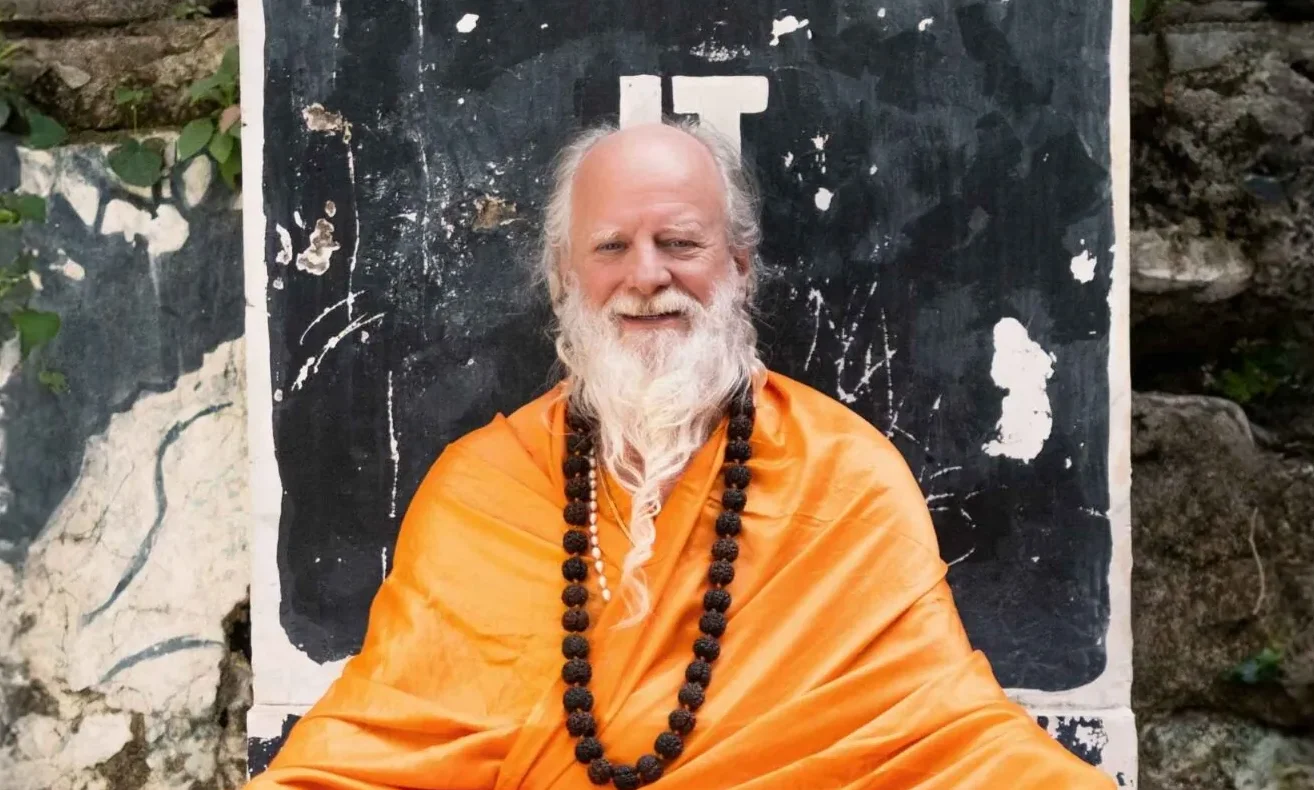
“Kaṛma is when you are bound to the concept of a desire being the thing that’s going to make you happy. It’s not.”
Thom Knoles
Is it possible to escape the cycle of desire that keeps us bound? In this episode, Thom explores the subtle mechanics of kaṛma and the paradox of fulfillment, blending ancient wisdom with contemporary dilemmas.
Move beyond the myth of desire-free enlightenment and discover the true role desires play in moving us, often mysteriously, right where we need to be.
Prepare to step into a new understanding of fulfillment, agency, and the playful nature of wants.
Episode Highlights
01.
Kaṛma: Action that Binds
(00:45)
02.
The Danger Zone
(03:30)
03.
Kṛiya: Action that Doesn’t Bind
(06:44)
04.
The Power of a Pink Shirt
(09:33)
05.
A Literal Bucket List
(13:13)
06.
The Desirability of a Desire-free State
(15:48)
07.
Q – Does attachment to the desire for enlightenment keep you bound?
(18:42)
08.
A – The Hypnosis of Social Conditioning
(18:50)
09.
Enlightenment’s an Acquisition
(21:37)
10.
Desires Just Move Me Around
(24:38)
Jai Guru Deva
Transcript
The Bond Between Kaṛma and Desire
[00:45] Kaṛma: Action that Binds
Thank you for listening to my podcast, the Vedic Worldview. I’m Thom Knoles. We’re going to dive for a few minutes into the subject of the relationship between kaṛma and desire.
And really the first stop is to analyze the word kaṛma. Kaṛma is a Sanskrit word, which sometimes in the west is translated as comeuppance. “You got what you deserved. You didn’t put a tip in the kaṛma jar at the coffee shop. And so one day when you’re incarcerated unfairly and you’re hoping someone’s going to bail you out, no one’s bailing you out. Why? Kaṛma man. You didn’t put that… you didn’t put any coins in the kaṛma jar at the coffee shop when you bought your coffee.”
This kind of idea of kaṛma is completely hokey and made up. The word kaṛma comes from the Sanskrit root K-Ṛ. If we put a little dot under the Ṛ, it’s pronounced krrrr, and kṛ means action. Ma is implicit of bondage, in this particular context. Ma may have other implications in other contexts. In this context, after the word, kṛ, kṛ-ma, kaṛma, means action that binds. Action that binds.
Now desire. What’s a desire? “I can conceive of something I’m not yet experiencing, which I want to experience.” Desire, right? Simple. I’m conceiving of something which I’m not experiencing and I want to experience it. The word want is there too. I’m wanting, I’m not having.
And so I’m having an experience of something that I’m not having that I want. What’s the relationship between action that binds you and that? Identifying something that you can conceive of that you think would be better, but you don’t yet have it. Kaṛma.
[03:30] The Danger Zone
And so, what is it that is the relationship between kaṛma and desire? It is the concept, the thing that turns kaṛma, action, into action that binds you, is the idea that where you will arrive if the desire got fulfilled.
And right there, this is the danger zone. Where will I arrive if the desire gets fulfilled? What will my experience be? If we suffer from a poor memory, we can’t remember what happened to our wiggly, googly, illuminated, electric toothbrush that we got under the Christmas tree when we were three. You brushed your teeth with it till the bristles went that way, and you toss it in the corner and there it is with the roller skates that you wanted and are no more interested in.
We can’t remember that we wanted a thing and we got the thing and then the thing was discarded, and we wanted a thing and we got the thing and the thing was discarded, and we wanted a thing and we got the thing and the thing was discarded.
Without the memory of that pattern, we can fall for the idea that, if the thing that I want arrives to me, then I will arrive at some kind of beatific state of really just not wanting anything else.
“Please, God, please God. Give me the skateboard. Give me the bicycle. I promise I won’t bother you anymore. All I want is that Stingray bicycle made by the Schwinn bicycle company with the little tassels hanging off.
“And okay, one more thing, and that is the reversible brakes, so I don’t have to squeeze the little things. Please, I promise I won’t bug you for anything else. Just gimme the bicycle.”
That tends to be a caricature of how we are actually. I just want that thing. And our promise that we are going to arrive in a state of complete satisfaction and not have any other desires, is not a promise we can actually make realistically.
Because our pattern is you get it and then you want something else. You want whatever’s coming next, whatever you can conceive of next. And so the failure to recognize the never-ending pattern that the fulfilling of a desire never brings fulfillment to the inner feeling, the inner state of Being. My inner Beingness doesn’t seem to be able to arrive at satisfaction through the mere fulfillment of a desire.
And so then what happens is we have to have kaṛma, we have actions that bind us. We’re bound to the concept of a desire being the thing that’s going to make me happy. And it’s not. It’s not. This is kaṛma.
[06:44] Kṛiya: Action that Doesn’t Bind
Now there’s another kṛ word, kṛ, kṛiya. K-Ṛ-I-Y-A. In Sanskrit, whenever we have a Y-A, ya, we have something being administered. Kṛiya. Kṛiya.
What’s being administered here? Desire appears and, properly assessed, one who is grounded in fulfillment is not going to not have desires. Someone who is grounded in fulfillment is someone who has meditated and has experienced oneness with the bliss field, and a sufficient number of times that that bliss field has become lively and activated, and it’s an underlying field of a deep inner sense of satisfaction.
And yet, even with that deep inner sense of satisfaction, the bliss field itself, the state of Being, causes desirable thoughts to appear. A thought about the proposition of which is, there’ll be something good that happens if you go there. This is a desire being had, juxtaposed with, and it’s called kṛiya, juxtaposed with a state of underlying fulfillment.
I have my underlying fulfillment and yet desires still come. Why? I know that fulfilling a desire can’t fulfill me. Why do I know that? I am the fulfillment? I’m the fulfillment field itself. I don’t need anything. If the desire’s fulfilled, it won’t make me. If the desire is not fulfilled, it won’t break me. Why is the desire coming? Let’s see.
When you follow a desire in this illuminated, enlightened state of consciousness, what happens is you’re taking the fulfillment field itself on an excursion. You are the field of infinite fulfillment, capability, and intelligence and creativity, and it needs to move around.
And so your deep inner Self, will cause a desire to bubble up that will cause you to move this body of yours. That is the… it’s the front, it’s the narrow end of the wedge. The front for Universe, this body of yours, the eyes and the mouth and the brain and the thoughts and all of that are the front for the Universal function, and it needs to move.
[09:33] The Power of a Pink Shirt
It can’t just sit here on the couch. And so a desire will come. Go get a pink shirt with flamingo prints that you saw in the shop when you walked past.
I think, “Well, I don’t know why I want the pink shirt with the flamingo prints. I know for sure it’s not going to bring me fulfillment. I know absolutely for sure. However, I don’t question any more thoughts that bubble up, so I’m going to go for the shirt and go out and see if it’s there.”
You stand up, you walk out of here, you walk over to the shop, and the shop’s closed, and the shirt’s gone. It’s not even going to be there tomorrow, evidently. And as you’re standing there, you might think, “Well, that’s interesting. Let’s find out why I’m here.”
So you de-excite and de-excite and de-excite, and then somebody walks up to you and says, “Are you Thom Knoles?”
“Yes.”
“I haven’t seen you in 35 years.” You had an appointment. It wasn’t about the pink shirt with the flamingo prints. It was about go stand there, but you move yourself, you move the fulfillment field to that place. The fulfillment field has an appointment with somebody who needs to meet the fulfillment field again after 35 years.
And so this is how in an enlightened state, we don’t have kaṛma associated with desire, which means, you are doomed to repetition of a desire coming and you attempting to get fulfillment by fulfilling the desire.
Fulfillment cannot come by fulfilling a desire. Fulfillment of the Self, fulfillment of the Knower, fulfillment of your deep inner sense of Being, it cannot be made fulfilled by fulfilling a mere desire. A desire actually is not a mechanism to bring you fulfillment.
A desire is a mechanism that’s designed to move you to where you need to be. You have appointments, and this is your secretary. Desires are your secretary that say, “Excuse me. You’re due over at the Pink Flamingo Shop, shirt shop at 4:45 this afternoon, and be sure you’re standing there.”
And it’s not going to say to you, “Because you’re going to meet so and so.” No, you let that story unfold. You’re completely non-attached. “I’m non-attached. I don’t care why.”
In Sanskrit we call this non-attached vairagya. I find myself, because I’m fulfilled, I’m not attached to whether the pink shirt actually does anything for me. I’m not even curious or interested. I just don’t disobey desire, that’s all.
So desire comes, off I go and I’ll end up seeing why. Now, maybe the person didn’t come along and say, “I haven’t seen you in 35 years,” but you think, “Well, I don’t know why I’m standing here. I’ll wander back to my apartment again,” but you walk back to the apartment, you discover a big wind came and blew the glass door over and smashed the chair that you were sitting on before you were invited to leave the place.
And you look at that and go, “Shewee. I would’ve been sitting right there if I hadn’t had a desire for that pink shirt.” We don’t know exactly why we’re being moved around. We’re not bound. In kṛiya, we’re not bound. There’s no kaṛma.
[13:13] A Literal Bucket List
In kaṛma, I’m convinced, “If I fulfill this thing, that’s it for me. I won’t want anything else, I promise.”
Oh, yes, you will. And you’re bound and doomed to constant repetition of the pattern. Didn’t get fulfilled. Didn’t get fulfilled. Didn’t get fulfilled. Didn’t get fulfilled.
So, in my home I have this beautiful bucket. It’s really nice. I use it to fill my bird bath where the little birds come and drink water every day. And we live in a very dry place, a place where the little bird bath dries up, and people have told me you can put mechanisms there and make it constantly filled with water. I don’t want that because I have a lot of fun with this little bucket.
I go out and I fill up the bird bath and sometimes it’s like St. Francis of Assisi. The birds come and land on my shoulders and things. Wild birds they just come and like land on me while I’m filling up the water, and then they hop in. And I love the fact that I can sit back in my little breakfast nook eating my toast, my sourdough toast with tahini on it, and I can watch and see the birds out there splashing around, having so much fun in the water and the sunshine and everything.
I want the water to run out, so I can go back out there and fill it up again.
So sometimes, I was holding a video meeting with some people and somebody said, “Thom, what’s on your bucket list?”
And I reached over and grabbed the bucket. I said, “Here’s my bucket. It’s the only thing on my list. It’s my bucket list. It’s got one thing on it. The bucket.”
All jokes aside, kaṛma is there if you’re bound. If you’re bound to the idea that a fulfillment of a desire is going to bring you fulfillment. Kṛiya is when you have discovered, “I am the fulfillment. I am the fulfilled field. I need nothing. I might desire things, but I need nothing.”
And so then a desire comes without any attachment. Non-attachment. No ma. Not kaṛma, but kṛiya. “I am carrying out the desires that are the mechanisms whereby I’m being made into an agent for progressive change. I’m being made into an agent for progressive change.”
[15:48] The Desirability of a Desire-free State
There’s nothing wrong with desire. Desires will not go away. I was talking to a Buddhist recently. Modern day Buddhists have forgotten what the original Shakya Muni, the historic Buddha, was teaching. And you can’t blame them. It’s been 2,600 years. It’s a lot of time.
And so, the person was saying, “Oh, you know, desire, and desire is the terrible thing. Desire is, you’ve gotta have a life with no desires. Don’t have desires. Don’t have des…”
and I said to them, “Isn’t it obvious to you?”
He said, “No. What? What are you talking about?”
I said, “Would you say that having no desires is a desirable state and it’s what you desire to have no desires?”
He said, “Yeah.”
And I said, “Can’t you see the paradox in that? Desire-free is desirable and you are unfulfilled because unless you fulfill the desire of being desire-free, you’re always going to be bound by desires?”
I said, “Really? Come on. This is foggy thinking. This is very foggy thinking. Buddha didn’t teach that.”
What Buddha taught was, if you assume authorship of the desire flow, if you say, “It came from me and it’s the thing I need, and when I fulfill it, then I’ll be fulfilled.”
Authorship of desire is the thing that binds you. It gives you kaṛma. You get bound into the never-ending cycle of attempting to gain fulfillment through fulfilling desires, including the desire for a desire-free life. If a desire-free life is desirable, it’s kaṛma. It’s still kaṛma and you’re bound.
So let’s get out of all that nonsense. We experience the deep inner field of Beingness, and we have consciousness that is completely fulfilled and fully aware of its capability, and then, “How am I going to move the fulfillment where it needs to be so that I am the field of fulfillment seeking need. I am not the neediness seeking fulfillment.”
If you are the neediness seeking fulfillment through fulfilling desires, you’re bound. Kaṛma. If you are the fulfillment looking for where the need is, you are kṛiya.
You are an agent of progressive change and desires are working in favor of moving you around to the right places at the right times.
[18:42] Q – Does attachment to the desire for enlightenment keep you bound?
Following on from that Guruji, would you say the desire or the attachment to becoming enlightened would also keep you bound?
[18:50] A – The Hypnosis of Social Conditioning
Yes. And even, and this is a shade of subtlety, but if I desire a desire-free state, if I think that being enlightened is going to be a state where I’m not bothered by desires anymore, if I think that I will arrive at a beatific state with no desires if I get enlightened, to whatever extent I believe in that, I’m already bound.
Also, there’s another feature, another subtle shade here. Generally speaking, the main thing that I see in people who are already, they already have a high percentage, let’s say 85, 90% saturation of fulfillment as their Beingness, is that they’re still caught up in enlightenment denial.
In other words, people are a lot more enlightened, most meditators are a lot more enlightened, as a percentage, than what they personally attribute to themselves. And so they are still somewhat under the influence of the hypnosis of social conditioning.
Meaning, everybody else around is saying, “Gotta get a car. Gotta get a better wage. Gotta get a this. Gotta get a that.” Why? Because if you do that and you eat at the five fanciest restaurants in town regularly, and you’re recognized by everybody as a socialite, you’re going to arrive in a beatific state of complete fulfillment and feel really good about yourself.
And subject that to any degree of intellectual analysis, and you’ll arrive at the understanding that it’s just definitely not the case. And yet people fall for this. Even people who are quite enlightened already will misinterpret why it is that desires are arriving in their mind.
If the interpretation is that, “Enlightenment is a desirable state, and I’ll move toward it because then I’ll be finally in a state where I don’t have desires, I won’t be bothered by them.”
Actually desires increase the more enlightened you get. That’s my experience. They increase. You have more frequent, more often desires than the average stressed person has, who’s half asleep most of the time, and suffering from all body sensations, because you have freedom to be available to have the desirable thing of your fulfillment moving around.
[21:37] Enlightenment’s an Acquisition
And so, any degree of attachment to a concept of arriving at desire-free because a desire gets fulfilled, that’s bondage. And there are degrees of attachment to these ideas. 25% invested, 50% invested, 90% invested, whatever.
“I want to get enlightened because it’ll be the state where everything will be good, and when everything’s good, I’m not going to be assailed by all these desires anymore and the dissatisfactions that I have in my life.”
Dissatisfaction is again based on buying into the concept that if only you could fulfill a few desires, that dissatisfaction will disappear. And it won’t. Fulfill desires, it doesn’t make dissatisfaction go away. So there’s only one answer.
“I have to be the fulfillment field and I’m going to allow that to occur. I exercise the mechanism of it, and when it appears I don’t question it.” How do I know I don’t question it?
You get a desire, like for example, the frivolous desire of a pink shirt at the shop over the road, and you’re kind of looking at that and going, “Well that’s very as if. I’ll go and do it, but the idea that it’s going to fulfill me is just too hilarious.”
Oh, but what about a desire for something more important than that? Like, “I wanna have a baby, and then I’ll be really happy if I have a baby.” I know lots of people who’ve had babies and they’re not fulfilled. They got the baby and then it’s like, “How do I get time to meditate and have dinner and go out and see my friends anymore? Why did I wanna have this baby?”
Even things that are supposed to be much more important than pink shirts, if we’re bound by, to the extent that we’re bound by the idea, it’ll bring me fulfillment, it’ll bring quietude, it’ll bring satisfaction, then to that extent, there’s kaṛma.
We’re bound. 25% bound, 50% bound, 100% bound, whatever. It’s all percentages. Everything’s percentages. Even enlightenment can be a thing that we hold out and say, “When I get there, then the beatific state.” And what’s this beatific state? “I won’t experience dissatisfaction anymore.”
We’re just setting it up as one more acquisition. Enlightenment’s an acquisition.
[24:38] Desires Just Move Me Around
If it begins progressing and we find ourselves acting and we’re not attached while acting, and even if, like in Michelangelo’s case, a giant block of marble is there, and he’s staring at it for hours, and then suddenly he picks up his 10-pound hammer and begins whacking away at it furiously for hours until he’s sweating and practically falling down.
And people say to him, “Michelangelo, what are you doing?”
And he goes, “I’m liberating the captive. There’s a captive inside the marble. I have to liberate them.” Kind of non-attached in the beginning. Seemingly completely non-attached. Not even a sketch about what this captive looks like, and then suddenly just whacking at that marble furiously.
Even in enlightenment, you can be caused to dive into furious activity that goes day and night, but you’re still not convinced that if the thing happens, it’ll make me beatifically happy. Or if the thing doesn’t happen, “I’ve lost my meaning in life.”
The test is, to what extent do you believe that all meaning is lost in life if the desire doesn’t get fulfilled? If you buy into that concept, to whatever percentage you buy into it, you have kaṛma. That’s kaṛmic, kaṛmic desiring.
It can either make me or it can break me. In the enlightened state, desires come and desires go, but none of them can make me or break me. If they get fulfilled, I don’t really even care. If they don’t get fulfilled, I don’t even care.
Fulfilled or not fulfilled, I’m fulfilled. Desires don’t fulfill me, they just move me around. They move me around.
