
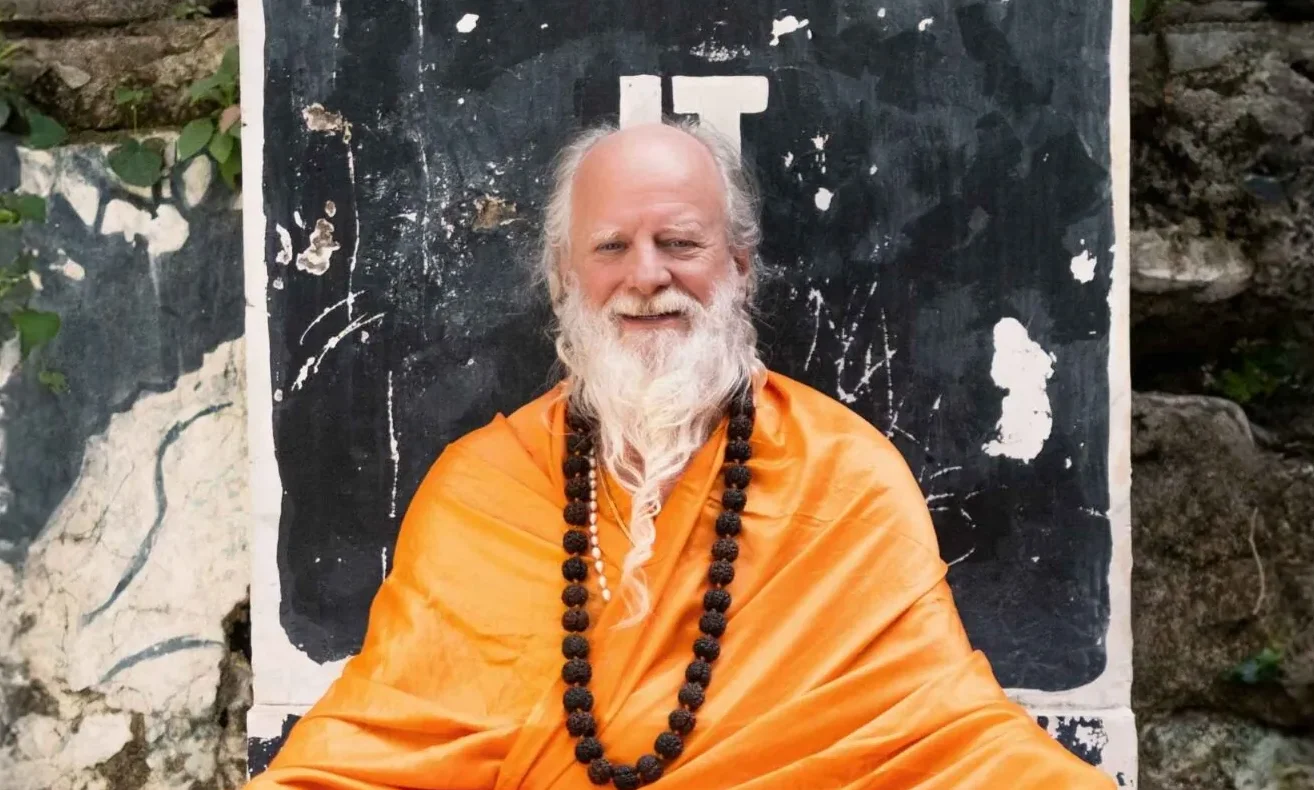
“Nature funds adventurous consciousness.”
Thom Knoles
Can a regional town become a living experiment in collective consciousness? In this conversation, Thom speaks with fellow Vedic Meditation Initiator, Barron Hanson about returning home to Nowra, in Australia, teaching Vedic Meditation in a regional community, and creating the Here in Nowra festival as a gathering point for meditators from around the world.
They explore the effect of sustained group meditations, the role of community in personal transformation, and what extended rounding can make possible in a properly supported setting.
Listen to or watch this episode to hear how meditation, knowledge, and adventurous consciousness can help reshape both individual life and collective life.
You can also watch this episode on YouTube here: https://youtu.be/MrQp2k0N3SE
Find out more about the Here In Nowra festival here: https://here-in.world
Episode Highlights
01.
A Hometown Mission Begins
(00:45)
02.
Finding Vedic Meditation in New York
(03:59)
03.
Meditation for High Achievers
(08:08)
04.
The Be Here Nowra Vision
(09:24)
05.
A Town That Embraced Meditation
(13:08)
06.
Reaching the One Percent Goal
(16:10)
07.
Healing Nowra From the Inside
(18:32)
08.
Measuring Collective Consciousness
(21:20)
09.
Retreats, Talks, and Community
(24:06)
10.
How to Join the Festival
(28:27)
11.
Ancient Culture in Nowra
(31:46)
12.
Festival Dates in October
(33:57)
13.
What Extended Rounding Does
(34:55)
14.
A Clockwork Answer
(43:31)
15.
Lessons in Building Community
(43:46)
16.
Practice First, Knowledge Follows
(49:33)
17.
Why Nowra Is Worth Visiting
(49:59)
18.
Nature Funds Adventure
(51:45)
Jai Guru Deva
Transcript
Building Community Through Vedic Meditation: A Conversation with Barron Hanson
[00:45] A Hometown Mission Begins
Thom Knoles:
Welcome to my podcast, The Vedic Worldview. I’m Thom Knoles. Today I have the great delight of being able to have a conversation with an old friend of mine, who once upon a time was a protege, but today is a colleague in the teaching of Vedic Meditation.
His name is Barron Hanson, and Barron comes from a multi-generation family that has lived in the area of southern coast of New South Wales, particularly around a town that is bound by a beautiful river, the town of Nowra, right on the coast between the Shoalhaven River on the north, and even the city straddles that river, and with the great Pacific Sea on its right-hand, or eastern, boundary.
And Barron, welcome. Let me hear a little bit from you about your family and your upbringing in Nowra. What was it like?
Barron Hanson:
Yeah, welcome.
Thom Knoles:
Tell me what your little township is like.
Barron Hanson:
Nowra is a beautiful place. I had the great good fortune of being born here into a fifth generation family. Our family, the Hanson namesake, came from Sweden, Johansson, and they found their way up in the 1890s to the gold rush west of Nowra.
It was quite a prominent gold rush in that era. And I think in my family, there’s always been an adventurous spirit, and through my great-grandfather and grandfather and father, and even from my mother’s side, there’s this adventurous travel nature.
So I grew up in Nowra, but like a lot of people in regional areas, they get out as soon as they can. As a teenager, I had a pretty, probably negative perception of Nowra. A lot of people give it a bad rap. It has a lot of social issues, like a lot of regional places in Australia.
And so, 18 years old, I hit the road with that adventurous spirit. I found my way overseas. I found myself living in New York City for the better part of eight years.
But around 2020, I started to realize just about how far away I was from this beautiful place, and family, and connection. And there was the devastating bushfires of 2019 and 2020. That was a real catalyst for me to realize that what was important to me was community and being back home.
And so I forged a path back to Nowra, which involved meeting you, involved learning to teach Vedic Meditation. And yeah, we’ve slowly but surely been teaching people in our hometown how to meditate. It’s been a great journey so far.
[03:59] Finding Vedic Meditation in New York
Thom Knoles:
And tell me something about your first becoming aware of Vedic Meditation by name, and what was it that attracted you to it? Because now you’re a proponent of it. So moving from being someone who it caught your eye, to being one of the exponents of it in the world, what was the genesis?
Barron Hanson:
Yeah, I lived in New York City, and I was running a media company. We had a number of employees. We were kind of, when you’re in that startup mode for business, really burning the candle at both ends.
And I was probably indulging in much of the darker sides of New York City as well, let’s call it, the city that never sleeps. And I had tried lots of different techniques and different things to calm myself down. I tried ultra-distance marathon running. I was pretty good at that, actually. I tried ice bathing. I tried sound bathing. I tried a host of psychedelics, but nothing was really sustainable. And, in fact, most of those things were very unsustainable for me.
And I think it was probably one too many hangovers in New York City. My business partner, Peter Maiden, who you’ve met on a few occasions, he was a Vedic meditator, and he suggested, I think he politely kicked me under the table when I was sleeping at lunchtime under my desk with a hangover, and he said, “You should try Vedic Meditation.”
And, to be honest with you, I did zero research. I googled Vedic Meditation teachers near me, and a teacher named Robert Hammond appeared. I sent him an email. He sent me back the thing. We had a short phone call. And within a few days, I was sitting in his beautiful apartment and being initiated into Vedic Meditation.
And almost immediately, I felt the effects because I kept falling asleep in the four-day course that I did. I was really fatigued. And he challenged me to try it for about six weeks. I did it for six weeks every single day, and I’ve barely missed a day ever since, barely missed a meditation ever since.
And it was probably about four years of doing the practice and doing it in New York City that, that’s when people started to notice. And this is very common with meditators, is that people start to notice a change. They start to notice that we’re a little calmer. We look a little bit fresher. We’re cool under pressure. We tend to make better choices.
And a lot of people started to ask me, “What’s your secret? What are you doing? Are you doing a new juice cleanse? Is that thing you were trying to do, is it finally working?” But it was the meditation, and that was the thing that stuck.
And I really wanted to be able to share that with people, and that led me to finding and being connected with you.
[08:08] Meditation for High Achievers
Thom Knoles:
And just for our listeners’ interest and edification, the Robert Hammond who taught you to meditate is the self-same co-founder of the Highline Park in New York City, the famous Highline Park.
Barron Hanson:
Yeah. And when I was living there, the Highline overtook Central Park as the most visited attraction in New York City, which is quite incredible. And he came up with that idea in meditation, and went for it, and did it.
And I think one thing that’s continued to pop up for me with this practice is Nature funds adventurous consciousness. And Robert had the gusto to go for that. And he continues to teach meditation as well, which is pretty cool, because he’s created one of the greatest attractions in one of the greatest cities in the world.
Thom Knoles:
It’s really amazing. And really, between Robert, yourself, and, of course, hosts of others, the idea that the public may have that meditation is a kind of purely hippie trippy thing, that you have to have a Volkswagen van with paint on it, and, you know, you have to opt out of society, and, you know, it goes with a kind of hippie lifestyle.
When there are so many super achievers like you, like Robert, who swear by it, practice it, and, in the case of the two of you, teach it to other people. One of the things that I really admire about our technique is that it’s been adopted by and is endorsed by people of every walk of life, by the way, including some hippies. They like it too.
So now here you are back in Nowra, and you’ve had some major social impact events there in the last few years. Tell me about this.
[09:24] The Be Here Nowra Vision
Barron Hanson:
Yeah, so it’s really interesting, the genesis of how this came about, because I was studying to become a teacher, and one of the prerequisites to become a teacher is there’s a course that you’ve created called Exploring the Veda.
And in one of the episodes of Exploring the Veda, one of the weekends, you talk about this idea that there’s a collective consciousness, which was a completely new idea to me, and I was really curious about it. And in New York City, I was a filmmaker, and so I jumped online pretty much straight after that weekend, and I was like, “Films about collective consciousness.”
And there’s, from my research, precisely zero. A few people have tried, ineffective. But there was also some studies and research done that if you get a small number, say about 1% of a collective meditating, then it can have a ripple effect through that entire field.
And the next thing I did was Google, “What’s the population of Nowra?” Population of Nowra, about 30,000. “What’s 1% of 30,000?” 300 people. Well, what if I could go back to Nowra and get 300 people to be daily, regularly meditating? What kind of effect could that have on things like the crime rates? What kind of things could that affect? Could that have on motor vehicle accidents, education, hospitalizations, all these kinds of things that have been studied and measured before?
And so I decided that was going to be a pursuit of mine, to see whether we could achieve it first and foremost, and then what would happen. And so I returned back here after Initiator Training in 2022, and I’ve been placing my awareness and attention on teaching meditation here. And that has been about four and a half years now.
And we have actually surpassed that number of people who have learned to meditate, but I know that not everyone’s meditating. And so the next challenge is, how do we get those people to be regularly, every day, every day meditating? And how do we get that number to our group meds? How do we get group meditations up to 300 people at every group meditation? So that’s the next iteration of the challenge.
But we’ve also had some incredible success in terms of drawing consciousness energy in. I happened to fall in love and marry, and we now have a child, with another Initiator named Rachel Gross. And she moved to Nowra. She moved her life from Pittsburgh to Nowra to help this mission and grow a family here.
And then three of my students have now become teachers. So Nowra has five Vedic Meditation teachers. And I think, and you can correct me if I’m wrong, but it’s probably the highest concentration of teachers anywhere in the world, Vedic teachers anywhere in the world.
So we’ve had some pretty incredible support of Nature, and we’re looking to continue that. We don’t want to stop.
[13:08] A Town That Embraced Meditation
Thom Knoles:
So Nowra’s rapidly turning into a hotbed of Vedic Meditation. Indeed. And I mean, I can only use my imagination because I have visited you a couple of times there, but I didn’t get a chance to kind of circulate in town that much, or get around.
Are you a known character in Nowra? I mean, when you walk down the street, are you, like, high-fiving people and things?
Barron Hanson:
It’s interesting. Nowra is a town which has really embraced meditation. And I think that the timing of this has been quite cosmic. I mean, it’s come at the right time.
I think maybe five or 10 years ago, meditation was probably perhaps not as well known in regional areas. But I think what we’re showing in Nowra is that there’s a need for this everywhere. Like, if we can show that Nowra is able to support a number of teachers and have hundreds of people come and learn Vedic Meditation, then surely this just isn’t a Nowra phenomenon.
And I think that feeling embraced by the town, and yes, I was also expecting more negativity. I was expecting some pushback. I was expecting some people to say, “Get out of here, you hippie,” perhaps.
And yeah, I am regularly embraced by people in the main street of Nowra who say, “Thank you for teaching me,” or, “Thank you for teaching my son.” Or probably one of the funniest interactions I’ve ever had was I taught this lady to meditate. And it was one of those students who I just never saw.
She did the four-day course. She came. She didn’t look like she particularly loved it. She just sat there and nodded her head, and she left. I never saw her.
And it was about two years later, and I was standing in the main street on my phone having a phone call, and she just walked up to me, and she just ran her finger down my shoulder, and she whispered in my ear. She said, “I’m still meditating.”
And so little things like that, where it’s like you don’t actually know the true effect of what you do. And you’ve taught so many people to meditate. I’m sure there’s people out there who you had that short interaction with, and then they headed out into the world, and they’ve probably had a huge influence that you just never have known or seen.
[16:10] Reaching the One Percent Goal
Thom Knoles:
Yeah, because that’s one of the things about what we offer, a course. People learn the technique. They practice it. The onus is on them to continue practicing. They’re not joining a club who’s going to be chasing them up and bugging them and asking them for stuff all the time.
They opt in as to whether or not they’d like to receive a newsletter, and so really it’s up to them to let us know, when they do spot us in the street or wherever, to what extent they’re enjoying the effect of it. We can only assume the best.
That’s a very interesting thing, and you’ve crossed a threshold in your own personal teaching recently. I remember you sending me a text. The numbers of people that you’ve taught in a relatively short time in a small town, what is that?
Barron Hanson:
Yeah, so in Nowra specifically, we’ve passed 300, which was the goal of 1%. Personally, I’ve taught over 500 people already since Initiator Training, and I think also too I’m quite proud of that, and I’ve really applied myself to it.
But I think also too the exciting thing for me is that some of my students have now become teachers. And so that multiplier effect starts to grow when that happens. And in particular, my first student who became a teacher, she works in the Defence Force.
So Nowra is a Navy town. About 10% of the employment is Navy or Navy adjacent, and she’s in the Defence Force, and so she has gone on to then initiate some of her platoon. She’s in the Army. She’s initiating people who are very high up in the Navy, and so that effect is the thing that probably excites you the most.
And I’m sure you’re noticing this in your lengthy career, because there’s now multipliers on multipliers. So you’re getting the square root effect, the square effect.
Thom Knoles:
I have not only, as it were, the direct offspring of my teaching, but my offspring’s offspring and my offspring’s offspring’s offspring. So it’s kind of like having great-great-grandchildren who are Initiators.
Barron Hanson:
Exactly, yes. That’s exciting. Very exciting.
[18:32] Healing Nowra From the Inside
Thom Knoles:
Nowra is a town that you would think would lend itself easily to looking at the statistics of before and after, and what do we know about Nowra as a country town of its size in Australia? Every town has its ups and downs and pros and cons and all of that. What are some of Nowra’s social statistics, or markers of social statistic, that make it an unusual country town, or is it a pretty common country town for Australia?
Barron Hanson:
Yeah, Nowra first and foremost has a reputation problem. I think a lot of people look down on Nowra. By contrast, there’s all these beautiful hamlets around Nowra, places like Berry, Jervis Bay, Gerringong, Huskisson, Kangaroo Valley, some of, like, world-class small towns that often win tourism awards.
You’ve got Nowra in the middle. Nowra does face things like higher than average crime rate for New South Wales, for the state that we’re living in. There’s a lower socioeconomic status in terms of the income earning. Mental health is a particular issue, particularly male suicides. These are all statistically off the charts compared to the towns around it, and then compared across the state.
And it’s interesting because this town, it is so naturally beautiful. It’s on the Shoalhaven River. It’s got these big sandstone cliffs. It’s got these beautiful beaches where you can swim. Yet it seems to attract people who are a bit down and out.
And it’s the end of the train line. If you come from Sydney and you catch the train as far as you can go, if you fall asleep on the train, you wake up in Nowra. But I think when I look at it, the reputation issue is the thing we’re trying to change, and we’re actually trying to change that from the inside out.
So less about what other people think, but how do we uplift the people of Nowra? How do we show the people here that something good is happening? How do we show the people here that the destiny of their town is in their hands? And for me, the most powerful tool for that is teaching Vedic Meditation.
Because when people do that, they realize that they can do more. They can give more. They can be part of a community that is trying to change. And I think that is the key part of this Be Here Nowra story.
And you told me something beautiful at the very start of my journey. You said that this story isn’t about me. It’s the story of Nowra wanting to tell itself through you. And I’ve always held onto that as being a conduit for the story of Nowra, and the story of Nowra wants to heal. The story of Nowra wants to become that blossoming town it can be.
[21:20] Measuring Collective Consciousness
Thom Knoles:
Tell me about your festivals and what you have planned.
Barron Hanson:
Yes. So when I was studying this idea that collective consciousness can occur with mass meditation events, I came across a particular study that happened in the 1980s where thousands of meditators descended on Washington DC for a summer, and there was some significant changes in the violent crime rate.
And I was blown away by the numbers and the success. And one of the challenges with what we’ve been going through with Be Here Nowra is, how do we measure the change? There is obviously change happening, and we can compare to towns of similar sizes. But can we create a statistically significant event?
And so the idea for Here in Nowra was born. And in 2024, we invited hundreds of meditators from all over the world to descend on Nowra for an entire month of activities. And I think one of the beautiful things about this is that we have this practice of Vedic Meditation, and there’s lots of people all over the world who are doing this just in their homes.
They don’t have a community. They maybe have an Initiator who they meet up with once a week for a group med. But what we wanted to do is create a place where Vedic meditators could gather and be together and enjoy the company of being a meditator.
And so we also wanted to measure it. So this was important, and this is another lesson that I learned from you, that before and after measurements. And so, could we, during that one-month period, measure the crime rates? Could we measure hospitalizations? Could we measure car accidents? Is there any significant change when we import all of this energy in for the month?
And then when people go home, does it return back to normal? And then we can compare against other towns across the state during that month. So it’s creating a more scientific approach to measuring this.
And at very least, the worst that can happen is that hundreds of meditators get together and have a really good time. And the best could be that we add to this significant body of evidence about collective consciousness. And that’s really my passion and goal, is to add to that body of knowledge and that research.
[24:06] Retreats, Talks, and Community
Thom Knoles:
Your festival is rich with arts, culture, music, and talks, knowledge courses. Give me a few examples. What’s going on?
Barron Hanson:
Yes, there’s something for everyone, and it’s a bit of a choose your own adventure. We have a month of retreats. We have a 15-day rounding retreat, so if people really want to come and get stuck into that.
Yeah, rounding is a process that we engage in with our meditation. It involves asanas, so yoga moves that we combine with light breath work, meditation, and a juicy lie down at the end. It takes about 50 minutes.
And then people can engage in this in a retreat setting where they can do multiple rounds in a day. And so we provide an environment which is conducive to lots of rounds. We cook you beautiful Ayurvedic food. Our retreat center happens to be nestled on the Shoalhaven River on 120 acres of pristine bushland.
And you can do the rounds, and we have an option for people to do 15 days of rounding, which is a significant amount. And in this time, you can get up to doing 14 rounds a day, which is I don’t know anywhere else other than Initiator Training where you can do that.
So it’s a real opportunity for anyone who is thinking about that. The event we ran in 2024, two of the people who came on that retreat ended up on teacher training with you. So it’s a nice launchpad for the teacher training if people are curious about that.
We also have a four-day retreat. We have a retreat for creatives, so people who work in the creative industries. We have an Exploring the Veda retreat. If people have been curious about that knowledge course that you offer, you can come and do Exploring the Veda in a bush setting, retreat setting.
So that’s the retreats. And then we have 14 wisdom talks. So wisdom talks are given by Initiators on topics that they’re passionate about. These are open to anyone. They don’t have to be meditators. You can come and just listen to an Initiator talk about the Vedic worldview on a particular topic that they are very passionate about.
We have workshops. You can come and take practical workshops on how to integrate this Vedic knowledge into your everyday life. We have social events. We have sunrise group meditations at the beach. We have group meditations not at the beach. We have rounding.
It’s really about celebrating this practice and taking this knowledge, and taking this experience that we have of Vedic Meditation, and bringing it into the world and into life. I think it’s such a unique offering, and it’s a chance for you to connect with people who are like-minded and love the same things that you do.
[28:27] How to Join the Festival
Thom Knoles:
And suppose I have just a few days and I want to go to Nowra and enjoy some of the offerings in the time that I have. I also heard there are concerts. Is that right?
Barron Hanson:
It’s true. Last year we had, sorry, in 2024 we had John Butler come and play, and he played a meditation concert. So it wasn’t his usual rollicking show. It was more of a sit and relax and close your eyes show. And we sold out the Shoalhaven Entertainment Center.
And we’re looking forward to announcing some more music events to go along in 2026.
Thom Knoles:
So you’re in the process now of enticing some musical talent to come and share their art with everyone.
Barron Hanson:
Absolutely. And there’s plenty of room for any of those musicians if there’s still time. If you are hearing this podcast right now and you’re a musician and you want to come to Nowra and play, we’ve got venues and people who want to hear you.
Thom Knoles:
Fantastic. I’m going to give you a name or two at the end of our talk. I’ll shoot you a couple of ideas by text of people who might actually respond well to this.
How do people get involved? What do they do, and what’s next? What are the dates, and what’s next?
Barron Hanson:
Yep. So the event, the festival, is happening for the entire month of October. And if you can make it for a day or a week or a month, please do.
I know the people who came for a month last year came and they worked remotely. So they went online during the nine to five, and then they enjoyed all of the activities on either side. If you want to get involved, the website is here-in.world. And we’ll put that in the podcast notes.
Or you can just Google Here Festival Nowra, and we’ll be the first hit on Google. But it’s a really beautiful opportunity to be with our community. And that’s what I’m passionate about, is bringing people together.
And you also get to be part of something in Nowra. Nowra is a happening place, as we said, and see what we’ve created here. If you’re interested in community building, this is a great opportunity to see what we’re building here.
[31:46] Ancient Culture in Nowra
Thom Knoles:
What kind of weather should people expect if they come from the northern hemisphere? Because for Americans, October is the start of the autumn, in fact, in deep autumn.
Barron Hanson:
I’m glad you asked. It is the best time to visit Nowra. Now I sound like a salesman.
It’s coming into spring. So we’ve weathered the southern hemisphere winter that we don’t really have. The plants are coming back into abundance. The bees are buzzing and doing their thing. The flowers are coming out.
The weather is mid-twenties. It’s warm during the day, cooler in the evening, not too hot, not too cold. Goldilocks effect. It is just that perfect time of the year when the days are getting longer. You can swim in the river. It’s totally safe and clean.
It is a real, the perfect time of year. That’s why we created it. We created it in that month particularly because it’s the creme de la creme of Australian weather.
Thom Knoles:
For people in the northern hemisphere who are not all that au fait with Australia, who want to get down to the beach or go for a surf in the waves, all that’s there.
Barron Hanson:
All that’s there. One of the coolest things that my local government area has ever done was they created the 100 Beach Challenge. And in the Shoalhaven, which is the LGA we live in, there is 100 beaches.
And those 100 beaches rank in some of the top beaches in the entire world. And we haven’t done all 100 yet, but it’s a worthy exploration. And some of them are the top quality surf beaches that you would have surfed at as a youngster coming down from Sydney.
You’ve got bays. You’ve got some of the whitest sand in the world. The beaches are one of the crown jewels of our area. And some of the lower ranked beaches in those beaches would rank probably higher in most places around the world. So, yeah, we’re really proud of our ocean culture here.
Thom Knoles:
Fantastic. Tell me a little bit about, now that we’re on the subject of culture, when I was there, I had the great good fortune of being able to meet some of the Indigenous Aboriginal elders of the region.
What possibility is there for people to have contact with Indigenous culture while they’re there and get a better understanding of it?
Barron Hanson:
Yeah, absolutely. So, Nowra has a rich history. It sits on the border of three neighbouring countries, tribes, nations. And so, it was always a meeting spot. And there is still a lot of rich culture and history here.
And we actually promote one of the local companies to do cultural tours. So, if you’re here, and we’ll include this on the website, you can go with a local and travel around and see some of the spaces.
And where we are holding our Wisdom Talks is at the Nowra Showground. And if you walk just a couple hundred metres over the cliff, and you go down into the bush near the Nowra Showground, there’s a rock painting that is dated 7,000 years old.
And so, think about 7,000, and we talk about our Vedic culture being that old, if not older. That is right in the center of Nowra, is still these ancient artworks. And that particular painting, as you look at it, it’s a rainbow serpent. If you step back far enough, it’s actually a map of the Shoalhaven River as well.
And 7,000 years that has been there. And it’s been a place where people have met and continued their journey. So, you think about that in terms of our culture and how long it’s been there.
And the Australian Indigenous culture is the longest continuous surviving culture that we have still left.
[33:57] Festival Dates in October
Thom Knoles:
Remind me again the dates in October.
Barron Hanson:
October 2026, October 1 to October 31st. So, the entire month.
Thom Knoles:
So, the whole thing. Yeah. Anything else that we should talk about, Barron, while we’re having our conversation?
Barron Hanson:
Well, I would never miss an opportunity to ask you a question, as you know. We’ve had many late nights where I have been peppering you with questions, and I do have a couple.
And so, first and foremost, we have this opportunity for people to come and do extended periods of rounding. And I’m curious to hear you talk about what would be the effect of someone doing 15 days of rounding in a row?
And I know you’ve done many, many, many days of rounding. And you can listen to some of those stories on this podcast about your experiences rounding. But what could someone expect with coming to do 15 days of rounding?
[34:55] What Extended Rounding Does
Thom Knoles:
What tends to happen when we’re in that special supervised setting, and I have to emphasize that multiple rounds, as we’ve described them, where we practice, we draw from the ancient yoga tradition, we practice what we call asana, which is just basically some bending and stretching, no pretzel positions.
We’re not trying to achieve anything or break any records. And we’re not looking at each other in the mirror or anything like that. Just a bit of gentle bending and stretching. I refer to this as neuromuscular integration. Neuro because it conditions the brain prior to meditation.
So you spend about 15 minutes bending your body in a particular way, and it sends a message to the brain to prepare for experiencing transcendence. That means stepping beyond the usual thinking activity into the very abstract, very subtle layers of thinking, or even into The Absolute itself.
Then the neurorespiratory integration, which we call in proper Sanskrit, we call it pranayama. Pranayama means to administer the prana, the life force that’s in the air, to your body and to your brain.
And I call it neurorespiratory integration because in the doing of this particular alternate nostril breathing technique, it’s a very gentle technique that’s done for three, four, five, six minutes prior to the meditation, after doing the bending and stretching.
Normally stress will come out during meditation, whether we do these precursors to the meditation, the asanas and the pranayama, or not. But we know that when stress releases during meditation, it kicks up a little bit of activity. We call that, in the jargon of meditators, we call it unstressing.
It kicks up a little bit of a tendency to have thought-filled episodes while meditating. When we do the asanas and pranayama first, some of those grosser stresses are released, relieved, dissolved, neutralized, prior to us even having the 20 minutes of meditation.
So when we do the 20 minutes of meditation, relative to a regular experience that we might have at home, it’s relatively more quiet, relatively deeper, relatively more settled. At the end, you referred to the lying down to complete one round, as we call it. You do a lying down session at the end, and you have five, 10 minutes lying there, just quietly absorbing the effect of the meditation and preparing for the next round.
So in a supervised setting, we can do, as Vedic meditators, multiples of this. If we have a long period of time, like you said, 15 days, we can build up to a high number of rounds in a given day. And every individual would be individually supervised by a certified, qualified teacher to make sure that they’re within their comfort level.
And what to expect? Well, what happens is, with multiple rounding, is there’s a systematic lowering of the basal metabolic rate. Basal metabolic rate means if we measure your breath, number of breaths per minute, we measure how much, what the tidal volume is of your breathing, what the tidal volume is of the heartbeat, because the heart can either beat like this, you know, with lots of pressure down and lots of expansion out like that.
Or, as it does in meditation, it tends to beat a little bit like this, you know, tiny little fluctuations, tiny contractions. And this reflects the fact that, in meditation, you’re going into a least excited state.
And in general terms, the more you can be hypo, and hypo in science means low, the more you can be hypo-metabolic, the more deeply rested your body is. And so, with multiple rounds, the level of metabolic activity outside of meditation is about the equivalent as it would be for the average person during an average eyes-closed period.
So let me make that graphic. You know, you do about four or five rounds, maybe more, prior to lunch, and then you go and have lunch with people, and you’re talking, and you’re enjoying yourself. But while you’re talking, while you’re enjoying yourself, while you’re having your delicious food, your body’s resting level is the equivalent of what it would be for the average person only during the deepest point of meditation.
And your eyes are open, you’re talking, you’re eating, you’re doing things. What this means is that access to that least excited state is unfettered, unshackled. And this means your body can throw off, release, and relieve, neutralize stresses that had accumulated over an entire lifetime.
And also, it gives the potential for exploring super subtle, hyper-acute sensory perception, to be able to enjoy those layers which typically we would refer to as the celestial layers. It just means the finest level phenomenology that’s there going on in the relative world around you.
Your sensory perception tends to get incredibly acute during the process of rounding, and so it expands your experience considerably. So not only are you receiving a lifetime historic reset, it’s like on our computers or our iPhones, if we need to, because of a problem, we can press the factory reset button.
And this is really like doing multiple rounds like this. It’s like pressing the factory reset button on the entire nervous system, getting it back to, the scientific term is homeostasis, in which every cell in the body has access to its entire repertoire of functions.
The immune system, the respiratory system, the circulatory system, everything back to normal. And so this is a fantastic opportunity to slow down, and even reverse, the aging process, to get rid of stresses that had built up subtly throughout our lifetime, many of which we don’t even know about, and to liberate our potential.
So full liberation of our potential, and to be able to do that with the camaraderie of friends and teachers surrounding you, in an environment where you’re completely supported. This is why we only ever do rounding in these special settings.
One would never try to do any of this on one’s own at home with children and with telephones ringing and text messages coming and going and all the usual disruptions and disturbances. A special condition, a special time, special place, special techniques of developing consciousness.
It just sounds like an absolutely ideal setting. And I don’t know of any other setting that any of our colleagues worldwide, Barron, are able to provide to be able to do this. This is a unique opportunity as far as I know.
I don’t think there’s any place else besides the actual process of training to be a teacher, what we call an Initiator, where people do go into high levels of rounding for considerable time. But Initiator Training is not for everybody, and Nowra is for everybody.
[43:31] A Clockwork Answer
Barron Hanson:
Thank you. It’s often been said about you, “Ask Thom the time and he’ll tell you how a clock works.”
Thom Knoles:
One of my guru’s favorite sayings about me.
Barron Hanson:
And that was a fantastic example of that. Thank you for giving us the physical context as well.
So you’ve spent 25 years plus with probably one of the world’s greatest community builders, Maharishi Mahesh Yogi, your teacher. And I’m curious, as you’ve watched our journey evolve down here in Nowra and my journey, is there any wisdom that you can impart from the years spent with Maharishi, particularly around community building?
And where I think we’re going to continue to try and grow this is like, what can you say, or what lessons can you derive from him that we can perhaps apply to Nowra and the community that we’re growing here?
[43:46] Lessons in Building Community
Thom Knoles:
I think the main message that he drove to us as teachers, you know, I was one of his teachers, that he gave me a huge amount of responsibility and fortunately most of it I met responsibly. But the main message he drove was to get two things, larger numbers of people involved, you know, and that’s just an everyday thing.
You know, I mean, you know, I’ve taught close to 50,000 people to meditate in my career, in 58 years of teaching, and people often say to me, you know, who are new teachers, “My God, it’s just unimaginable. How did you do that?”
I said, “Well, I started with one or two, three and four, and then it turned into five and six. And, you know, every one of those people that you teach meditation to knows another 10 people who they’re going to talk to about it over the next six months or a year.”
And so you’re not just teaching one person. You’re teaching potentially 10 new people every time you teach one, because each one of them has 10 friends or family members that they’re going to drag along eventually within six months or a year. So you just have to keep going and adding those increments, and before you know it, the multiplier effect comes.
Now you’re already having that because several of your offspring, meaning people who you taught to meditate, are now teachers who are bringing people in. And so that multiplier effect naturally applies. So that’s one thing, is just, you know, to be open to the possibility of teaching as many people as would like to respond to our simple message.
You know, we’re simple people, natural. We offer a simple natural technique to the world. Those who would like to try it, we’re here, we’re ready, and we’ll give it to them at the highest level of expertise.
Second thing, of the two things that Maharishi drove home, to get those who already meditate, and that’s, you know, much of the audience that we’re talking to right now are existing Vedic meditators, those who already meditate, to get them to Cosmic Consciousness, that’s the state where all the stresses have been released and the mind is completely liberated, to get those to Cosmic Consciousness as quick as possible.
And that growth comes from two things. One is more direct experience of meditation, and the second thing is better intellectual understanding of that process and all of its implications in the waking state. And so knowledge is comprised of these two things, empiricism, which is direct experience, and conceptual delineation.
That means to have a good theoretical understanding of what’s going on and why, as you continue practicing meditation, because it revolutionizes your life. As we know, if it’s done twice every day, as prescribed, it absolutely will revolutionize anyone’s life.
And to understand the mechanics of how that’s happening, and why that’s happening, is just as important as experiencing it. Because when you have knowledge, intellectual understanding, then you will do less of that inadvertent resisting of the change.
When we start going through progressive change, there may be a part of us inadvertently that resists the change. And as meditators, we are gifted with the stability and the adaptability to manage change gracefully. And in fact, given enough time in this kind of practice, we learn how to adore change.
It just becomes something, you just can’t wait for the latest news about what the change is. It’s fantastic fun, actually. So we become more adventurous people, and we need to understand why.
And we become more interesting people. And that on its own is going to light us up so that we radiate life for all to enjoy. And people will come to us and say, “Hey, tell me whatever it is you’re on, I want some.”
[49:33] Practice First, Knowledge Follows
Barron Hanson:
It’s like that analogy, you know. What I’m hearing is the meditation and the rounding is like upgrading our hardware, and then the knowledge is the software, with the iPhone.
Thom Knoles:
Correct.
Barron Hanson:
A great analogy. And hearing that is a bit of like a one-two punch. So it’s like we need to get people purifying their nervous system and getting rid of the stress through doing the practice.
But then we need to also continue to lift people up through the knowledge, such as this podcast. This is a fantastic body of knowledge. And then, the advanced knowledge courses like Exploring the Veda and Mastering the Siddhis. These are the things that are akin to the software upgrades.
[49:59] Why Nowra Is Worth Visiting
Thom Knoles:
Yeah, that’s it. I would love for all of my listeners to, right away after hearing this podcast episode, have a look at your diaries, as we call them in Australia, Americans call them calendars, schedules, and change things. Move things around and get to Australia.
For those of you who are north of the equator, which I’m sure there are millions listening to this right now who are north of the equator, you always had Australia on your bucket list. That’s what you tell me. Do something about it.
Use this as the pretext to get yourselves down there to the wide brown land, the beautiful gem of the Pacific, Australia, and see that place. Get to Nowra and enjoy some of the offerings of Barron’s beautiful festival, October 1 to October 31.
If you can’t get there for the whole thing, get there for part of it. Then travel around Australia, but add that to your agenda and really do something about this thing. Don’t just talk about, “I wish I went to Australia,” when you’re on your deathbed. Get yourselves down there and participate.
You will absolutely love it. You’ll absolutely love the worldwide tribe of Vedic meditators that you meet, and you’ll have lifetime connections and new friendships and new camaraderie and fantastic memories.
[51:45] Nature Funds Adventure
Barron Hanson:
Thank you. Thank you, Thom, for the support and the conscious energy you put behind this. I think it comes back to a quote I said at the start of that, Nature funds adventurous consciousness.
If you have that adventurous spirit, then Nature will support. Look, my great-great-grandfather came to Australia from Stockholm in the 1880s, and it took him two years by boat. Now you can just hop on a flight.
You can get a train from central to Nowra. We’re at the end of the line. We’ll have someone pick you up. Couldn’t be easier. If you live in Sydney, just get on the train. You’re already there.
Thank you for your support, and thank you for this conversation that’s been enlightening for me. Jai Guru Deva.
