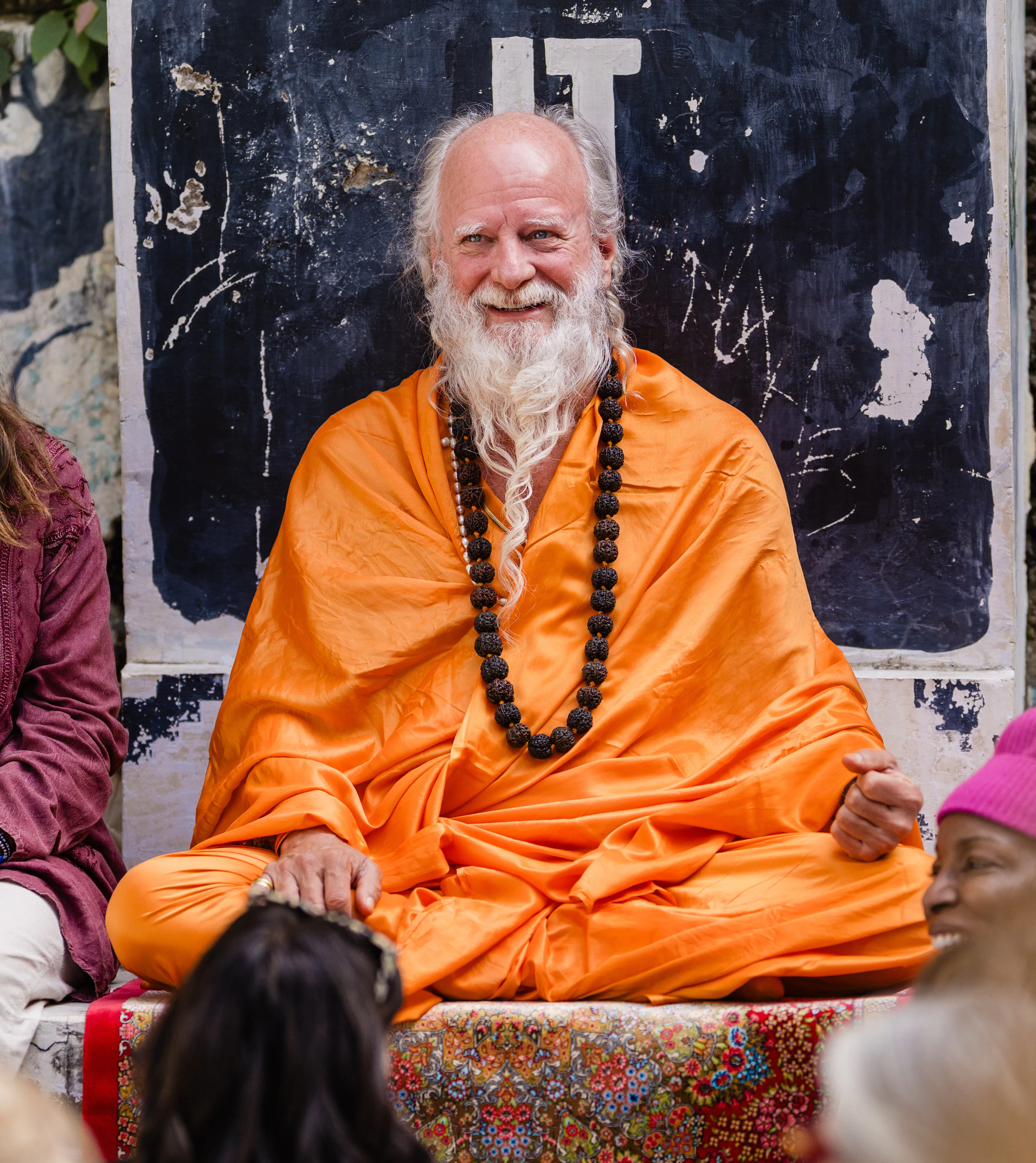
“If reparations can be made for the past, then go for it. Otherwise, just spinning the wheels and not actually getting anything progressive done is also a crime.”
Thom Knoles
What do we do with guilt and shame about the past? In this episode, Thom responds to a guest’s question with a question of his own: is there a call to action or not? He considers what happens when we judge who we were through the lens of who we are today, when reparation is called for, and what to do with the shame of not suffering while others are.
Listen to or watch this episode for a refreshing perspective on guilt, shame, and where our attention belongs.
You can also watch this episode on YouTube here: https://youtu.be/TtuaVmwa_PU
Episode Highlights
01.
Q – How do we handle guilt and shame?
(00:47)
02.
A – Is There a Call to Action?
(01:06)
03.
Judging the Past with Today’s Lens
(03:58)
04.
Stay Present and Let the Past Go
(07:09)
05.
When You’re Ashamed of Not Suffering
(08:49)
06.
What Breaks Your Heart?
(10:47)
Jai Guru Deva
Transcript
What We Need To Do About Guilt And Shame
[00:47] Q – How do we handle guilt and shame?
GUEST:
My question is, how can we understand and deal with guilt and shame, particularly… well, whether it’s everyday or what may come from unstressing?
[01:06] A – Is There a Call to Action?
THOM KNOLES:
I think that we need to understand, is there a call to action or not?
If we start getting over-intellectual about potential shortcomings, where we might have been able to act in a way that was helpful but we didn’t, or we acted in a way that was not helpful or obstructive or harmful… If we start getting very intellectual about it, let’s get super intellectual about it. You’re probably examining only 10% of the violations.
With all the things that we could be guilty and ashamed of, that’s just from your perspective. The Cosmic perspective would possibly be that there’s 10 times that much. You’re just thinking of the surface stuff.
And so, is it forgivable to be evolving? Evolution means from less sophisticated and less capable to more sophisticated and more capable.
And so then, if we acknowledge that progressive change or evolution is the theme of everything, and I’d love to hear any argument that puts it otherwise, because we could have a conversation that would go on through the night. And I promise I wouldn’t argue, I’d listen, but I don’t think I’d be all that convinced. Evolution is thematic.
In order for evolution to be thematic, there has to be a state, a state of consciousness, where we were less aware, less conscious, less capable of serving the evolutionary need than we are now. There has to be.
If you’re more evolved now, that means you were less evolved earlier. How far back do you want to go into how incapable you were of identifying correctly what the need of the time was?
And so for us to feel guilty and ashamed that we were in a lesser state of consciousness before than what we are now is really a waste of time. What we need to do is be in the present moment and forward-looking.
You know, whatever it is that may have happened in the past, and there’s absolutely nobody who doesn’t have a shameful past. That’s a fact. We might have varying degrees of being able to obscure it, or varying degrees of not having to think about it.
[03:58] Judging the Past with Today’s Lens
But because we were less evolved, looking through the lens of today, the lens of today is not the lens we had then. We didn’t have the lens that we have today about the impact of omitting action or the impact of committing actions.
We have today’s lens. And if we take today’s lens and move it back into the past, as if we could have had it then, the answer is you couldn’t have had it then. You couldn’t. You’ve got today’s state of consciousness and you’re judging yesterdays, all the yesterdays, with today’s lens. And it’s not a very adequate way of doing things.
If you do do it, when you do it, there’s nobody who doesn’t have all kinds of things of which they could be ashamed by using today’s lens. But we didn’t know. Maybe we can say, “I should have known,” but should have… You can’t stop somebody, and we couldn’t be stopped in those times, from behaving according to our level of consciousness. Not possible to stop it.
By today’s standard, whatever you did or didn’t do, because it’s both, right? Maybe we should have done something and didn’t, or could have and didn’t, or we did something that actually, it turns out, was inappropriate or unsustainable. There’s no end to it, the self-examination. And there’s no end to the degree to which we can condemn ourselves for having been in a lesser state of consciousness once upon a time.
And so it makes much more rigorous intellectual sense to climb into the present moment. And from the present moment, use the lens of state of consciousness you’re in now to be of maximum effective use to evolution. From the present to the future. Don’t take that lens into the past. It’s just a completely illogical thing to do.
How far back do you want to go? According to the Vedic worldview, you’ve only been a human a certain number of lifetimes. Do you want to go all the way back to when you were a jackal and you ate a child in a village who was screaming, “No, no”? Do you want to go all the way back to a time when you were a maggot, drilling through the nose of a poor innocent dinosaur?
Do you want to go all the way back to when you were a bacterium? Killing… a killing bacterium and you were just so self-indulgent, trying to stay alive as a bacterium, so self-indulgent. How far back do you want to go with this lens of judgment?
[07:09] Stay Present and Let the Past Go
Keep the lens in the present. Keep the lens in the present and angled toward the future, and do what you can do in the state of consciousness you’re in now, and let the past go. Let it go.
Unless there’s a call to action. And what would that be? Is there a call for you to make reparation? Is there a call for you to make reparation? Maybe there is. And if there is, then it’s a good idea. It’s a good idea to do that.
But if there’s no potential for reparation, if there’s no possibility and there’s no call just to look back at the past and feel ashamed, right now, Nature is saying to you, “Please engage.”
But here we are, ruminating over the past, and we’re violating the laws of Nature right now, because our consciousness is not in the present. And the present is where it’s at. The present is where it’s at. The past is not where it’s at.
Unless there’s something you can look back upon and say, “I really… I could make things better by making some kind of reparation, I could.” But if there’s no potential for that, let it go.
Stay in the present and get relevant now. Get relevant. It’s not relevant to be examining the past infinitely. It’s just not relevant. It’s too much.
[08:49] When You’re Ashamed of Not Suffering
Now, what about feeling ashamed of not suffering? “I’m not suffering and other people are. I’m so ashamed of it.” What do you do about that?
Take your knowledge base, whatever it is that you’re doing, whatever it is that is you, that’s making you not suffer as much as others. Find whatever that is and figure out how to bring it to others.
It’s not enough just to feel bad that other people are suffering more than you. It’s a call to action. Dive in, figure out how to make yourself an effective tool to decrease the state of suffering of others. And the best way to do that is to raise people’s capability. Get them into a higher consciousness state so that they can also, just like you, suffer less than average.
And so this is how we deal with present-moment shame. “I’m ashamed of the fact that there are people suffering everywhere and I’m not.” Alright, that’s a call to action. You need to do something about that.
And so the behaviors that we engage in largely need to be present and future. If reparations can be made for the past, then go for it. Otherwise, just spinning the wheels and not actually getting anything progressive done is also a crime.
If somebody’s too busy thinking about how ashamed they are of the past that they’re not answering the call in the present, this is also a crime. And they’re going to regret it later. So we need to get in the present moment as much as we can. Get in it. Dive into it.
[10:47] What Breaks Your Heart?
Some of you heard this story because I told one person today in a private consult, so forgive me for repeating it, but there was a woman who came to me and said, “I took your charm course. I can’t find any charm. I meditate twice a day. There’s absolutely nothing charming at all. Absolutely nothing. I don’t feel like doing anything.”
And I said, “Well, let’s look at the aversion side of it. Aversion is the opposite of charm.”
She goes, “Well, I don’t really know what that means. I don’t feel averse to anything.”
And I said, “Well, is there anything that breaks your heart?”
And her answer… her eyes immediately filled with tears. And she said, “Yes, there is.” She said, “I went to a fundraising thing and I accidentally saw a documentary. I didn’t really intend to see it, I just went because there was somebody there I wanted to meet.
“And it was a documentary about a generation of African kids who were born with congenital AIDS. Their parents had AIDS and they died. And these children were left in orphanages with AIDS, but with very little medical care. And it was the saddest scene I’ve ever seen.”
And I said, “What are you doing here?”
She goes, “What do you mean, what am I doing here?”
And I said, “Why aren’t you there? Why aren’t you there?”
And she said, “You mean I should go there?”
I said, “Or come up with an alternative. What alternative do you have? You don’t find anything charming at all. You need to go there.”
She’s there today. And she is the head of a United Nations program, managing non-governmental organizations, creating awareness of the use of condoms through radios that you can wind by hand, that don’t require electricity, so that you can be educated when the condoms fall down from the sky in the crates, instead of wondering what they’re about and kids running around making water balloons out of them.
People blowing them up and letting them zoom around the room and all of that, that there’s actually radio education, which there couldn’t be because there was no electricity or batteries to run the radios.
And she’s working with this guy who’s invented the wind-up radio. You wind it and wind it, and then you get two hours of radio play. And then let’s get some programming on there that educates people about the use of these things, and also bringing aid to those children in those orphanages and fundraising worldwide to get various kinds of medicines that will help people live with AIDS. This has now been going on for seven, eight years.
So what’s the call to action? Get into it. Take that mighty brain of yours and do something different. Just make something happen. But we don’t want to be sitting around just rolling in the mud of shame. We need to action. Action.