
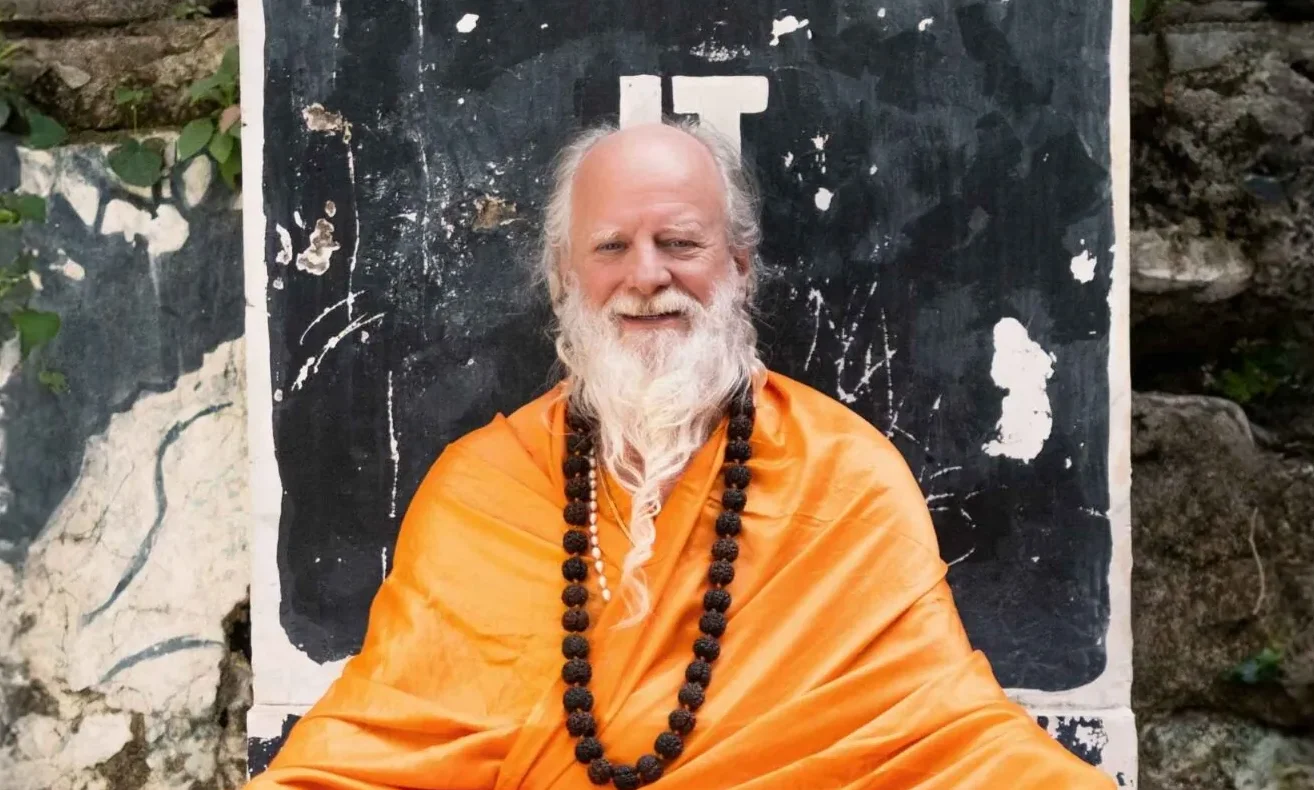
“Someone who meditates twice a day becomes very good at letting go of rigid attachment.”
Thom Knoles
One of the biggest causes of suffering in our lives is the fact that nothing lasts forever. It’s not only true that all good things must come to an end, but all things must come to an end.
In this episode, Thom reminds us that Nature has the final say on what is, and what no longer is relevant in the natural process of evolution. Rather than resisting Nature’s timing, our suffering is reduced or eliminated if we embrace Nature’s timing.
Once again, Vedic meditators have a natural edge in putting this into practice.
Listen to the full episode to explore the complete teaching, or watch it on YouTube here: https://youtu.be/99fcBENajAs
Episode Highlights
01.
Evolve
(00:45)
02.
You Are a Production
(03:58)
03.
A Universe That Wants a Story
(06:03)
04.
Constant Atomic Exchange
(07:48)
05.
Identifying Irrelevancy Through Vedic Meditation
(11:26)
06.
Constant Relevance Refreshment
(14:14)
07.
The Dangers of the Ever-Repeating Known
(17:15)
08.
Disruption and Relevance
(20:19)
09.
Letting Go of Rigid Attachment
(23:13)
10.
Contextualizing Pain
(25:45)
11.
Welcome to the Solution to All Problems
(30:34)
Jai Guru Deva
Transcript
When Is The Right Time To Let Go?
[01:30] Evolve
Thank you for listening to my podcast. I’m Thom Knoles. This is the Vedic Worldview. I’m often asked about this concept of relevance or irrelevance, and for that we have to have a broader understanding of what evolution actually is.
Evolution is a fundamental force of our universe. It is the Cosmic law. The Cosmic law, if we could put it into a one-word sentence, is: Evolve. Full stop. Americans say period. Evolve. Period. Capital E, Evolve. And this is the requirement.
What does evolve mean? Everything has to move from being, all forms, all phenomena, and all relationships between forms and phenomena. This is how we cover absolutely everything, a form, a phenomenon, or relationships between forms and phenomena. This covers everything. This is an all-encompassing statement. Every form, every phenomenon, every relationship, the wholeness of all of that has to move forward and assemble ever increasing sophistication.
Sophistication is a scientific term which could be described, I describe it as taking simplicity and making it increasingly complex. Complex does not mean complicated. Complex, and then integrated complexity which performs a function, then that is sophistication. Integrated complexity that performs a function.
A function with reference to what? Progressive change. Progressive change is the kind of change that occurs when multiple systems, forms and phenomena, relationships between them, are combining and permuting in ways that is assembling sophisticated, integrated, forward functioning.
[03:58] You Are a Production
So how do… you’ve got trillions of atoms making up your body and how do those atoms assemble themselves into a human nervous system?
And by the way, it was not once upon a time. They are doing it all the time right now. How is it, what are the mechanics by which the atoms right now are assembling themselves to become your cells?
And your cells are constantly dying. You have 70 trillion cells. It is a lot of cells, and about 200, 300 million of those die every day. Through natural attrition, skin cells, muscle cells, and so on, and they are replaced by new cells. New cells are being produced every day.
Where is all this cell mass coming from? Well, it is coming from atoms that combine and permute to create molecules that make the jump into being your cells. It is going on right now.
Right now you, your individuality, is a production. You are being produced right now. You are issuing forth from the underlying unmanifest Unified Field. You are manifesting right now out of that Unified Field. It is not a thing that happened once. It is a thing that is ongoing.
And in order for something to continue to be supported, that thing, whatever it may be, form, function, relationship, has to be obedient to the Cosmic law to become more sophisticated. More sophisticated.
Let us remember ever increasing complexity, integrated into a function, a function of movement towards elegance.
[05:58] A Universe That Wants a Story
And then what is all this about? In aid of what? Why is it all happening? Because the one indivisible whole field wants to have a story.
“Is it bedtime? I have to have a story. Tell me a story. Tell me a story.” That thing that we see in all of us is also the nature of the field. It is kind of boring just being one indivisible and whole and not having sequential elaboration where there is the creation of the so-called non-self, so-called, that then finds its way back into realization of being Self. That is the whole story of creation right there.
So if there is a thing, a form, a function, a phenomenon, a relationship, that is functional with regard to that thing, then while it is functional, it is relevant.
Relevance has a phenomenon attached to it, which we are going to call maintenance operator function. It is maintained. It is maintained. It is maintained so long as it is functional with reference to the Cosmic law, evolve.
And so relevance has to do with sustainability of a form-function relationship, so long as it is producing ever increasing sophistication, ever increasing assembly of complexity, with integration, function towards evolution, that thing is relevant.
[07:48] Constant Atomic Exchange
When a thing becomes irrelevant, it has stopped yielding functionality, but it is continuing to eat up resources. The resources of the universe, all the atomic and molecular and cellular resources, and all of that that has to go into the constant forward movement. When a thing has failed to yield functionality with reference to the Cosmic law, evolve, then that thing begins to be subject to and begins to attract the disintegration function, which is sometimes called destruction operator.
I do not really like the word destruction that much because it sounds wanton. But it is relevant if we think of it as something got integrated, now something is being disintegrated, because disintegration is occurring due to it having once been a relevant, functional combination of things, which is no longer yielding, making any contribution to that forward phenomenology.
And so disintegration is occurring and there is a recycling by the way. Recycling was not invented by humans. The reaving apart of molecular structures, the reaving apart of atomic structures and reassembling them. The atoms that surround the Earth are constantly recycling. Every one of us, every time we take a breath, is breathing in or breathing out atoms that once upon a time were the body of Genghis Khan, or Jesus Christ, or the little shoeshine guy in a podunk town in wherever.
We are all in constant exchange. We are in atomic exchange. Our atoms disperse, and then they reassemble and recycle into new relevant forms and functions.
So when something is irrelevant, what does it mean? No longer yielding, no longer being productive of forward evolution, progressive change. And so then it is going to attract those operators of Nature which disintegrate atomic and molecular function and disperse it all and reassemble it.
And so then we live a life in a very practical sense of whether or not our minute-to-minute behavior, our thoughts, our reckonings, our feelings, our attachments, the things that cause us to have repetitive thinking, to what extent are those relevant?
[10:56] Refreshing Relevance Through Vedic Meditation
Then, how do we get relevant? In other words, how do we identify irrelevancy?
The best thing to do is to learn how to transcend. To transcend means we step out of isolated form and function. In the practice of Vedic Meditation, you learn how to do this transcending thing. Go beyond. Transcend. Go beyond is what that means.
It means you sit in your meditation practice, which my dear listeners and viewers, if you have not yet learned it, look up thomknoles1dev.wpenginepowered.com/ and ask one of my colleagues, where is the closest teacher of Vedic Meditation in my region?
And they will send you to somebody who will teach you how to sit comfortably in a chair, close your eyes, allow your consciousness to step out of the thought field and to experience oneness with the unmanifest Unified Field, which that field constantly is issuing forth whatever new forms and functions are relevant to the current moment.
So when you unify with that field in your consciousness, of course, mind body, they are connected, obviously. Consciousness is producing this body. This body is being produced by our consciousness. So when we settle down into that transcendental Unified Field function, as we come out, we are going with and picking up the thematic behavior of what is now being manifested to cause evolution to occur.
We are not caught in what was once upon a time. Once upon a time might have been yesterday, or it might have been this morning, or it might have been 10 minutes ago. Once upon a time relevant, but no longer relevant, behavior, thinking, emotions, and all of that, appetites for things.
So then, what we are doing is we are refreshing our sense of what is relevant, and when we come out of meditation, you only practice it for 20 minutes, morning, evening, twice a day practice. Every time you meditate, you are refreshing your sense of what is relevant, and thoughts which had been relevant, but no longer are relevant, stop coming.
[13:14] Constant Relevance Refreshment
And thoughts which may be continuing to be relevant, they get strengthened. And behaviors, desires, emotions, and all of that, which are useless to the process of evolution, they drop away. And so you have this relevance refresher. You refresh your relevance.
Not only your relevance, but the relevance of your consciousness state and what it reckons itself to be, and what your consciousness state reckons it should be instructing itself to do or not do. This is constant relevance refreshment.
So Vedic Meditation can be seen in that light. We could look at it in a different way. If we want to look at it from a kind of a negative, slightly fear-based angle, and we will not hover in that zone for very long, but we can look at it this way for a moment.
“I do not want to disintegrate. I would love to continue to be a relevant form, a relevant function, a relevant phenomenon. I, my totality, I would like to continue being relevant to evolution. I would like to be attracting of the maintenance operator and the creativity creation operator, inventive and innovative operator. And I would prefer if the disintegration operator was not the main thing going on in my life. Like everything is falling apart.”
So how do I make that arrangement? I refresh myself with relevance every time I practice Vedic Meditation.
And who is this Self inside? Well, that is changing all the time too, is it not?
You know, once upon a time you were a little kid and you thought, “If only I could get that special kind of electric toothbrush that my friend has that lights up and whistles a little song when I play it, then I will be really happy.” And you got the little whistley-tune toothbrush and within three weeks or so, the bristles were all out like this and it was over in the corner, covered in the sand, sitting next to your boogie board.
What happened to the great thing that was going to save your life? It is kind of discarded. It is over there on the side somewhere. It is going to end up being back in the recycling bin.
So are you that same kid? Obviously not. You have graduated to a greater, more relevant hierarchy of a sense of functionality, what is useful, what is not, and what is worth doing and what is not worth doing. What is worth leaning into and what is not worth leaning into.
[16:15] The Ever-Repeating Known
Now, this has been happening already in your life, but I am going to put it to you, if you do not practice Vedic Meditation, you are a little slow on the uptake. In other words, you are hanging onto and continuing to think and behave and breathe and move and eat in all kinds of ways that may once upon a time have been relevant to a state of evolution that you were in once, but now something else is being demanded of you. Evolution is demanding something of you.
So what happens in evolution? It is very interesting. I learned this from Professor Sarah Walker, who was the author of Assembly Theory at Arizona State University, and who is going to be speaking at a symposium that I am helping to organize sometime in the next year. She is a physicist and an astrobiologist. Fascinating woman.
And so, a steady state of evolution, steady state, steady state, steady state of a form, a function, a particular, let us say a human. Just to make this very specific to my viewers and listeners. There is this movement forward.
It may be that that movement forward of that individuality is in fact obedient to, and is getting a kind of an A+ rating in the evolutionary stakes, adopting progressive change and challenging assumptions regularly, and letting go of irrelevant behaviors, adopting new behaviors, being adaptive and moving forward.
Or it may be that that specific form that is you is, with reference to how the rest of the universe is assembling itself, you are going too slow. So what happens? You will attract to yourself a disruption. Something will come in from that which is all moving forward faster than you, and it will disrupt your assumptions, disrupt the regular programming, disrupt what I refer to as the ever-repeating known.
The dangerous thing is the ever-repeating known. The stagnation. And when that disruption happens, there is a test. To what extent are you able to harness the disruption to cause adaptive forms and functions to appear? Or to what extent are you going to resist the disruption and be defined by the disruption, and fail to meet the test of forward movement, and thereby attract disintegrating operators to you?
[19:19] Disruption and Relevance
Disruption causes one of two outcomes. One is, you get knocked off the regular programming and you become adaptive. Or disruption can have another impact, which is you change, but you change in the opposite way, which is through decay. You fall apart basically, disintegrate, so that you are not using up the resources of the universe and maintaining something that is no longer relevant.
So then what happens when we practice Vedic Meditation? We tend to have fewer disruptive phenomena because, on an average, a Vedic meditator twice a day refreshing their relevance is moving forward at a pace that matches the pace of the surrounding universe.
The 2 trillion galaxies hanging in space, all assembling themselves into ever more sophisticated forms and functions. And you are basically not dragging your heels. You are moving forward and at a progressive pace. You are letting go of that, purifying, normalizing, letting go of, exfoliating irrelevancy, and moving forward and being adaptive and all of that. And so then you do not tend to attract disruptive influences anymore that test your relevance, test the relevance of your thinking.
So the moral of the story is learn how to transcend. You cannot manage your life by second guessing what is relevant. By second guessing it, I mean using the little dinky human intellect to try to figure out what is going on and what is my role in all of it?
That is not a functional way, because your little human intellect, teeny little human intellect, the same human intellect that arranged all the stresses for you that you have accumulated in your lifetime. The same intellect that set you up to inadvertently violate laws of Nature and causing cascades of suffering.
That same little intellect is not gifted with comprehensive intake of all of the forces of evolution that are required in order for you to be relevant. And so we cannot use the intellect alone just to do that. We have to learn how to transcend our individuality, unify with the Unified Field in our meditations morning and evening, and then come back into life, and watch what happens.
[22:13] Letting Go of Rigid Attachment
You become strong in life-supporting behaviors and thinking. And the life-damaging thinking, irrelevant thinking and irrelevant behaviors, begin dropping off. And when they drop off, you do not look back at them and go, “Oh, I am so glad to be rid of that.”
No, something that was once upon a time relevant was relevant for its day. It was relevant and maintained for a period of time because it played a role in the ever elaborating storyline of evolution. Anything that existed had to come into being on the basis of it being relevant for it to come into being. But for how long is it relevant? How long is it relevant?
And so to have that constant refreshment of relevance, we need to practice Vedic Meditation and learn how to transcend every day, and then pay attention. When, this is the correcting of the intellect function, when we find change happening, do not get rigidly attached to old, now irrelevant styles of thinking, trying to pump more air into the little floaty thing that you use in the swimming pool when you can see that it has got holes in it anyway. It is just like trying to keep it alive.
If we learn how to transcend every day, we become very good at letting go of rigid attachment, rigid attachment to things that no longer are relevant.
So then that makes you dynamic. Somebody who is dynamic is somebody who is really up to date in the way they are thinking and behaving. They are regarding of their fine level of feeling. They are regarding of their preferences, because if they meditate twice a day, anything that continues to be relevant just gets stronger. And anything that is not relevant, it gets weaker and less attractive as each progressive day goes on.
[24:45] Contextualizing Pain
So this is our explanation of relevance versus irrelevance. This is our understanding of evolution and what the heck is going on in this universe. What is it actually up to? And what all the mechanics are of having a life in which there is a minimization, a minimizing of unnecessary suffering.
And I say unnecessary suffering because if I go to my massage therapist or my chiropractor, she might say, “Alright, because you have been sitting there on that couch with your legs in a pretzel position for so many hours giving those podcasts, we are going to really work on your hips right now.”
And I am like, “Okay. That is going to be an interesting sensation, but I will go with it.” And she might get right in there with her elbow and start releasing things. Now, if I was a little kid, like I can remember being one once, like six or seven years old, and somebody started sticking their elbow into my hip, I would be shouting to the rooftops.
But now when my chiropractor says to me, “Are you okay with this? Usually this causes tears.”
I go, “My tears are coming because it is going to end.” I do not have tears of suffering, and the powerful focus sensation of it actually makes me laugh. It does not make me cry.
So it is a powerful sensation. When I call it pain, pain means that is a sensation which I do not want to have because I do not understand it. When I understand what it is, I call it a powerful focus sensation that I am fully into, and I am going to pay you extra today because you did such a great job.
So the contextualizing of sensations, it does not mean that as you gain more and more illumination in this regard that you begin living a bland life in which there is no variation of sensation basis. Of course there are variations of sensations and we are into it because we meditate twice every day.
We can sense what is necessary in order to keep things moving forward in a progressive fashion. And some of those things have sensations in them.
Are they pain? Pain is a very pejorative word. Pain means I am having a sensation and I would rather watch TV. I am having a sensation and I would rather eat my sandwich without it. I am having a sensation and I prefer to ignore it and not attend to it in any way.
So I like people to lose the word pain and start using the word focus sensation. A powerful sensation that is information filled. It has a tremendous amount of information in it about the necessity for localized change.
And so pain is like, pain is a thing, you want it to go away, you go into the chemist, as we say in Commonwealth countries, in America, we say pharmacy, and there are rows after rows of things to do to make your pain go away.
How to not experience the information base about localized change. How to stop experiencing the information base about localized change. Pain killer. And I want maximum strength. It is so interesting how they all have on their label “maximum strength.” You are never going to see one that says moderate strength or low strength. So always maximum strength.
Why? I want to do what I want to continue doing, and I do not want to be annoyed by Nature trying to inform me about anything, because I have got other ideas about what I want to experience.
So then, when Nature starts turning up the pain dial, the sensation dial. You know it was at three, but you did not pay attention, so now it is going to go to five and you are still not paying attention. So now it is going to go to nine and you are still not paying attention. What is it going to take?
So, is pain, pain? Pain is when you do not want to experience it. Sensations. Sensations that require attention. Pay attention. Give them attention.
[29:34] Welcome to the Solution to All Problems
So, life is not going to be sensation free. There will be emotional sensations, heart sensations. There will be all kinds of things that are informing you of transition occurring. Transition is occurring. Phase transitions are occurring.
And when we ignore phase transitions, then the sensation dial gets turned up and we start calling it pain. “I am in pain, I am in pain.” That means you are late in the piece in paying attention to a phase transition that needed to get done. So stop ignoring. Embrace it. Embrace it.
So. Vedic Meditation twice a day. Once again, our solution to everything. Solution to all problems.
My teacher, Maharishi Mahesh Yogi, had for a while headquartered himself in Switzerland for about nine years, and he had a banner hung up outside the place where he gave his lectures every day.
And the banner was a fantastic banner. I will never forget it. “Welcome to the solution to all problems.” And you had to walk under that banner to walk into the place. Fantastic. Such confidence.
Jai Guru Deva.
