
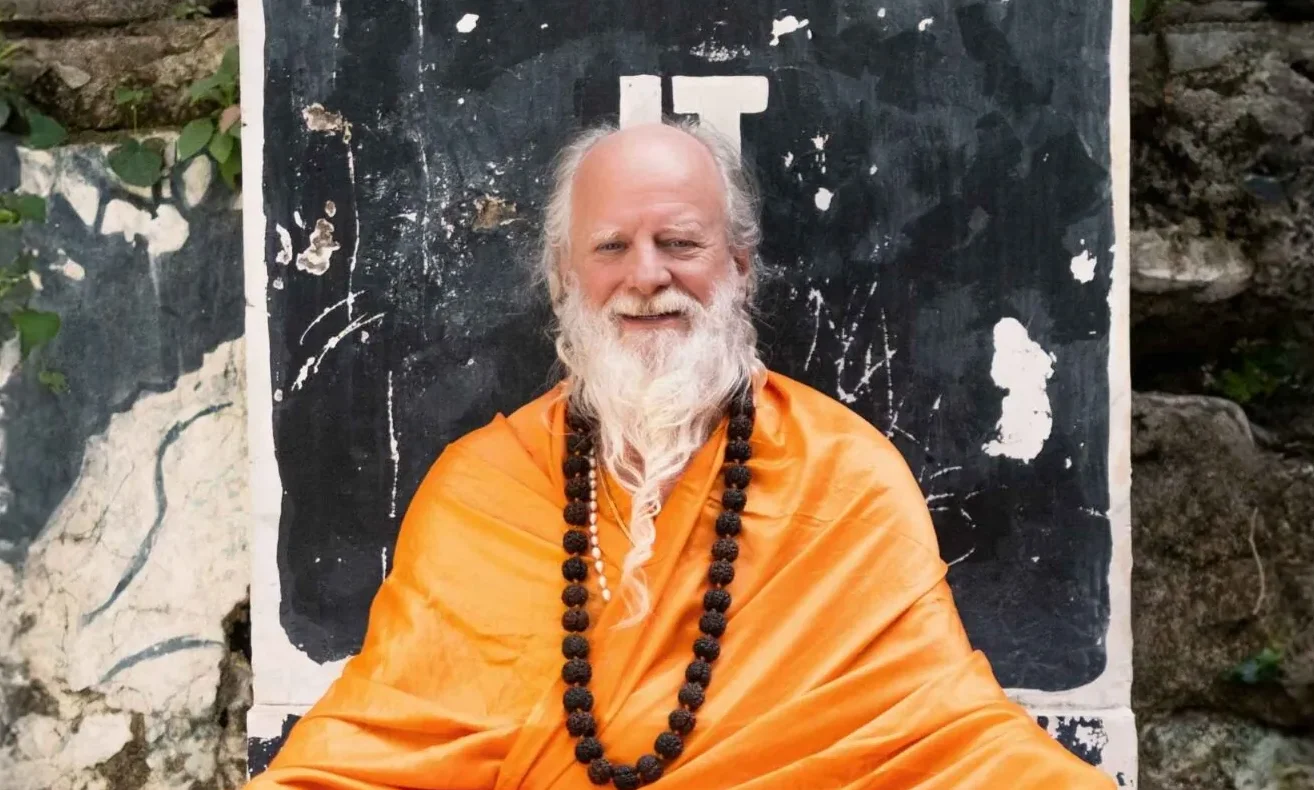
Do less and accomplish more is a familiar adage amongst meditators and an essential concept in reframing the understanding of ‘productivity’ through meditation. Recently one of our Vedic Meditators had questions about this phrase and sought Thom Knoles’ insight.
What is the meaning of the phrase? What does it mean to accomplish in this context? Is this a way to accomplish a task more quickly?
We’ve shared his thoughts here.
Question:
Can you clarify the phrase “Do less, accomplish more, do least, accomplish most, do nothing, accomplish everything”? I feel meditators misinterpret this phrase and thus behave in a spiritually lazy manner.
Thom’s answer:
When we say, “Do less and accomplish more, do least and accomplish most, do nothing and accomplish everything,” we want to be very clear about what this means.
There’s a second part to each one of those statements:
Do less and accomplish more.
Do least and accomplish most.
Do nothing and accomplish everything.
So, if we do not “accomplish more” when we are “doing less,” we do not follow the adage properly.
DO LESS and ACCOMPLISH MORE
“Do less and accomplish less” is not what we’re saying.
We’re not saying, “do least and accomplish least.”
The quote is not, “do nothing and accomplish nothing.”
We’re saying do less and accomplish more, do least and accomplish most, do nothing, and accomplish everything.
Now, what can this possibly mean?
It means that there’s a test.
The test is built into this adage as to what the anticipated result would be.
Archimedes and his lever
Here, we’re looking at something akin to how Archimedes described the use of a lever. Levers move great masses, such as a large boulder, that can’t otherwise move by body weight alone.
How does a lever work? First, take a long pole and a fulcrum. You insert the narrow end of the pole underneath the boulder that you wish to shift. You position the fulcrum underneath the pole.
Now, using only your body weight, you begin to push down at the longest end of the pole, and the boulder now moves easily. The lever completes the work (moving the boulder) with minimal effort (use of a lever).
This is how we do less and accomplish more.
How to do least and accomplish most
Do least and accomplish most. What can that possibly mean?
We use the least amount of action achieving the maximum amount of effect. Sometimes this is thought of as working smarter, not harder. This is how we have leveraged the use of technology.
Suppose I want to find out what the weather is going to be. I could race all around the neighborhood and ask old-timers to look up at the sky and tell me, based on their experience of previous periods and almanacs that they may have kept, what tomorrow’s weather will be. That’s a lot of activity to get a minimal amount of information (which is sketchy at best).
Or, I could open my trusty iPhone, tap on a weather app, and instantly, I can harness the expertise of hundreds of scientists, and data from a weather bureau, and receive a reasonably accurate forecast about what tomorrow’s weather is going to be. I’m doing least and accomplishing most.
Do nothing, accomplish everything
What about doing nothing and accomplishing everything? Is it at all possible?
Nature simply and innocently witnesses its infinite organizing power, issuing forth into all of the activity that’s needed to create the history of the Universe. This profound observation underscores the importance of aligning ourselves with the Universal consciousness state to achieve sustainable long-term success.
According to the Vedic worldview, we aspire to that Universal consciousness state. Universal consciousness is well within the reach of a human. By practicing Vedic Meditation, we can align with Nature’s infinite organizing power, thereby achieving productivity through meditation.
“Do less and accomplish more” does not permit meditators not to do anything. If you are not accomplishing more, then there is more work to be done.
“We actually do far more than we need to be doing and get only tiny amounts of productivity out of all of that doing.”
Thom Knoles
What are we meant to accomplish?
What does accomplish mean? What is the accomplishment? It’s incumbent on us to accomplish a lot.
As a collective, we’re born with a massive brain of hundreds of billions of neurons with infinite potential. Because we accumulate stress and do not practice useful techniques to explore our optimal brainpower, we waste a tremendous amount of our potential.
We actually do far more than we need to be doing and we get only tiny amounts of productivity out of all of that doing. We often equate successful people to the amount of time they spend working. And these people often consume huge amounts of time and energy in their days, which is not sustainable long term.
We arrive at this recommendation for personal success: Do less and accomplish more to improve efficiency and maximize progressive change. By establishing a twice-daily practice of Vedic Meditation, we can begin this process of optimizing our productivity and our contribution to the evolution of everything. Transform your life through mindful meditation and make productive use of your brainpower and consciousness state.
In order to feel more accomplished, make productive use of your brainpower and consciousness state. We want to have evidence that our doing less has, in fact, accomplished more than what we accomplished before.
You’re invited to learn from Thom Knoles from anywhere in the world, through the only Vedic Meditation podcast that discusses all areas of life through the lens of the Vedic Worldview.
