
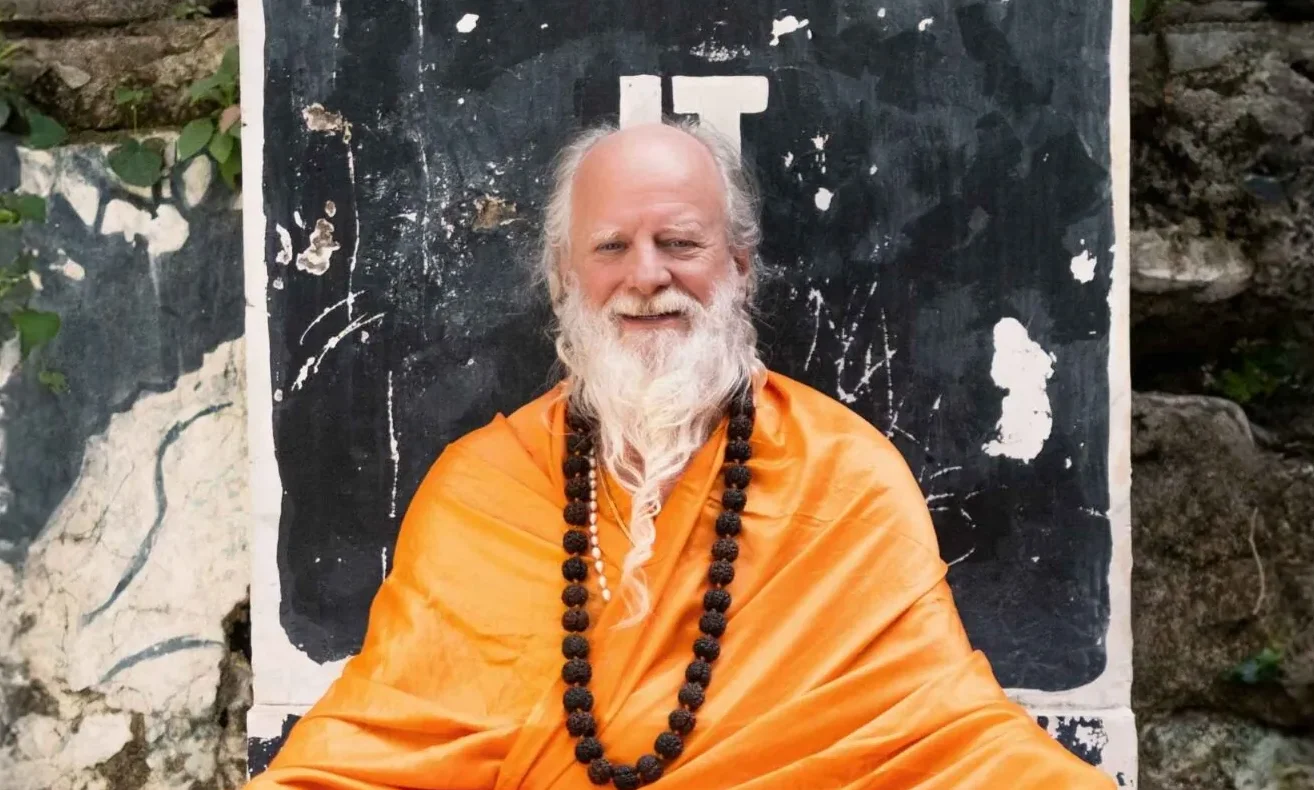
“The ego is innocent. You can’t get rid of it..”
Thom Knoles
Is the problem ego, or our misunderstanding of it? In this Ask Me Anything episode, Thom responds to three big questions: how to balance eliminating the ego with having a healthy self esteem, whether consciousness can move backward through time, and how compassion differs from enabling.
Along the way, he connects self-esteem, spiritual evolution, past lives, and compassionate boundaries to the regular practice of Vedic Meditation.
Listen to or watch this episode for a clear Vedic perspective on identity, evolution, and what it really means to love wisely.
You can also watch these episodes on YouTube here:
https://youtu.be/rTPOZIkfJHs
https://youtu.be/JCmG5lNb8AM
https://youtu.be/6jx9tXrwhjA
Episode Highlights
01.
Q – Can ego and self-esteem coexist?
(00:45)
02.
A – The Ego Cannot Be Erased
(00:52)
03.
The Mantra Turns Inward
(03:38)
04.
Purifying the Individual Ego
(05:46)
05.
Enlightenment and False Identity
(08:58)
06.
Q – Can we reincarnate backwards in time?
(11:22)
07.
A – Evolution Does Not Reverse
(11:30)
08.
The Universe Has a Larger Now
(13:58)
09.
Evolve. Period.
(16:07)
10.
Revisiting the Past Consciously
(18:10)
11.
Q – Is tough love compassionate?
(20:01)
12.
A – Compassion Refuses Enabling
(20:07)
13.
Support What Sustains Life
(24:05)
14.
Compassion Arises Spontaneously
(26:11)
Jai Guru Deva
Transcript
Ask Thom Anything: Ego, Reincarnation, and Tough Love
[00:45] Q – Can ego and self-esteem coexist?
How do we balance getting rid of our ego versus having a healthy self esteem?
[00:52] A – The Ego Cannot Be Erased
So getting rid of our ego is a very Western psychology mentality that’s, from the Vedic perspective, completely impossible.
From the point of view of Vedic psychology, we think of ego as having a function at a layer in our individuated consciousness state.
Individuated consciousness state means largely the human consciousness. Surface layer of it, the umbrella, is mind. Next layer is intellect that says yes or no. “Is this of the self as I know it, or is this not of the self as I know it?”
Third layer, fine level of feeling. Now we’re getting down deep into the deep consciousness of the individual human individuation.
Below the fine level of feeling, we have individual ego structure.
Now, what is individual ego structure? All it is, is a field that receives through the senses, goes past the intellect, goes past the fine level of feeling, an experience lodges itself in the ego that gives the ego, gives the sense of self an identity.
The ego is innocent. It just happens to be littered with all of the experiences that you’ve had so far.
And it is is a holding, it’s a holding field. It holds all of the experiences you’ve had and creates out of that a sense of who you are and what you are based on what you’ve experienced so far. You can’t get rid of it.
[03:38] The Mantra Turns Inward
So what do we do in meditation? Underneath the ego is another ego. Underneath the individual ego is the Cosmic Ego, the Cosmic Self. That Cosmic Self, that Cosmic Ego, has Totality Consciousness in it.
So here’s the individual ego, and it’s outward looking. It only looks outward. The senses brought something in, the mind looked at it, the intellect looked at it, fine level of feeling looked at it. If it gets past all those filters, it lodges into the ego. What you see, you become. Ego is littered with all the stuff that you’ve seen. That means seen, tasted, touched, heard, smelled. All of those experiences are in here.
Now here comes the mantra. You’re practicing Vedic Meditation. Mantra, meaningless, beautiful, mellifluous sound. But it pulls the awareness inward.
And as it pulls it inward, what happens? The ego watches it. It got past the mind, it got past the intellect, it got past the fine level of feeling. Mantra is completely innocent. And the ego begins to turn. And the ego watches, and then the mantra disappears.
And the ego is left facing only the Cosmic Self. Individual ego here, and it’s facing the Cosmic Self. And that Cosmic Self imprints on the ego because the ego has no filter now. There’s no intellect filtering anything. There’s no fine level of feeling filtering anything. Just Cosmic Self imprints on it.
[05:46] Purifying the Individual Ego
Now, when that happens during meditation, after meditation’s over, the individual ego looks outward again. But now it has imprinted on it indelibly a moment of being one with the Cosmic Self. Individual ego now has Cosmic and Self very delicately, but indelibly imprinted in it.
And then you start dealing with all the regular stuff in life. There are things in this individual ego, experiences you’ve had in the past, that do not sit well alongside, “I am Universe.”
See, “I am Universe” happened here. And you come out of meditation, “I am Universe” is still imprinted in the ego.
And, you know, “I am bad boy, I’m bad girl, I am bad person, I am all things that you may have heard or thought or experienced in the past,” they don’t sit well with “I am Universe.” And so they get expelled from the ego. This is the individual ego getting purified.
Individual ego, you can’t get rid of it. Getting rid of the, annihilating the ego is nonsense. Doesn’t mean anything. The ego has to remain, but what remains in it with each repeated practice of Vedic Meditation, 20 minutes every morning, 20 minutes every evening, this happens. Cosmic Self gets imprinted in the ego. Ego comes back. Anything that’s in here that doesn’t rest well alongside of “I am Universe” gets ejected.
That comes out. Now the ego is becoming purer and purer and purer. It still has individual status and structure. Individual ego still has memories of individual life and so on. But what really is held in there in the I Am-ness, in the I Am-ness, which is what ego is, what’s held in there is only that which resonates with “I am Universe.” I am Universe and I’m individual both simultaneously.
[08:58] Enlightenment and False Identity
So this is individual ego learning to merge with Cosmic Self. And this learning happens spontaneously as a direct innocent experience each time we practice Vedic Meditation.
So we’re not trying to get rid of the ego. It’s not possible. “Get rid of the ego” means you don’t have any sense of self.
What are you if you don’t have a sense of Self? It means you have no ethic, you don’t stand for anything, you don’t have any assemblage of individual talents, status, and structure. We have to have ego. But we have to have ego that is reflective of Cosmic Ego.
And for that to happen is ridiculously simple. What do you have to do? Learn Vedic Meditation and get your butt into a chair twice a day. Butt in the chair, there you are, eyes closed, practice the effortless, delicious, mellifluous technique. Mind settles down, identifies with with the Cosmic value, come out, deal with everyday life, do that again each evening, every morning, every evening. It’s not even a chore, you look look forward to it, it. I, I can’t wait to get into that chair and close my eyes and take a dive inside. One looks forward to it so much.
So it’s not a chore. It’s a, it’s not that you “have to” meditate, it’s that you “get to” meditate. You have the extraordinary advantage of being able to meditate.
And what happens is through regular daily practice, five years, six years, seven years, eight years of regular daily practice, all of the old stresses get expunged from the ego. That’s what that ego purification is, it’s release of stress.
So you get rid of all the accumulated stress. And then after having become free of accumulated stress, you’re liberated to Cosmic Self operates as if it is individual ego. Individual ego and Cosmic Self have merged. This is what we call enlightenment.
So enlightenment is that state where no more littering of the ego with useless concepts that falsely identify what you are inside. You know, All problems come from one essential problem, and that is a a false sense of identity. You know, “I am the body, I am a body that’s been through this experience, I’m a body that’s been through that experience. All I am is a body.” This is false. And, you know, therefore I am the sum total of all the things I’ve experienced. This is also false.
When you add into that experience of The Absolute experience of the Unified Field which happens in meditation twice every day, then when you say, “Who am I?” It’s no longer a who, it’s a what. What am I? I appear to be an individual, but in the backdrop of my consciousness, I’m The Universe. I appear to be The Universe having a human experience. I’m The Universe having a human experience.
Now, this is the rehabilitation of the ego. So ego can’t be eliminated, but it can be rehabilitated. When it makes false assumptions about itself this is a disease state. When ego properly assesses itself, we have everything good. Everything just fine.
Jai Guru Deva.
[11:22] Q – Can we reincarnate backwards in time?
Can we reincarnate backwards in time?
[11:30] A – Evolution Does Not Reverse
If we look at time as a totality, then depending on who the we is, you know, and in Vedanta, Vedanta meaning the final conclusion of the Veda, the most advanced way of thinking about all of the Vedic worldview taken together, time is the now of Cosmic Intelligence.
And so what does that mean? What is the now of a house dust mite whose entire lifespan is 48 hours? The house dust mite rides on little motes of dust. You can’t see them with the naked eye. You have to have a scanning electron microscope. You’re breathing them in right now and slaying them by the hundreds of thousands just by breathing. They trail around behind you, feasting on human skin that flakes off, and you leave a trail of that everywhere you go.
House dust mites. So the house dust mite that lives for forty eight hours considers the human, if it could consider, hypothetically, to be immortal. Compared with a house dust mite, my sense of now, which might now, that’s gone. Now, that’s gone. Now, that’s gone. Now, it’s approximately a second, a second and a half or something is now. To a house dust mite, what’s a now? Well, it must must be a micro microsecond, you know, because an entire lifetime, you you know, you’re an ancient old house dust mite with a walker and you know, you know, breathing through an oxygen mask and things, riding around on little motes of dust. You were born forty eight hours ago and now you’re headed for the house dust mite grave. All right.
[13:58] The Universe Has a Larger Now
Let’s take the human now, which is this: now, now.
And we go into ever larger forms and functions, ever larger statuses and structures of consciousness, and there are those that are larger and more time accumulating than the human. There must be whole universe, which is a nervous system, whole universe has consciousness. The biggest version of consciousness is Unified Field consciousness at universal scale. And its idea of now is big bang out to here, collapse back onto itself, big bang out to here, collapse back on itself, big bang out to here, collapse back in on itself. Each one of those is a now.
And so you’re living inside the now of the biggest consciousness of The Universe and your entire lifetime and perhaps all of your lifetimes taken together are nothing but a microsecond in that big consciousness. Can that big consciousness, what does it experience? It can experience easily everything that you’ve been up to and everything that you’re going to be up to, all past, all present, all future, are contained in the now of that big consciousness. From its perspective, nothing really much ever happened.
It’s able to look at less evolved versions of you and look at your current evolution and look at your future evolution as all just the consequence of a second.
[16:07] Evolve. Period.
Can you, as an individual, become less evolved? Because previous life was always less evolved than this life and future life. Evolution is the Cosmic Law. It is inviolable. It is a one-word imperative sentence, is the Cosmic Law. All other laws are obedient to it. And that word is, “Evolve.” Full stop. Americans say period. Evolve. Period.
So if evolution is an absolute requirement, can the consciousness that you’re experiencing yourself as now go back into the past and completely inhabit a less evolved version of you without any awareness of the more evolved version of you that you are now? No. That can’t happen. Because devolution can’t happen. Things can’t go backwards in evolution.
A river which is coming down off the Himalaya and winding around and looping left to right, and it’s heading south. Let’s say it’s heading south. Most of the rivers out of the Himalaya do that. And it’s making its way across through mountains, mountainous territory before it gets down to the plain, and occasionally it’ll, even though it’s heading south, it’ll curve and go east for a while, and then it’ll curve around a mountain range and go west for a while. It might even curve around and go north for a while.
But that northern moving water of that river is still headed south. Its overall bearing is is south. It’s heading, its bearing is south. It’s moving south. It might be going north temporarily, but it’s going south because it’s going to end up in the the Bay of Bengal. It’s going to end up in the ocean, and and because it’s ocean bound, it can’t go backwards and go back upstream.
[18:10] Revisiting the Past Consciously
Now, your consciousness is able, and when you have learned Vedic Meditation and you have availed yourself of one of my advanced courses entitled Exploring the Veda. Exploring the Veda, in installment number three, we spend eighteen hours discussing how it’s possible for your existing consciousness to explore and refresh and reinspire less evolved versions of yourself in this lifetime and in previous lifetimes. It’s definitely possible for the you with the state of consciousness that you are now to revisit those lesser evolved elements of this life or previous life. But for you to become absorbed in it and lose your consciousness of what you are now, that’s not possible. Because devolution is not a possibility.
And so overall, every moment you’re evolving. From the time I first started answering this question till this moment, you have evolved, everything has evolved, everything in The Universe has gone forward. And it may go forward what seems to be incrementally, but it’s moving forward. There’s no backwards movement. And there’s no standing still.
Can you revisit the past and experience it with new eyes, with a new consciousness state, with the consciousness state that you are? Yes, you can. Revisiting the past is a distinct possibility if you develop that talent. And I teach you how to do that in my course Exploring the Veda in episode three.
So there it all is for you.
Jai Guru Deva.
[20:01] Q – Is tough love compassionate?
How do we balance tough love with compassion?
[20:07] A – Compassion Refuses Enabling
Well, it depends on how we define tough love. You know, I’ve heard that people take a leather belt and beat their children and call it tough love. I don’t agree that that’s tough love, that’s just brutality. You know, so depending on how we define tough love, if by tough love we mean that we refuse to allow nascent, that means the very beginning stages of addictive behavior, to be controlling of us or of others in a family setting, if by tough love we mean we take a disciplined approach to the largest possible view, so long-term view versus short-term view, if by tough love we mean that then tough love is compassion.
If by tough love we mean brutality, then no, tough love is not tough love. That’s a misnomer, it’s just brutality.
But if somebody comes to you and with glazed over giant eyes with their pupils completely expanded all the way to the edges of the iris and says to you so lovingly, “Could I please have some money for some drugs?” And you say, “That won’t be happening, my dear child.” If that’s the kind of direction we’re going with tough love, then you know, I wouldn’t call that tough love. I would call that compassion. It is not compassionate to be an enabler of other people’s bad behavior.
If you’re an enabler of other people’s bad behavior, then then you’re being tough, meaning tough means callous. It means you don’t really care about them. If you decline from being an enabler of other people’s bad behavior, then that declining is in fact compassionate. It’s compassionate for them, it’s compassionate for you, it’s compassionate for everybody who is concerned. And so compassion and declining to be an enabler of unsustainable behavior, these two are the same thing. It is compassionate to decline to be an enabler of the negative or negating behaviors of others.
I don’t really like the word tough love because it’s misused. You You know, people belting each other and saying, “This hurts me more than it hurts you.” That’s not tough love, that’s just brutality.
[24:05] Support What Sustains Life
So let’s take care that we define these things properly. Let’s get rid of the words tough love and just say, “I decline to be an enabler of behavior which is going to bring down somebody or bring down the whole, and instead of that, I’ll be available at any time to be the enabler of, of good sustainable lifestyle, good sustainable behavior. I’ll enable that.”
And then we are just loving. And loving is compassion. Compassion is kindness. And we need a lot more of it. But we’re not going to get it just by wishing for it.
So in talks with His Holiness Dalai Lama fairly recently, he said to me, “I don’t meditate, I don’t believe in transcendence, I don’t believe there’s anything transcendental.” That may be surprising to some of you, but that’s the standard position of Tibetan Buddhism. That there’s no Unified Field, there’s no thing that’s connecting everything, all there is is individuality, and you know, you have to try to do your best to be kind and compassionate to other human beings because just like you, they’re the product of their environment. And this is what he was telling me.
You know, karuna, in Sanskrit, it means compassion or kindness, but that kind of kindness and compassion cannot come if we don’t release all of our stresses.
[26:11] Compassion Arises Spontaneously
If I don’t release my stresses, if I don’t practice Vedic Meditation twice a day and release the stresses that I’ve accumulated, then then I’m going to feel needy. And when I feel needy, I’m going to behave like a needy person.
And having compassion, having the capacity to be kind, if I feel that I’m more needy than you, then it’s going to be a big ask for me to behave in a way that appears to be self-sacrificing. That is to say, you know, I’m going to go for the long term rather than the short term.
So really karuna compassion cannot be engendered or created just by wishing for it. I’m gonna sit around and think about myself being kinder and more compassionate intellectually. If If it’s not a raw visceral, a visceral experience, then it’s not gonna be possible to sustain it.
Compassion is a spontaneous product of bring being stress-free. If I’m stress-free to the extent that I’m free of of accumulated stress, then to exactly that extent, I will spontaneously be compassionate.
And compassion doesn’t mean I just let you have anything you want, even if that is a self-destructive thing. No, it does it has that element of discrimination in it. it, Differentiation, the ability to tell the difference between that which is helpful and sustainable and that which is not.
So compassion ultimately is a product of a mind that regularly is in contact with the Unified Field.
