
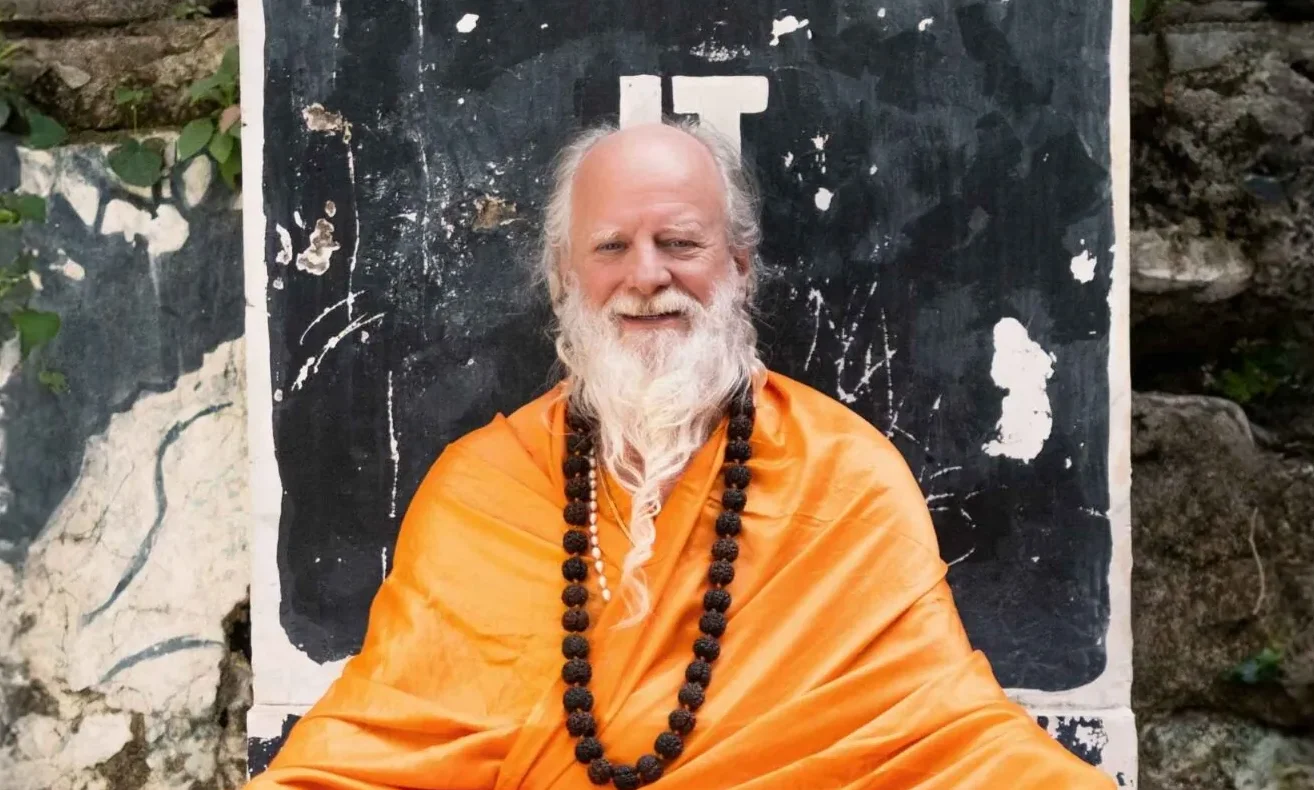
“We need to harvest the joy of person-to-person human connectivity.”
Thom Knoles
What if the thing holding back our evolution wasn’t the Unviverse, but our alignment with it?
In this Q&A episode, Thom explores the subtle early signal of misalignment, why formulaic living dulls creativity, and how the unknown became the forge of the human brain.
Thom also challenges us to make our behaviors more evolutionary, offers a cautionary message about our modern archives, and shares a bold, simple law you won’t forget.
Episode Highlights
01.
Q – How do we make evolution exponential as opposed to gradual?
(00:45)
02.
A – The Sweet Spot Is…
(00:55)
03.
Looking for Frictionless Flow
(05:03)
04.
The Dangers of Formulaic Thinking
(07:18)
05.
An Allergy to Embracing the Unknown
(10:40)
06.
The Unknown is the Frontier that Built the Human Brain
(12:33)
07.
An Invitation to Do Something Different
(15:30)
08.
Q – What exactly are we to harvest? Knowledge or resources?
(17:54)
09.
A – Breaking the Shackles of Our Brain
(19:11)
10.
The Greatest Wasted Resource on Earth
(21:35)
11.
Use It Or Lose It
(24:01)
12.
Brain-Power Problems
(26:43)
13.
The Great Good Fortune of Being a Vedic Meditator
(30:39)
14.
An Outlet for Social Relevance
(32:31)
15.
Q – Are our current evolutionary theories still relevant?
(36:14)
16.
A – Big Crunch is Making a Comeback
(36:54)
17.
Individuality is Cosmic
(39:34)
18.
Thank Goodness for the Asteroid Strike
(42:12)
19.
Unreliable Archives of the Human Experience
(46:03)
20.
Q – Should we harvest more interactions with each other?
(52:14)
21.
A – Meditators Have the Capacity to be Interactors
(52:35)
22.
The Joy of Person-to-Person Human Connectivity
(56:06)
23.
Commonality is a Great Uniting Force
(58:28)
24.
Q – Does the Veda state that evolution is Cosmic Law?
(01:00:41)
25.
Evolve. Full Stop.
(01:00:59)
Jai Guru Deva
Transcript
Questions About Evolution
[00:45] Q – How do we make evolution exponential as opposed to gradual?
Jai Guru Deva. How do we make evolution exponential as opposed to gradual?
[00:55] A – The Sweet Spot Is…
So, I’m going to take the liberty of rephrasing your question, if you don’t mind. Rather than us making evolution exponential rather than graded, first of all, evolution is just evolution. How might I make my own alignment with the existing evolution exponential, whereas my, as opposed to my alignment with the existing speed of evolution graded, gradual? Are you all right with that change? Good.
So evolution is a thing that’s moving at a speed, and what varies is not evolution and its speed, but our alignment with it. So there is a particular speed and the speed is varying all the time. The speed of change. The speed with which change is occurring, elaborating sequentially.
Sometimes I’m not keeping up with the pace. Other times I am keeping up with the pace, and one of the ways of doing this, besides of course, and I keep emphasizing this, for our listeners who have not yet given themselves the advantage of the practice of Vedic Meditation, you know, one needs to meditate twice every day, but that aside for the moment, if one is already practicing Vedic Meditation twice a day, we have to pay attention to the sensations of what I call the lack of bliss.
We don’t wait for gross and egregious suffering to be the hallmark that I’m not aligning myself with the pace of evolution. Evolution’s going at a pace. Is it moving a little more slowly and I’m attempting to go faster than it? Or is it moving a little faster and I’m not speeding up enough in my pace of change?
If I’m doing either of those things, I’m going to start experiencing, before I start suffering egregiously, I’m going to start experiencing a lack of bliss.
So the sweet spot is when I’m feeling good all the time, then I know that I am at the same pace as my big Self, my big consciousness. Unified Field consciousness is causing change to occur at a pace, and I am pacing with it.
If it starts moving faster than my individuality has detected and I’m dragging, then I’m going to, before I start suffering, there is another thing, let’s call it the aura of suffering that is the precursor of suffering.
The aura of suffering is, “I’m feeling lackluster.” If you’re feeling lackluster and change doesn’t happen, you’re going to feel a lot more lackluster in another hour or another five hours.
There’ll be grades of movement towards suffering and all the sensations of suffering: emotional suffering, physiological pain, all that stuff. Emotional pain, whatever.
And so, we don’t want to have to really… and those are strong corrections. Those are very powerful corrections where we’ve postponed, we’ve postponed long enough that now Nature is being unambiguous and its approach to getting us to evolve at the proper pace.
[05:03] Looking for Frictionless Flow
So being alert to this thing, I want to live a life in 24-hour bliss. Even if bliss might still be there, bliss, by the way, doesn’t really mean ecstasy in my opinion. It means a kind of supreme inner contentedness with whatever’s going on.
I might be inspired to work 18-hour days, but it feels frictionless and I don’t feel like I’m “working.” I feel like I’m just enjoying myself and it’s super productive. Other times I might be really content if circumstances allowed and I was able to be guided naturally into that, to rest for 18 hours a day. And that just feels fantastic.
And so we’re looking for the frictionless flow, and we want to pay attention to the beginning signs of friction. And the beginning signs of friction means I’m either trying to move faster than Nature is sequentially elaborating, faster than Nature’s pacing, Nature is evolving, or I’m dragging my heels and I’m not moving fast enough. There’s going to be a sign, a lackluster feeling inside, lack of bliss. I’m not feeling the full bliss.
Then I need to be alert to what is it in my life where I’m not, I’m not responding? I’m not responding. I’m not taking hints. What are the hints that I’m not paying attention to? What are the areas in my life where I’m either holding on and being rigid or I’m not taking up something that Nature’s hinting at me to take up?
And you’ll always come to the answer if you just ask those questions. There’ll always be something.
Now there’s no harm in being adventurous, and I really rather am in favor of people being adventurous in their explorations of these questions. What is it that I’m not taking up?
[07:18] The Dangers of Formulaic Thinking
One of the signs of danger in my opinion is, and I’m not going to say humble, because I’m not humble about it, my opinion, in my opinion, one of the signs of danger is formulaic thinking. “I’ve got the formula. I have…” and what does formulaic thinking mean?
It doesn’t mean I’ll evolve with Nature. That’s the big formula. That’s all. Okay. It is, “Okay. I get up at eight in the morning and I, or I get up at seven in the morning, it’s like more realistic. And I brush my teeth with cinnamon-flavored toothpaste.
“And only cinnamon-flavored cinnamon-flavor toothpaste will do, and it has to be from a particular manufacturer. And only with a particular kind of toothbrush set on a particular speed setting. And then I take my Ayurvedic herbs and starting with this one and then moving to that one, and then moving to that one and moving to that one. And then I, get my favorite socks on. And then I put my feet in the shoes. And then…”
Having this kind of, like, rigid attachment to a formula. Once we start thinking, “I’ve got the formula, I’ve cracked the code, I’ve got it.” Nature doesn’t behave that way. Nature causes change to occur. Seasonal change, all kinds of changes are occurring all the time.
And we are also expected to be innovators. To break symmetry is one of the definitions of creativity. So it is very important that if we find ourselves falling into formulaic thinking that, “This is my formula. I get into the car. I say a certain little thing. This is my good luck thing that I say, and then I do this and I do that. And before I put the car in reverse to back out of the driveway, I always have to do this. And I have to do that…” a kind of a form of what appears to be healthy, but in fact is obsessive and compulsive behaviors.
Once we start getting into obsessive and compulsive behaviors, these are danger signs of rigid attachment. Rigid attachment to formulaic thinking. And people are often joking about people who have OCD, obsessive compulsive behavior disorder, but in fact, it is a downfall of almost all humans, in my experience.
Almost all humans depend, wherever they are on the spectrum of obsessive compulsive behaviors, can fall prey to them. And it’s a very easy thing to fall prey to. And so, to actually shake things up a little bit once in a while, rather than just, I’m going to mindlessly follow little obsessive compulsive things, looking for those obsessive compulsive things, and occasionally just breaking the symmetry of it can be very helpful. It can be helpful to our creativity too.
[10:40] An Allergy to Embracing the Unknown
Also letting go of ideas about what my dharma is. “My dharma is to be a carpenter, and somebody asked me to make a cabinet, but I’m not a cabinet maker. I’m a carpenter and there’s a difference.” That kind of thing where, “I’m a this, I’m a this, I’m a this and I’m not a that, that, that or that. And I’ve decided that this is what I am and I just don’t move outside this field, baby.”
Well, so you think. All of us is going to be called upon to embrace progressive change in a vast variety of ways that we cannot predict.
Sometimes I get people who are stuck in their formulaic behavior saying to me, “Okay, Thom, I’m willing to change, but I need to know what’s going to happen if I change. I need to know what’s going to happen. So if I change in this way, tell me exactly what the results will be and then I’ll agree to the change.” And you’ll see how they’re taking, like, an obsessive compulsive approach to, “I’ll make the change provided that I know exactly every step that’s going to happen as a result of that.” This is an unwillingness to be confronted with the need to be creative, innovative, and adaptive.
We need to be confronted with a demand on us to be innovative, inventive, creative and adaptive, and not know what’s going to come out. If you know what the result of the change that you’re going to make is, you’re probably not making sufficient change. This kind of allergy that we have to embracing the unknown.
[12:33] The Unknown is the Frontier that Built the Human Brain
The fact is, as I’ve said very often in other contexts, the ever-repeating known is the dangerous place. The unknown is the safe place. Why is the ever-repeating known the dangerous place? Because it smacks of stagnation. Stagnation, the ever-repeating, known.
The unknown is the safe place because it is the frontier that built the human brain. The unknown is the frontier that built the human brain. Our brain is a consequence of our forebears having ventured into the unknown. When I talk to my anthropologist friends, they tell me, you know how it is in human nature to say, “I wonder what’s over that hill?” And so, the original upright bipedal neuro-centric humans, our ancient ancestors, the Homo sapiens always had a curiosity about what was over that hill.
And so they came out of Africa and they went north. And then they began, some of them said, “We wonder what’s over that hill to the east?” And some of them said, “We wonder what’s over that hill to the west?” And someone said, “Well, we wonder what’s over that hill to the further north?” And like that, over a period of about 10,000 years, we pretty much circled the globe.
It was a phenomenon how far human beings ventured, right out of the… The America’s story is a very interesting one because North America was, anthropologically, the last place settled by human beings. People coming over, we call it, the land bridge over the Bering Strait.
The fact is it wasn’t a land bridge. It was a land mass. There was an entire corridor of land that came from modern-day northeastern Russia to modern-day Alaska. And then human beings coming across that, and the water rose and it turned it all into islands. And so then, there they were with a whole continent to explore.
So, just following the map of humanity around is a great story of sequential elaboration. The curiosity about what’s over that hill, and then thinking, “There could be big animals over there that might kill me,” or, “There could be big animals I might be able to hunt,” or, “There could be verdant fields or whatever.”
We have to acknowledge that part of the reason why we got the big brain was our willingness to venture.
[15:30] An Invitation to Do Something Different
Now, venturing doesn’t necessarily mean just, you get up and leave where you live. It might mean you depart from the areas of your life that you’ve decided are your particular defining elements.
We get very involved in… I frequently meet people who I can tell they never listen to music. Never. Just, they’re, like, allergic to music or something. They’ll never listen to it. “I’m not a music kind of person,” they’ll say. Or, “Music annoys me,” or music, because they have some bad associations with music being played in situations they didn’t like or whatever.
Or there’ll be people who will say, “I’m not a one of these, I’m not a one of those. I’m not a one of those,” and all that. And I always advise them to break the symmetry and begin exploring. And it’s very important, I think, to expose ourselves to the marginal discomfort of adventure.
If we’re not adventuring, then we’re in a guided tour and guided tours are not the way to expand brain function. Living in a guided… you see those old geriatrics, going along in a bus, and on the side of it it says, Bondi Adventures. And there’s nothing adventurous about it. It’s all absolutely guaranteed what they’re going to be experiencing. Nothing out of the ordinary.
If we want to stay relevant, we have to take a lesson from our forebears about how our brains were built. We didn’t get the giant prefrontal cortex by staying home and repeating the known all the time.
So formulaic behavior is a danger sign. And it’s an invitation. It’s an invitation to identify where there might be a little bit of obsessive compulsiveness, and break the symmetry of it and do something different.
[17:54] Q – What exactly are we to harvest? Knowledge or resources?
Thank you so much for your podcast. In your episode on hypnotism, suggestibility and evolution, you ended it with explaining, which frankly made me feel a lot better, how this marginal political upheaval that is currently going on, particularly in the United States, at least that’s how I interpreted it, is nothing compared to the sixties that you had lived through, and that we come from ancestors with incredible adaptability.
And we’ve gotten rather spoiled with our temperature control and everything being just so, yet we come from stock that is super, I guess I want to say, powerful.
And then it ended with saying it is now time to harvest as opposed to get upset about everything. It’s now time to harvest.
My question is what exactly are we to harvest? Is it to harvest knowledge? Like keep gaining knowledge, keep meditating obviously, but keep gaining knowledge? Or is it to harvest resources? Because when I hear harvest resources, it actually makes me then think that there might be lack and then I get fearful. So I was wondering if you could please elaborate.
Thank you so much.
[19:11] A – Breaking the Shackles of Our Brain
Thank you for your question. Wow, you really listened. I’m deeply impressed at your summary of all the different things I said, and also you’ve highlighted an area of ambiguity at the end of my podcast. So let me dive into the concept of harvest.
The first thing we harvest as meditators is the unleashed, the unfettered, the breaking of the shackles on our brain. Our brain’s capacity for computing is massive, and yet because we’ve assigned the brain the odious task of hanging on to various kinds of impressions from the past, and giving them undue and inordinate importance, this is what stress does, it causes us to consider whatever the events of the past were to be more important than what’s right in front of us.
And so then we end up being stuck in reactivity, where we’re reacting to something that’s not here anymore. It’s something that was once here, but not here anymore. And when we’re reacting to things that are not here anymore, we’re failing to actually interact with the present moment. And a failure to interact with the present moment puts us in a greater and greater risk position of making ourselves irrelevant. Having lots of irrelevant reactivity, when in fact we need to be embracing what actually is the need of the time.
So the first harvest of a Vedic meditator is the harvest of the unleashing of billions of neurons which had been assigned the task otherwise of hanging on to the distant past and the reactivity of it, and, if you like, you know, the chemical injuries.
The chemical injuries means we hold the memory of stress in neurochemical form, and the chemistry of the past is rarely relevant in the present. Once in a while it is, but rarely.
[21:35] The Greatest Wasted Resource on Earth
And so to quote Sir John Eccles, Nobel Prize winning neurologist from Australia, some 98% of the brain’s current activity is being taken up and running programming about things that are no longer here, that don’t have any relevance to react to, in other words stress, leaving only about 2% of our brain to actually come up with anything creative or innovative.
So we have to harvest our brain first. The greatest wasted resource on Earth is not water and food or land or anything else, or temperature. The greatest wasted resource on Earth is human brain capacity.
We’re born with these heads that are the hardest heads in the mammalian kingdom for a mother to birth. There’s no other cranium existing in the mammalian kingdom that is harder to push through the birth canal than the human head. Those of you who are mothers know all about this.
In fact, the human head is made pliable. It’s malleable so that it can squeeze itself down into a cone shape on its way through the birth canal. And very often people who see a newborn baby for the first time get a little alarmed that they have a conehead baby. Well, of course, the cone disappears and the head rounds out again after a few hours.
Why am I making this point? That’s all in aid of getting the massive brain, the massive brain of the human onto the Earth. And then we end up accumulating all kinds of junk in it, and we only used 2% of it. We would’ve been much kinder to our mothers if we’d had a pinhead if we were only going to use 2%.
So, why talk about this? Well, because this is one of those irrelevancies. If in the stakes of evolution, if the birthing of a giant head yields nothing except the ever-repeating known, then it starts to become evolutionarily irrelevant, and disruption is going to be invited. It will invite disruption, meaning extinction, basically.
[24:01] Use It Or Lose It
So you know, we have to get on with properly making use of the giant head that we have. Human brain is a cosmic computer. It’s capable of computing Cosmic Intelligence. This isn’t the first time I’ve ever said this. I used to say it 40, 50 years ago, and then I heard lectures by the Nobel Prize winner, Roger Penrose, who talked about how the human brain contains in it, microtubules in the neurons that allow access to the quantum field itself.
And this is absolutely resonant with the Vedic worldview about how individual consciousness, individual physiology, is a transducer, like a radio, that is able to tune in to the already preexisting Unified Field of consciousness. So we have that capability, but if we don’t use it, evolution will take it away from us.
And it may take it away from us by taking us away from it. In other words, there’s no divine right that humans have to be the currently most neurologically-evolved critters on Earth. Wouldn’t have any divine right to be that. Any species that over a few million years can rise into bipedal neuro-centric anthropods, and there’s nothing stopping cockroaches from doing it, unless we stop them by stamping on them and things.
But, if we make ourselves irrelevant, other species will rise into this position. If we like being us, if we like being humans, evidently we do, we seem to like it a lot because we have lots of arguments about what it means to be a human and who has what rights. We have a lot of arguments about this. Wars over it.
So we seem to like being humans. If we really like being humans, let’s get on with being real humans. That means let’s use the entire thing up here inside of our cranium. And to do that, we’ve gotta peel away the stress layers and stress chemistry, which is otherwise making this giant brain that we have nothing but a redundant piece of irrelevancy, and evolutionarily that can’t stand. That will end up going into disintegration. Harvest number one.
[26:43] Brain-Power Problems
Second harvest. Let’s look at things like resources. I work with International Farming, which is one of the top most giant agricultural concerns on Earth, with millions of acres under cultivation, and that feeds hundreds of thousands, if not millions of people.
IF. International Farming, they are happy for me to use their name like this because they’re all meditators up there at the top and they listen to my podcast. They might be listening right now and cheering me on.
They tell me, like all other major agriculturalists tell me, that the problem is not food production or even the existing availability of water. The big problem is distribution and wastage. Somewhere between one quarter and one third of all the food produced every day in the world is thrown away and not distributed because we haven’t come up with better ideas about how to distribute all the food that we produce.
And so then, though there are a billion people who will wake up today on the Earth and not know where their next meal’s going to come from, it’s not because there isn’t food. It’s because there’s no creatively intelligent distribution network that prioritizes the feeding of human beings.
And so when we look at tapping into resources and harvesting, we need to also harvest our creativity, and begin applying our creative intelligence to distribution. Distribution is the problem that’s causing either starvation or undernourishment, the close cousin of starvation, on the Earth today.
We also waste an enormous amount of water. Year after year I watch while Phoenix, Arizona has its so-called monsoon season. It starts in July. It’s not actually a monsoon. It’s a bit as if to call it one, but it’s a rainy season where something up to five cubic kilometers of water fall on the city every week. Lakes of water fall on that city every week.
Is there any catchment? Hardly any at all. The water lands on the desert city, lands on the roofs of all the people who are air conditioning themselves, rolls off the roofs into the rain gutters, out through the rain gutters and into the streets, into the stormwater drains that all drain right out into the desert.
Just about zero catchment, maybe 2% catchment, 98% of all the water that falls on Phoenix, Arizona, is just wasted, evaporating back into the sky again, out in the deserts. In Phoenix there are open canals that go from the Colorado River, hundreds of miles across open desert.
One third of the water in those canals, transporting water to the golf courses of Phoenix, and it’s drinkable, potable water sprayed on golf courses so that people can have golfing. One third of that water evaporates into the sky because it’s in open canals out in the middle of a desert.
Now, these things are not resource problems. They’re brain-power problems. They’re brain-power problems. Distribution of food, distribution of water, the use of things.
[30:39] The Great Good Fortune of Being a Vedic Meditator
All of this comes from shortsightedness, on the part of what? Millions and millions and millions of people using 2% of their brain. And it’s very hard to figure out how to be a better, more responsible, more relevant human when you’ve only got 2% to work with. And this is why we have to practice our Vedic Meditation regularly.
So, harvesting means, the first thing, harvest your great good fortune being a meditator, and allow yourself to make your experience of being a meditator relevant socially. There’s lots of ways of doing this. The greatest musicians, the greatest lyricists, greatest poets, greatest writers know all about this, whether they novelize or fictionalize their autobiographical experiences.
And it’s widely recognized that the best fiction is actually faintly autobiographical of, or sometimes absolutely blatantly autobiographical. Nobody’s making those people write those lyrics or make that music or whatever, where they’re revealing their feelings. Nobody makes them do it, but they do it.
And because of that, when you hear that song or hear those lyrics or read that book, you can relate, and it might bring tears to your eyes because there’s another human being who seems to have knowingness about something that all other human beings, or many other human beings, have experienced once. And that’s how we feel the resonance between us. But not enough people are making their experience relevant socially.
[32:31] An Outlet for Social Relevance
Do you have an outlet for making your experience socially relevant? Making your experience of your life, your arc, the arc of your evolution from this to that. And it’s not just that, the end point of it, the whole storyline, making that whole storyline relevant socially. If we don’t have an outlet like that, then we’re contributing to the problem of human beings not being able to relate to each other.
We have to have some outlet of social relevance, whatever it may be. It might be music. It might be agriculture. It might be culture. It might be you dancing. It might be you picking up an instrument and learning how to play it. It might be you trying your hand at poetry or writing. It might be you making documentary films. It might be you becoming a meditation teacher.
It might be whatever it is, but if you don’t have a means whereby you’re making your experience relevant socially, then you’re contributing to the problem of human isolation where people get their ideas from looking at Instagram or whatever it is, wherever they get their ideas about how they can feel human and feel part of the human experience, the collective human experience on Earth.
So if we want to make ourselves relevant to that, we have to find some outlet for social relevance, whatever it may be. Something that you do, express, write, sing, dance, whatever it may be, your contribution to the group effort of all of us learning how to relate to each other.
When we look at the world problems today, they’re based in an inability to relate to each other. That’s why we have massive polarization in a country like United States. Nobody can relate to anybody. You can only relate to people who are in your club.
And the people who are in the other club, they’re the enemy. The enemy team and your team, and it’s all about who’s going to beat them, who’s going to win, and who’s going to lose.
That’s… it’s not a win or lose game. It’s who is going to inspire relatability the most. That’s where the competence lies. We can display competence by inspiring relatability.
What are we doing about it? That question needs to be answered. We need to harvest that. So, applying ourselves, basically. We can’t just meditate and be an island of contentedness and peace, because our peacefulness will be kicked around like a football by the unpeacefulness of the world all around us.
And so, find an outlet. If you don’t have one, explore. It may not be the first thing that you explore. It might be the second or third or 15th thing, but engaging in the exploration is itself an exercise in causing the human collective experience to be relatable. So those are just a few thoughts for you about harvest.
Jai Guru Deva.
[36:14] Q – Are our current evolutionary theories still relevant?
Guruji, in your mention just then of Roger Penrose a thought came to mind around some of the recent discoveries of the James Webb Space Telescope and what is coming to light is a lot of very interesting challenges to our current understanding of the cosmos and the Big Bang and some of those kind of evolutionary theories. I guess I’d be very interested to hear your Vedic worldview perspective on what that might mean and whether there is any kind of relevance there in that storyline.
[36:54] A – Big Crunch is Making a Comeback
It would appear that an old theory, which was Big Bang expansion followed by re-attraction and the Big Crunch, which once upon a time was the main theory for probably about 30 years.
And then it fell into disfavor in recent years and it looked like the Big Bang and everything expanded out and expanded out, and the heat dissipates and the whole universe just ends up moving into a kind of nihilism of no-thingness, a rather Buddhist kind of point of view about the ending of the universe. That was an inside joke for anybody who happens to know a little bit of modern Buddhism.
Now, because of the discoveries of dark energy and to say nothing of dark matter, it appears that there’s sufficient gravity to pull everything back in at some point. Although the outer edges of the universe right now, nothing can move through space even anywhere near approaching the speed of light. There are physical laws that stop that.
Not the least of which is anything that moves through space approaching the speed of light begins to acquire the mass, meaning the weight of the universe itself. And you can’t move something that is as massive as the universe through space. There’s no amount of propulsion system that can make that happen.
And so, speed of light is unattainable. However, the space itself is a fabric and that fabric of space on its outer fringe is expanding. The universe is growing on its outer edges as fast as, and some say faster than, the speed of light, which means that there are objects that are sitting in the periphery of our universe, which are going to disappear from view because they’re moving away from us faster than the speed of light.
It means the light that they’re emitting can’t get to us. It can never arrive because they’re moving away from us at such an astonishing speed. Things are going to start disappearing from our telescopic capacity to view them, but because of the new assessments about dark energy and dark matter it appears that the Big Crunch Theory is coming back. It looks as though there’s going to be a limit to this expansion and it will re-attract.
[39:34] Individuality is Cosmic
Now, none of this is anything we have to worry about next week. We’re talking multiple billions of years, if not, 10 to 15 to 20 billion years, of Earth years.
The little blue dot that whirls around. You call that years. Whirls once, that’s a year. Whirls again, that’s a year. It’s funny how we look at the entire timing of space based on what one little tiny blue dot does and how fast it spins and how frequently it goes around the, how frequently it goes around the Sun.
One spin is a day. 365 spins going around in one orbit, that’s one year. We base all of our ideas of time on what our little blue dot’s doing. It’s very funny to me. It’s very funny to me.
It’s like little kids who have decided that, “Here’s a pine needle and this is worth that much, and here’s a little piece of corn that’s worth that much. And, Okay, now you play. You’re the shopkeeper. I’m going to come to you with my little piece of corn and my pine needle and things, and you’re going to give me things from your shop.” So amazingly childish.
So perhaps universe is going to come back onto itself. What is the relevance of that to us individually? Well, individuality is in fact cosmic. Some of the greatest discoveries that ever been made in astrophysics have been made because of people having a personal sense of their deep inner Cosmic Self.
Including, very prominently, Albert Einstein, who said famously that, “The universe cannot behave in ways that I can’t understand because I’m made of the universe and the universe made me. The universe made my brain. I am the universe, and so it can’t behave in ways that I can’t understand.”
And, people just thought, “Well, that’s a bit of arrogance.” But he certainly deserved to be able to say that since it’s widely agreed in the world of physics, that although Einstein’s discoveries eventually would’ve been made, he was 200 years ahead of his time. 200 years. It would’ve taken, without him, it’s hypothesized it would’ve taken another 200 years for people to make the discoveries that he made in just a few years of his life. And so Einstein’s not the end of that story.
[42:12] Thank Goodness for the Asteroid Strike
Edwin Hubble, who was the first one to surmise that not only are we and our Sun and our solar system members of a galaxy known as the Milky Way, it wasn’t till quite late in the piece that there was any concept of there being any other galaxy besides the one that we were in.
It’s so interesting. We thought the whole universe was just empty space and our galaxy, and this was during the time of Albert Einstein. Albert Einstein was invited by Edwin Hubble to come to the Mount Palomar Observatory, looked through a telescope and saw the first time other galaxies floating in space.
And Einstein considered it to be his most grave oversight, that even he, the great Einstein, had not yet realized that there must be a universe filled with galaxies. Edwin Hubble was the first one to not only hypothesize that, but then to demonstrate it through teloscopy. That’s why we called the first big space telescope the Hubble Telescope, named after Edwin.
So we’re living in a universe that’s expanding and how astonishing? Here we are, little squishy critters who’ve only been upright for about a million years. Before about a million years ago, our ancestors were quadripeds and didn’t have very big brains and had little pointy noses and whiskers and things. Little furry things.
We go back far enough to the time of the dinosaurs. We had ancestors then. People often say, were there any humans around with the dinosaurs? Were, like, the Jurassic Park kind of concept? Well, no, there weren’t any cave people, as we call them. Paleontological humans were not around at that time.
However, our more modified versions of us were around and they were stomping, running around between the stomping feet of the Tyrannosaurus rex and the velociraptors and the brontosaurus and things. But nothing like us appeared until long after those dinosaurs disappeared. Nothing like us.
But if those dinosaurs hadn’t disappeared, it’s due to a meteorite strike, it’s unlikely that our ancestors would’ve ever had a chance to evolve into these iPhone-bearing, Instagram-watching, TikTok-viewing humans. Here we are. So, thank goodness for the asteroid strike.
Evolution occurs as a concept, as a result of disruption. Adaptive forms and functions. This is a very important thing to remember. Adaptive forms and functions arise out of disruption of a steady state. This is one of the greatest big realizations of modern science in the last 20 years, the role that’s played by disruption.
So for those of you who are like, “Ah! Disruption’s occurring. Disruption’s happening.” What I hear is, “Are you watching for the adaptive forms and functions?” Adaptive behaviors as function and adaptive forms are new ways of thinking and new technologies, new inventions, new innovative ways of increasing the connectivity of the human condition.
[46:03] Unreliable Archives of the Human Experience
And right now we’re using it. Nothing like this podcast would ever have been possible 50 years ago. In my living memory. Nothing like this would’ve been possible.
I remember 50 years ago, if you didn’t have a landline sitting right next to you and you were out somewhere, you had to walk up to a payphone landline. And you had to have the right number of coins in your pocket. And then you had to submit those coins into little slots. And if you got it right and nobody had put any chewing gum or anything in the slot or if the thing was working and that was always a big if, then you could make a phone call and let somebody know that you were going to be late if they were near a landline. If they could… nobody had anything mobile. There was no such thing as a mobile phone.
So then, we also have to, and that reminds me to say, we also have to find more ways of making the human experience connective and relatable because we’ve lost a very interesting piece of our collective history.
When I read a book like Undaunted Courage, which is the title of a book about the Lewis and Clark Expedition that set out from the east coast of the United States, from Pennsylvania in 1802 and made its way all the way to the west coast on foot and by boat. 30 men with a dog, a big Newfoundland dog, decided to go and find out what was to the west, west of the Mississippi River in the United States.
And it took them a long time to get out there and make their way all the way, and every one of them survived. Astonishing. But how do we know about it? They all wrote letters home. And so then all those letters collected from all those households and people and all of that, and archived and put in one place.
Now suddenly you have the material for a book that describes every step of the way they took. But what would’ve happened if all these 30 men had gone out with their dog for four years, five years and called home with a telephone? There’s no recording of it. That information’s not recorded.
Someone goes, “Mom, we ran into some tribal people and we, the dog got stolen and we jumped in the river and all that.” Mom’s not there writing anything down. She’s going, “Yeah, darling. When are you going to be back?”
You see what’s happened? We’ve lost documented history due to the tyranny of telephones and electronic media, which, one pulse, whether caused by thermonuclear weapons somewhere, and it wouldn’t take lots of them, it’d just take one, or caused by a Sun flare, could wipe out all of the history and information that we think we’ve accumulated.
And when was the last time you ever sent anything which somebody at home can archive about what your experience was when you went to Paris for the first time? It’s all lost.
And so future generations attempting to get a feel for what we’re experiencing, what a couple of generations of us now have been experiencing, they have a real dearth of information. They haven’t got a clue what we’re actually experiencing. They have newspapers, but newspapers don’t tell what you’re experiencing, what your personal experience was.
So we have to find ways of being better documentarians of what we’re experiencing. This is one of the ways in which we’ve become a grossly isolated society. We’re isolated because nobody can relate to anybody else except via very artificial little postage stamps called Instagram and TikTok and Facebook.
Little pictures that are all fake about how wonderful your life is that don’t actually document your experience and which are also eminently erasable. They could be erased any minute by anybody, even by a corporation that happens to own those. If they pull the plug, your stuff’s all gone. So you know, you don’t even have rights to it yourself.
Fascinating. No more letters home, no more Lewis and Clark Expedition. No more, this is what it felt like to be a soldier in World War II, a Russian, surviving the siege of Leningrad. No more information.
What experiences do we hear from Ukrainians on the front line who are surviving the siege of their country by a foreign invader? We don’t hear anything. We read the news and we hear 15 guys were killed by drones. That’s it. We don’t know who they were, what they did, anything about them. Nobody can write home.
So, there has to be an improvement, and it has to be technologically driven, of figuring out ways of archiving our collective experiences that we can share, otherwise we’re left in a vacuum, a history vacuum is occurring.
Now what that has to do with the modern discoveries of physics, I don’t know. But it was fun to have that little ramble.
[52:14] Q – Should we harvest more interactions with each other?
I’ve often heard you, on the same theme, I’ve often heard you mention that conflicts between humans could be averted if people made eye contact and smiled in the street instead of being absorbed in their phones all the time. Or chatting with the Uber driver. Is this one thing which might be on this list?
[52:35] A – Meditators Have the Capacity to be Interactors
Well, just to clarify, I don’t think I quite said that. That, you know… it was a nice way of putting on it, but a bit of spin was put on it. And so, minus the spin, what I actually said was that, as meditators, and I didn’t mention phones, by the way, as meditators, we have the capacity to be interactors.
We have the capacity to be interactors. When I walk in the streets of Manhattan, particularly Manhattan, everybody’s walking very fast. It’s a little bit like a pedestrian freeway. Most people have earbuds in their ears and they’re talking to somebody who’s not there, and they’re watching where their feet are going so they don’t trip over cracks and things, and they’re moving apace.
If you get into that flow and you decide to exit the pedestrian freeway, you have to kind of almost make a turn signal to get off and you find someplace to hide from the riparian flow of all the humans.
And when I look at this, occasionally I notice as I’m walking through the streets of Manhattan, and we can use any place. Manhattan’s a particularly intense place where millions of human beings ignore other human beings who are right in their immediate presence. Ignoring human beings who are right in their immediate presence.
So, I make a point, and I’ve just done this as an experiment, and I thought, why don’t more people do this? It’s wonderful. That, if I have to hop into a taxi, taxis still exist in New York, they’re very abundant, or an Uber or a Lyft or whatever the equivalent is, rather than saying, “54th and Third, please,” I’ll actually say to the person, “What’s the driving business like these days?”
And they look in the mirror like, “You’re not talking on earbuds on your phone. You’re actually talking to me? Oh my God. You recognize that I’m a human being. How interesting?”
Nobody ever talks to people. It’s so fascinating. Rather than going down to Anita’s ice cream place downstairs here and saying, “I’ll have a vanilla ice cream with a strawberry thing on top, thanks.” Why not look into the person’s eyes and say, when they say, “How you going?”
And you say, “I’m going really well. How are you going?” And making a comment of some positive nature about some delightful earring they might have, or some delightful way that they’ve done things.
Being a little bit humane to our fellow humans, even a little bit more, just a little bit more. If we watch how much we pointedly ignore each other when we’re in actual physical interaction, we have the capacity, and we learned all about this during the great pandemic, when everybody had to vanish into their rooms and look at each other on screens.
[56:06] The Joy of Person-to-Person Human Connectivity
We learned that we can have that kind of connectivity, but there’s no pheromonal exchange. There’s no molecule to molecule. There’s no… you can’t smell anybody who’s on a screen.
Sometimes you’ll think that’s a good thing, but in case they do happen to have a nice fragrance, you’ve got no idea about it, and you’re looking at artificial and synthesized colors under artificial LED lighting. You’re not looking at somebody who’s actually standing in the sunlight.
So to what extent, when we actually are liberated to be able to have a personal molecule-to-molecule in-the-flesh interaction, are we actually behaving as if that’s a wonderful treasure or just a kind of annoyance? “There’s a lot of people here, I’m just going to ignore everybody and get on with what I need to do.”
There’s too much of that. And getting back to my previous questioner’s question about what is it that we need to harvest, this is another thing we need to harvest. We need to harvest the joy of person-to-person human connectivity.
Talk to people. Ask people questions. Look at them and listen to them respond to you. Show interest in what they’re saying. Ask them a second question. And if they’re really busy just acknowledge their busyness, but don’t miss the opportunity to acknowledge the humanity of another human being who’s standing right in front of you. Or you’re seeing the back of their head while they’re driving the car in which you’re riding.
There’s going to be more and more Waymos, they don’t exist in Australia yet, as far as I know, but they’re all over the United States, driverless cars. You hop in one of those things, there’s just a steering wheel and there’s no human interaction. See, you got your way. You got rid of the humans by ignoring them.
Keep ignoring them, and they’ll just go away. And if we don’t want all of them to go away, we need to stop ignoring each other. Ignoring each other is, to me, a grievous, maladaptive behavior of human beings.
[58:28] Commonality is a Great Uniting Force
So once we are meditators and we are liberated from the stresses that make us feel as though, “All I’m going to do is bring my insignificance into contact with somebody else’s insignificance,” once we’re liberated from that kind of very defeatist mentality, by awakening our sense of what we are in meditation, we should be able to be in contact with other human beings and make things thrive.
Let’s see if we can make things thrive. That would be a really good idea. A really good idea.
Thrive and don’t be afraid about what their politics are. “Oh my God, what if they think this? What if they voted for that person and not this person?” Come on, you were all little babies once, suckling at your mother’s breasts, if you had the good fortune to do that. And all pooping in your diapers and nappies and being spoon-fed and everything, you were all the same until somebody convinced you that you are one of those or one of those.
And so let’s transcend these petty differences and dive down into and seek what we have in common. Commonality is a great uniting force. It’s a very great uniting force.
So, let’s… not everybody in the world’s going to do it because not everyone’s listening to my podcast. Maybe that’ll change. But for those who are, turn up the dial, it’s not like black and white, that you weren’t doing anything and now you have to do everything.
If you were sitting at 20% being interactive with other human beings who are live and in front of you, if you were at 20%, turn it up to 30. How about you turn it up to 40 and so on? Make your way up in grades and things will get better. It’ll make you feel good because you’re making a positive contribution to humanity.
Jai Guru Deva.
[01:00:41] Q – Does the Veda state that evolution is Cosmic Law?
You’ve frequently referenced the concept of evolution as being a Cosmic Law. Is there anywhere in the Veda that specifically makes this point, or is it only implied? If it is only implied, can you elaborate on this and give examples?
[01:00:59] Evolve. Full Stop.
It’s only implied. I don’t recall any one particular verse that says Evolve is the Cosmic Law.
It is a conclusion to which we can be constrained by looking at an entire body of knowledge. And we mustn’t dismiss something simply because it’s implicit. I mean, if somebody says to you, “Look, I don’t want to be negative, but… no, no, I won’t say anything.” Are you just going to walk away from there and think that they think you’re pretty good?
The implicit is really powerful. The implicit sometimes is far more powerful than the explicit. All through the Veda, we can see the arrows all pointing in the direction of one, what would be one word, which is evolve and engage in progressive change.
That’s what the universe is doing. It is not just an imperative command, it is also a statement as an existential statement, what the universe is all about. Evolve. Evolving.
So, I can’t really point to any one document or text where it lays it out. It’s left to people like me to summarize and help you to arrive at conclusivity about what Veda is trying to say to you. And that’s my job. So I’m Vedic, I’m considered a Maharishi, and so I’m going to say it now and make it textual.
The Cosmic Law is evolve. Full stop. There. Now it’s in the record, in the Vedic record. First the rishi speaks, then it becomes true.
