
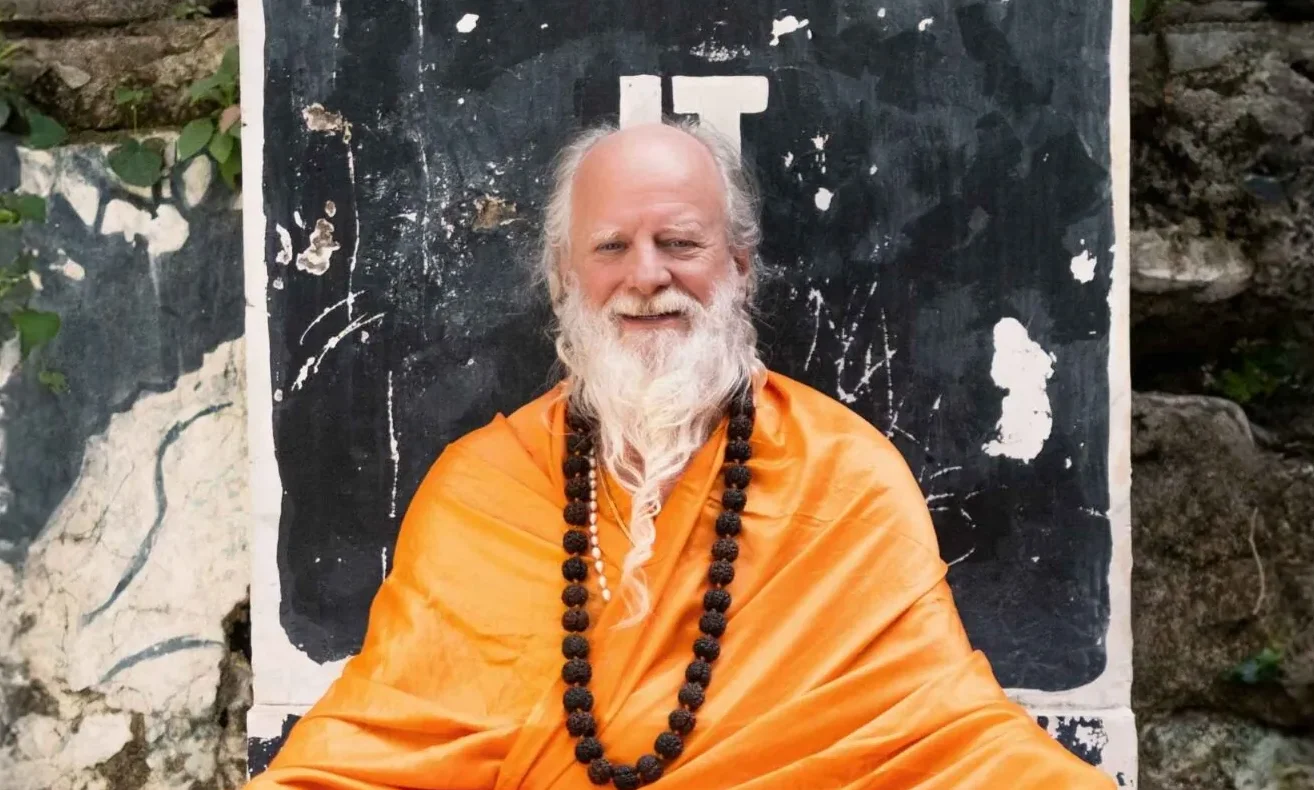
“It felt so good to pursue a path that felt right and that I didn’t feel that I was forcing. I felt more in flow with life, and was so excited about what I was learning. I felt almost childlike, not childish, but childlike, and that’s a lovely way to be.”
Joh Jarvis
How can a piece of advice unsettle a life that seems already established? In this first installment of a three-part conversation, Thom Knoles and Joh Jarvis, a fellow Vedic Meditation teacher, look back on their first meetings, Joh’s years as a journalist and executive in Australian media, and the unexpected suggestion that led her to New York City. Joh reflects on meditation, becoming a Vedic Meditation teacher, and learning to follow a path that felt more true to her.
Listen to or watch Part One of their conversation. The next episode covers Joh’s work establishing The Light Inside (http://the-lightinside.org), a program that teaches Vedic Meditation inside the US prison system.
You can also watch this episode on YouTube here: https://youtu.be/ZA0afGvDac4
Episode Highlights
01.
First Impressions And A New Direction
(00:45)
02.
From Journalism To Meditation
(04:25)
03.
The First Face-To-Face Meeting
(07:36)
04.
Connections To Australian History
(12:28)
05.
A Dangerous Paradise
(14:46)
06.
Taking The Leap To New York
(19:44)
07.
Training To Teach Meditation
(21:27)
08.
Meditating In Rishikesh
(22:30)
09.
Following A Path That Feels Right
(25:01)
10.
Finding A Home In New York
(26:12)
Jai Guru Deva
Transcript
From Journalist to Meditation Teacher: Joh Jarvis’s Journey, Part 1
[00:45] First Impressions And A New Direction
THOM KNOLES:
Welcome to my podcast, The Vedic Worldview. Today, I’m starting a series of conversations with wonderful people, and thank you for tuning in. Today, my conversation will be with my colleague of many years, Joh Jarvis, who started out, in my life and experience, being a resident of Australia, and who is with me now from New York City.
And we’re going to dive into how all that happened, Joh, as part of our conversation, so let’s just start off, Joh. This is a conversation and not an interview. Let’s start off with when each of us came into the awareness of the other first, so I’d like you to start that. When did you first hear about me and what it is I teach? And what were the circumstances? Where were you? What were you up to? What stage of life were you in, et cetera, et cetera?
JOH JARVIS:
All right. Well, Thom, I’ll give you the raw truth, if you like, but so I first heard about you from my teacher, Tim, and you were his teacher. That was many years ago, probably 18 years ago, possibly, and he mentioned training with you. Then one day, he said, “Thom’s coming to town. You should go and see him.”
THOM KNOLES:
And the town was Sydney.
JOH JARVIS:
It was Sydney, and you were coming to Sydney. At that point, you’d moved back to Arizona, but you were coming to Sydney, and you were speaking in Paddington. Tim suggested that I come along, and I must admit, I wasn’t that enthusiastic because, not because of anything to do with you per se, but you were described as a guru, and that wasn’t something that I was particularly interested in.
At that time, Tim really was very encouraging. He said, “This will really affect you, Joh. I highly recommend you come to it.” So anyway, I did come along, and I remember walking in the room. I don’t know what I expected, but what I got isn’t what I expected. So you weren’t, I think at that stage, I was not very interested in hearing anything that was overtly spiritual. I don’t know what I was interested in, but that wasn’t what I was interested in. I’d been meditating at this point maybe for six months, and it had profoundly changed my life, but I didn’t see myself as spiritual at all, and that wasn’t what I was looking for.
But then I walked in and listened to you, and you were talking about how we don’t use the maximum of our potential, and that we had so much more potential. The way that you were talking about it, you were saying to us, I remember this very clearly. You said, “So maybe you speak a second language. Maybe you’re thinking about speaking a second language, maybe Spanish or something. Well, I suggest you learn something really hard, like Swahili.” I thought, “Oh my gosh, this guy is different.” That was my first experience with you.
18 years ago, there was no, I mean, podcasts, I don’t think they began for about another maybe 10 years or maybe, I don’t know, five years. There was no really way of really knowing much about you, so that was my first experience.
[04:25] From Journalism To Meditation
THOM KNOLES:
And what were you doing in your life with your life? What was your career? What had been your career? What were your, what was your view? I mean, since 18 years ago, a lot has changed in your life, and I make the assumption that on that night that you walked into the room in Paddington, in Sydney, for those of you who don’t know what Paddington is, it’s a wonderful suburb of Sydney, Australia, that is in the eastern suburbs and a very interesting part of town. Let’s put it that way, very eclectic and based in lots of dwellings and houses that come from the 19th century, and so a very culturally interesting and diverse place.
So you walked into Paddington on that night. What did you think your next, say, five, six years were going to look like? And what were you doing instead of what you’re doing now?
JOH JARVIS:
Yes. So now I’m a meditation teacher living in New York City. Then I was an executive at ABC Radio, the Australian Broadcasting Corporation, and I took that pretty seriously. You know, like a lot of journalists, I guess I was, if not a cynic, I was a skeptic about most things. I mean, you’re trained to be that way, so I trained as a journalist for, you know, 20 years or so. As part of that time, I was also an executive and I was running these radio networks, and I guess, yeah, I saw myself as, I saw it as a kind of a highly valued concept to be cynical and skeptical, and so it’s really at odds with pursuing a spiritual path.
So, but yeah, I was highly stressed. I had previously drunk quite a lot of alcohol over time, and, you know, I had stopped drinking and I’d begun meditating, and it had, like I say, profoundly changed my life. What does that mean? It meant that I was probably nicer, you know, because I was just less stressed. I was happier. I really understood the concept of a sense of internal supreme inner contentedness. I felt that for no good reason. I felt happy a lot of the time. That was entirely in contrast to how I had spent a large proportion of my life, so, you know, you can’t, when that happens, you start to take other aspects of the Vedic worldview seriously, and I was slowly coming to it, and you were the introduction, I think.
I mean, Tim was slightly, but yet, yes, when I met you, that took it to another level. And in a minute, maybe we’ll get onto what happened after that first time I spoke to you, because it did also have a very big effect on me, your speech. Should we go on to that or?
[07:36] The First Face-To-Face Meeting
THOM KNOLES:
I’m trying to recall, and I would like to come back to it, but I’m trying to recall the first time that you and I met face to face, and I wonder if you’ll help me recollect that, besides the fact that you were a face in a large group of people in Paddington.
JOH JARVIS:
Yes, of course. I mean, there was, goodness knows how many people there, probably a hundred or something, I would say. So I was so enamored with the way you were speaking. I thought, “I’ve got to meet this guy.” So I went up to Tim afterwards and I said, “How do I meet him?” And he said, “Well, you can arrange a consultation.” And I did that, and so I then met you face to face, first time in a beautiful home in Bondi.
So you were talking about Paddington. Bondi is also an Eastern suburbs neighborhood, and it overlooks the sea. The house we were sitting in was overlooking the sea. And I remember when you arrived, you were wearing a, my recollection is a silk dhoti, and you were looking full guru. It was great. And I didn’t care. I thought, “I just want to meet this man.” And so we sat near a window. I remember this so clearly, and you spoke a lot about Maharishi, who I was very interested in, explaining a lot about what he had taught you and what a remarkable human being he had been. So historically, I was interested in that.
You talked a little bit about some of the fundamental teachings of the Vedic worldview of the Veda, I suppose, and then at the end of the conversation, there was some very interesting things that happened, but maybe we’ll talk about that in a minute. But that’s just setting it up for you. I don’t know if you would remember that. You meet with so many people.
THOM KNOLES:
It’s about a thousand people a year I meet with. But, Joh, just for our audience, who may not realize, I was embedded in Sydney, Australia for 30 years.
In fact, most of my adventures with Maharishi Mahesh Yogi happened from trips that I would take from Sydney, which was my home, either to India or during his nearly 10 years that he spent in Switzerland. So I would leave Australia sometimes for a month or two. Australia’s so far away from every place else. If you’re gonna leave, you might as well leave for a long time, and sometimes for up to a year and a half or two years even, but I would always return to Australia as my home.
I lived in the eastern suburbs of Sydney, and, over the years that I taught meditation there, I taught about 10,000 people in Sydney during my 30 years there. I grew up from being a very young teacher in my 20s through my 30s and then throughout my entire 40s, and I had managed to really become quite ingrained in Australian society.
I was a well-known character in the fields of law and justice because, like you, and we’re gonna get onto this in a few moments, I had done my jail time. I had spent time teaching meditation in incarcerated settings all around Australia. I had got to know and was consulting to, at the end of the 30 years, I was consulting to several large law firms. I was a known character to two or three premiers of the state of New South Wales and their partners. I was a very well-known character in the eastern suburbs, having taught thousands of people in that area. I was a business consultant as well as a meditation teacher, and I think that over the years that you and I got to know each other, to use an old 1970s phrase, I think it rather blew your mind how many people you knew of or had been in contact with as a journalist who I had known.
Let’s just, and we’ll do some back and forth in time so this doesn’t get too boringly sequential. What were some of those personalities that you heard of that I had been in contact with that made a deep impression on you?
[12:28] Connections To Australian History
JOH JARVIS:
Well, you told me about your relationship, your friendship with a former head of the High Court of Australia. So in Australia, the most senior, the ultimate court is the High Court. In the US, it’s the Supreme Court, but in Australia, it’s the High Court, and you knew, and of course I’m just right now forgetting his name, but he’s a very prominent jurist.
THOM KNOLES:
Lionel Murphy.
JOH JARVIS:
Lionel Murphy. Lionel Murphy was a very famous head of the Supreme Court in Australia. And you described to me how you not only taught him meditation, that he was also a student of the Veda, and that you were with him, well, with his family. I think you were in the car outside the High Court when Lionel Murphy eventually went in to resign, so this is an historical moment in Australia, and I was a history student, I was a politics student, and that was described as both of those things, so key moments in Australian history, you described that you were essentially there.
So that, I was very taken aback, but there are other things as well. So I come from South Australia, and one of the key figures in South Australian history was Don Dunstan, and he was very important to me because I’m gay, and when I was young, in the early ’80s, just, I think it was 1977, he made it possible for, he decriminalized homosexuality, so he made a remarkable difference to my life, but he did so much in South Australia. He was a very notable premier of that state. You knew him and you knew his wife. I think you were with her towards the end of her life.
And then the other person and somebody I’d interviewed, also a very senior jurist in Australia, lawyer, Michael Kirby. He was also either head of the High Court or he was a High Court Justice, so, and you’d also taught him meditation, and so I was just bowled over by these names, people I had looked up to and who are remarkable figures in Australian history.
[14:46] A Dangerous Paradise
THOM KNOLES:
Let’s get back to the house with the beautiful ocean view and Bondi, and me sitting there with my silk dhoti on. What did I say to you that was so pivotal?
JOH JARVIS:
Well, I guess really what you said to me was, yeah, it just completely turned my life around, and the way that it came about was, so we were sitting there, it was an hour consultation and towards the end of the consult, and it was mainly talking about some teaching from the Veda, but it was also talking a lot about Maharishi, and I remember thinking at the end, “I’ve got to ask him a personal question here.” You know, “I’ve got to ask him something about me.” I’m thinking, and what came to my mind was, “Do you have any advice for me?” So my question was, “You know, Thom, it’s lovely to meet you. I just want to ask at the end here, do you have any advice to me?” Now, what I expected you to say was, “Yes, Joh, I think it would be a good idea if you did some additional practices to your meditation or maybe extended the time that you meditate or something along those lines.” That’s what I was expecting, but instead, you looked at me, then you looked out the window, you swept your arm kind of in the direction of the sea below and you said, “You need to get out of here. It’s a dangerous paradise.” I’m like, “Oh my goodness, that’s not what I expected.” And I said, “And go where?” And you said, “New York City.”
And it was like one of those things that when it’s, there are some things that you can say and not unsee. There are also some things you can hear and not unhear, and I had always wanted to live in New York City, and at this point, my life was probably 48 or 49. I had a very established career. I had property. I had family. I had a girlfriend. I had everything that, you know, I was established and I was pretty stuck as well. Stuck, established.
And I really, I believe that doing something like moving to New York City really needed to have happened when I was in my 20s. You know, that needed to happen a long time ago, and that now I had to think about my superannuation and how I was going into the next stage of my life, but when you said this, it just shook me deeply in a way that I, it just kept going.
You know, now this, what’s interesting also about what you said was this: If you had said to me, “You need to go to London or Paris,” both nice cities, or in fact, my sister was working in Rwanda at that point with the Jane Goodall organisation. If you’d said, “Go to Kigali,” I think that city is called the capital of Rwanda, Kigali. “Go to Kigali,” nothing would have interested me; there was nowhere I wanted to live except for New York City, and I couldn’t get rid of this thought.
THOM KNOLES:
You’re time’s up.
JOH JARVIS:
And I said, “So what should I do there?” At that point, you weren’t interested in talking about it anymore. It was less like, “I’ve given you the advice, now go.” I’m like, “Oh my gosh, aren’t you gonna hold my hand for the rest of this? I mean, really, is that it?” And I couldn’t shake it, and as a result, it just kept going over and over and over and over.
Clearly, I’m in New York City now. Can you hear that siren outside?
THOM KNOLES:
Movie producers always insert that sound of a background siren when they want to demonstrate that the next scene is in New York City.
JOH JARVIS:
Definitely, just right outside my window now, it’s quite, yes, it’s a sign that you’re in New York City. So I cannot tell you what impact that had on me, and I’ve since asked you about it. Why did you say that? And again, you haven’t been that interested in discussing it, I must say. You’re a bit like, “I gave you, you asked me, I gave it to you, now you go and do it.”
And what I’ve come to know this as is it’s, there was something deep within me that you recognised, and I’d said very little about myself, by the way. I’d hardly told you anything, and I couldn’t shake it. And then for the next year, I decided, “I’m going to go. I don’t know how I’m going to do it.” It’s not that easy to live, to move countries. I had to get a job for a start, and so what I did was I sold everything I had. I told my family; my parents were elderly, so that’s not a, it wasn’t a popular decision.
And I left my partner at the time because no one wanted to come with me, and I tried to drag, rope other people into it because I was terrified, but yeah, I eventually moved, and yeah, life-changing moment for me.
[19:44] Taking The Leap To New York
THOM KNOLES:
How long did it take you to actually, from the time we had our conversation, to actually land in Manhattan?
JOH JARVIS:
Look, I think it was about a year. I prevaricated, certainly. I tried, like, I literally tried to rope other people to come with me. My girlfriend at the time, she didn’t want to come. A close friend of mine, a young guy, I just, you know, you really can’t, and anyway, he wouldn’t. Eventually, he just decided, no, I can’t do that, and so, yeah, it took some time. You have to set up a visa.
But I’ll tell you something. Once I made that decision, it actually happened very easily and quickly, so my house sold and I got a good price for it, and I needed that money to set myself up here.
And things like this are scary when you’re at that stage of life, when you think, I just want to take myself back to that moment. I really thought it was all over for me. You know, 48, I mean, that’s ridiculous, but that’s what I thought. I thought those sort of, those things, I saw them as something you do as a young person, and I also was very enamored with my position in society. I thought it was important. I needed that. I needed that identity. I needed to be known as something, and I was throwing myself into the wilderness, in basically to a city I didn’t know anyone.
There was one person who was a contact here. I didn’t know anyone, and also the internet back then, so this is probably 11 years ago now, didn’t have the information that it’s got now, so it would be easier to do now. You’d be able to find out a lot more than I was able to find out. I basically just landed here in an Airbnb and then just worked it out.
[21:27] Training To Teach Meditation
THOM KNOLES:
So, at some stage, you went off and got trained by Tim as a meditation teacher, and I remember that happening, and I remember you deciding to take yourself to India and to spend several weeks or months in India doing very high level meditation. But where does all that fit into the picture?
JOH JARVIS:
It was in between me meeting you and then leaving, so maybe there’s a bit longer there, 18 months or something, but I trained with Tim to be what we call an Initiator or a teacher of Vedic meditation, and as part of that, I needed to go to India and spend a long time.
I think it was a month doing some practices which really enhance your ability to teach. It sort of prepares the physiology, the physiology for teaching so that you’re most stable, so you’re a stable human being when you’re charged with helping other people, teaching other people.
[22:30] Meditating In Rishikesh
THOM KNOLES:
And what were your main takeaways from your experience? I happen to know that you were in the town of Rishikesh, India, and you were really pretty much on your own, although you were checking in with one of the more senior teachers regularly.
What were some of your most interesting insights and takeaways from that experience of being in Rishikesh, India, in the foothills of the Himalayas, on the banks of the Ganges River, just meditating away for up to 14 hours a day? Can you give us a few vignettes?
JOH JARVIS:
So I have such fond memories of this time. So I’m alone, I’m in this room, it’s dark, and I’m getting up to do these practices. Now, if you’re doing these practices, you’re actually getting up at 2 a.m. is fine, because you’re very deeply rested, and so I’ll be up and I’d be looking forward to what I’m about to do.
But before that, I think they would bring me, someone would bring me a cup of milk or something, so I’d have a cup of milk and I would be looking out the window, and every day, the same black elephant would come with a small elephant, clearly a baby, and they would bathe in the water, so there was enough moonlight to see this happening, and it was magical. It was so beautiful, but also when you’re doing practices like that, I’ve heard others say the same sorts of things.
I also happened to be reading the Mahabharata at the same time, so I’d have a few hours at the end of the day where I could read, and the Mahabharata is a seminal Vedic text, and it was like the full display of the Mahabharata, which is the great story of India, was just playing out in front of me on the Ganges each morning, very early.
That was really quite something, and then the next thing I would see just below me was there was a family that would live there. And every day, without missing a beat, the same man would come out and he would get on his motorcycle and his wife and his child. I found this so moving, like they were clearly a very loving family, and the little kid would wave goodbye and the mom would wave goodbye and he’d be off on his motorcycle.
And so I felt like I was just seeing, I love seeing the way people live. I love seeing different lifestyles, and that felt quite intimate. They’re clearly a very loving family, and the whole thing, I just loved.
[25:01] Following A Path That Feels Right
THOM KNOLES:
Wow. And quite a departure from your earlier career.
JOH JARVIS:
Well, yeah. I mean, that’s kind of significant because how I would describe the difference between what I had left to what I was now doing was I was really following what was deeply within me that was charming, interesting, attractive, as opposed to following a path that I was conditioned to follow, which was a worthwhile path. Don’t get me wrong. It was worthwhile, but you make a decision to be a journalist, so I did it around 19/20, and I didn’t know what I did when I was like in my early 40s.
And it felt so good to pursue a path that felt right and that felt, I didn’t feel that I was forcing. There was no force. I felt more in flow with life, and I was so excited about what I was learning. It’s a very different, I felt almost childlike, not childish, but childlike, and that’s a lovely way to be, and that’s not what you’re like when you’re kind of a little hard bitten as a journalist. It’s not the same thing. Very different.
[26:12] Finding A Home In New York
THOM KNOLES:
So you completed your teacher training. We had our conversation in Bondi. Off you went to New York City. You settled into your Airbnb, and then what?
JOH JARVIS:
Well, I mean, you know, a number of things happened. It was not smooth. So I hadn’t, I kind of timed my arrival in New York with the arrival of, there was the Pope’s visit at the time, so this is 2015, September, and there was also a United Nations meeting. I now know September is the worst month to spend in New York if you actually want to get accommodation. It’s like so expensive, and so I was in this two week Airbnb and I was like desperately trying to find the next place to move to, but I couldn’t, and I ended up moving out to Rockaway, which is a beach a long way from that, you know, an hour and a half on the train from New York City.
And then it became kind of like, as when you move to a new city, which you know very little about, and New York City is not an easy place to live, even though you might have some cash to pay to live somewhere. If you don’t have a credit rating, which I didn’t in America, it is quite hard to find somewhere to live, and I ended up living in an apartment opposite, it was a beautiful apartment, I thought, in a place called Bushwick in Brooklyn, which is really for, Bushwick is for young, is for young cool people, and I wasn’t that, you know, but this is where I ended up living.
My apartment was very, it was really what I dreamed of, like huge loft overlooking the, look towards the Empire State Building in New York. So Brooklyn looking into New York, and I thought, “This is like fantastic. I’ve really just landed on my feet here.”
And the first night, I’ll never forget it, at 6 p.m. just on the dot, a noise began like probably like that noise we were hearing before or the sirens, but in this case, it was a series of trucks, and the noise was, I had moved opposite, I had moved opposite Brooklyn’s Waste Management Centre, and so every night at six o’clock, this noise would begin and it wouldn’t finish, it wouldn’t abate until six in the morning, and the smell, I couldn’t, I didn’t want to open a window, but if I wanted to, the smell was just next level, so no wonder this place was relatively, like it was cheap, it was available, it was beautiful, because it was the worst place that you could move into, and of course, when I tried to kind of change the situation and get the real estate agent to move me, of course he was nowhere to be found, so I had to live in this place for some time.
I cried actually. I’m not a crier really. Well, I can be, but not really. Not when something like that happens, I’m tough, but I cried when that happened.
