
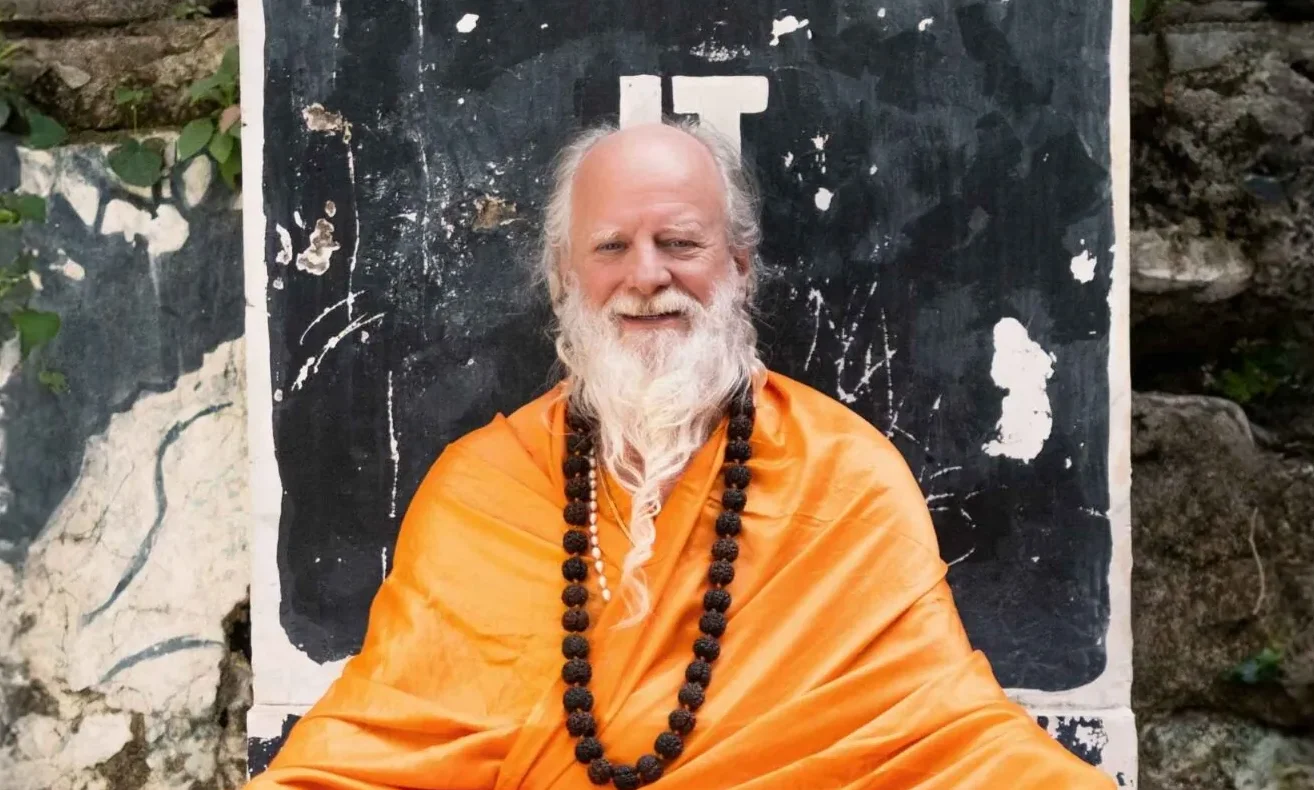
“Action comes straight out of the field of Being. When action comes straight out of the unmanifest field of Being, it’s the action of The Universe.”
Thom Knoles
What if right and wrong are not fixed rules, but questions of consciousness and timing? In this Ask Thom Anything episode, Thom responds to questions about right action, hesitation, evil, and so-called demonic forces, reframing them through the Vedic worldview.
From Arjuna on the battlefield to the image of becoming a river rather than the landscape, he explores how Cosmic Intelligence, not personal reactivity, reveals what action belongs in any given moment.
Listen for a deeply Vedic lens on right action, evolution, and the states of consciousness we call good, evil, or demonic.
You can also watch these episodes on YouTube here:
https://youtu.be/PQ3Taob0b6Y
https://youtu.be/S3-BVGCApJo
https://youtu.be/-Iaolzrhsx0
Episode Highlights
01.
Q – Is there a general right and wrong in life?
(00:45)
02.
A – Spontaneous Right Action
(01:56)
03.
Transcending Relativity Before Action
(05:51)
04.
No One Answer Fits All
(08:18)
05.
Q – How do we move through resistance?
(10:41)
06.
A – Stop Hesitating
(10:59)
07.
The Window of Relevance
(12:18)
08.
No Last-Chance Mentality
(15:07)
09.
Q – Why do we see suffering and evil?
(15:57)
10.
A – No Evil in the Vedic Worldview
(16:40)
11.
Sequential Elaboration Makes Story
(19:22)
12.
Volunteering to Be a River
(22:26)
13.
Landscapers Make Rivers Visible
(24:00)
14.
Evolution Needs a Baseline
(28:24)
15.
Q – What is the Vedic perspective on demonic possession?
(31:01)
16.
A – Demonic Is a State of Consciousness
(31:11)
17.
Teaching a Killer to Meditate
(33:47)
18.
Nothing Is Outside Understanding
(37:34)
Jai Guru Deva
Transcript
Ask Me Anything: Right vs Wrong, Good vs Evil
[00:45] Q – Is there a general right and wrong in life?
Jai Guru Deva, Thom. Thank you for your time and your guidance.
I want to ask you if there is a general right and wrong in this life. I know everybody has a path, but is there more reason for us to pursue a life of academic study and learn about the secrets of this world to better it, or is it okay to pursue pleasure and party, or seek revenge when you feel as if you’re wronged?
I guess my question comes from, at times, feeling as if I struggle, going between a higher calling and catching myself sometimes in my emotions, and feeling like I can make a decision that would be totally against some of the things that I’m learning on my spiritual path. Thank you for your time.
[01:56] A – Spontaneous Right Action
This is the question of a very virtuous man, a man who has deep concern for spontaneous right action. This is exactly the kind of question that was asked by another very virtuous man by the name of Arjuna, 5000 years ago on a battlefield, who was faced with having to engage in war in which not only was he killing people, he would be killing people, and he was a very proficient warrior, but the people that he was fated to have to kill, if indeed he went through with it, were his own family members, his cousins.
All of the many children of his uncle, all of those who had usurped the kingdom, had formed an army, and he had his own army of other cousins and his own brothers. And there he was on a battlefield in a one mile wide no-man’s land. He got his spiritual teacher, Krishna, to wheel him on a chariot.
Krishna agreed to be the charioteer, but wouldn’t agree to fight in the war. It was not fair, because Krishna was an avatar of Supreme Being, and he had to let the story play out at the human level. Arjuna’s first reaction was, “I won’t fight.” And he unslung his bow, his mighty bow, Gandiva, and threw it on the ground. And the opposite side all began cheering, and a few loose arrows began to go across the no-man’s land, and the warriors who were backing Arjuna all felt completely despondent because what they just saw.
And Krishna said to him, “You’d better pick up your bow.” And Arjuna said, “Why? I refuse to fight. I won’t fight my cousins. It’s better if they just come and slay me and destroy me than that I should have their blood on my hands for the sake of winning this battle.”
Krishna says, “Oh, you want to be a pacifist. It would have been very good for you to tell me this 14 years ago, 14 years ago. If you decided to be a pacifist, we could have averted this war, but you didn’t ask. You didn’t show any interest. You weren’t in the least bit concerned about the tendencies that your cousins were beginning to show that were going to end up in them usurping the whole kingdom.
“And now, if you let them kill you, it’s selfish on your part, because though they’ll kill you, they will then go on to debauch the entire culture of India. Debauchery is their methodology. They’ll debauch everything. And so if you’d wanted to be a pacifist, it would have been a good idea to tell me 14 years ago.
“Now we’re on a battlefield. If they end up winning and they debauch the whole kingdom of India, it won’t be their karma. They’re practically bestial people, almost animal like. They’re just following their nature. And because they’re following their nature to destroy it won’t even be their karma, it will be your karma, the debauchery of India, because you could have prevented it today, and you didn’t prevent it.”
[05:51] Transcending Relativity Before Action
So Arjuna says, “How can I arrive at, conclusively, at the same state that you’re dictating this from?” And Krishna says, “Let me teach you Vedic Meditation.” And right on the spot out there in the middle of the battlefield in the no-man’s land, in the minutes before the war began in earnest, Krishna taught Arjuna how to transcend.
“Go beyond your individuality,” he said. Nistraigunyo bhavarjuna, it means, “Arjuna, go beyond all of this relativity. Yogastha kuru karmani, established in Beingness of The Universe, then come out and perform action.”
You have to transcend thinking. Stop thinking about it. You’re not going to arrive at being conclusive by merely being an individual and sitting around thinking about what’s right to do, or what’s wrong to do. That’s not going to work. What’s going to work is you incorporate Cosmic value into your Beingness, experience Unboundedness, and then let Nature operate through you and then be decisive, move into action.
Yogastha Kuru Karmani, established in Being, perform action. Not, established in Being, think about it. It’s established in Being, perform action. Action comes straight out of the field of Being. When action comes straight out of the unmanifest field of Being, it’s the action of The Universe.
And so, in answer to your question, o virtuous one, you virtuous man, should you be partying, or should you be out righting the wrongs and things? Basically, there’s no one answer to this, because in any given moment, any range of human activity, from inaction, complete non-action, all the way through to extremely dynamic action, anything in that entire range could be the correct answer, depending on what the actual evolutionary need of the moment is.
[08:18] No One Answer Fits All
And we see this like in when Rebbe Moshe meets the great voice on the mountain that carves the Ten Commandments, and then one of the commandments is, Thou shalt not kill. A very odd thing for Rabbi Moses to hear, given that he’d also read in previous parts of the Talmud that God loved Solomon because Solomon, Saul, I should say, God loved Saul because Saul killed the Philistines in their thousands, but God really loved David, David, because David killed the Philistines and their hundreds of thousands.
So here we have God cheering on Saul and David for killing their enemies, and we have God saying, “Thou shalt not kill.” So then under what condition is killing correct, and when is it incorrect? Sometimes celebrated, sometimes absolutely forbidden.
What this is really all about is, don’t just be an individual human. You need to have Cosmic awareness. You have to embody Cosmic intention. And then the onus of whatever it is your action may be, action or inaction may be, the onus is not on your individuality. Your individuality is not the creator of karma. Universal karma, Universal action is acting itself through you.
So we have to be that nervous system that is available to be an agent for progressive change, to be an agent of Cosmic intent. That’s the nervous system we have to be. And then we individually don’t have to decide. We’ll see what needs to be done and we’ll do it. Otherwise, we’ll party. Partying is also okay. Good.
Jai Guru Deva.
[10:41] Q – How do we move through resistance?
Any tips or suggestions for people who, Thom, when they have a clear call to action, there’s still some resistance to follow that call to action?
[10:59] A – Stop Hesitating
Stop hesitating. When Arjuna was on the battlefield with Krishna, he said to him, “There’s the enemy. They’re my cousins. I can’t possibly fight them. I won’t fight. What do you think I should do?” And Krishna said to him, “Actually, best thing to do is to fight.”
And Arjuna said, “Yeah, but what if this?” And then Krishna had to answer all those questions, “…and therefore fight,” says Krishna, after about five or six paragraphs of answering. And Arjuna says, “Okay, I hear that. But what about this?”
And then, once again, Krishna answers with paragraphs and paragraphs the inquiry of Arjuna, and at the end of which he says, “…and therefore fight, o scorcher of enemies.” And Arjun says, “Thank you very much, but I’ve come up with another reason why I shouldn’t fight.”
He’s asking the embodiment of Divine Intelligence what to do, who’s telling him on at least half a dozen occasions in the discourse, fight, and Arjuna is basically going, “Really, but what about this?”
[12:18] The Window of Relevance
So what we need to know is the window of relevance is on its way to closing. When we have clear direction, we just act. Don’t look before you leap. Leap. You can look on the way down. Figure out where you’re going to land once you’ve gone past the point of no return.
And looking before you leap means, “My individuality is more important than all this Universality.” And the question that a Vedanta guru, Vedanta means the ultimate in Vedic knowledge, is going to ask you, when you hesitate and say, “I don’t know,” is going to say, “Who’s this I? Who’s this I that’s talking here? I don’t know, or I’m unsure. I this, I that. That I needs to go away.” That individual I needs to grow into the Cosmic I, and when it grows into the Cosmic I, it’ll be decisive.
Otherwise what happens? We can talk about consequences of hesitation. The window of relevance of action, if, finally, after Nature has urged you on and urged you on and urged you on, if finally you say, “Okay, I’ve had three and a half months to think about it, day and night, I think I will act,” and then you go running straight into a closed window. Boom.
And you think, “What happened? I ended up agreeing with the thing Nature was telling me to do, and now all the options are closed. It’s not working. What happened?” Answer: you hesitated. The window closed.
[15:07] No Last-Chance Mentality
For a period of time, you were the answer, and you engaging in activity, was the answer. It’s not going to last forever. And so if we take our sweet time and let our intellect ratify, you know what ratify means? It means give confirmation and permission. Let the intellect ratify it after fine level of feeling has said, “Go, go, go, go,” and we go, “Hang on, hang on, hang on. I just want to think about this for a while.”
Who’s this i that wants to think about it? And the window of relevance is beginning to close, because time is passing. Nature is going to find somebody else to get through and get that thing done if you hesitate. And then you get to watch while somebody else did what it was you could have done, and they’re not going to do it as well as you could have done.
But you have to watch that. That’s your course fee. That’s the fee that you pay. That’s the pain that you feel for learning a lesson.
Now, if you learn a lesson, you’ve paid your course fee, as it were, be sure that you learn it. Be sure that you learn it. It is possible that we miss the boat by hesitating, but if we’ve missed the boat by hesitating, let’s learn from it. Let’s learn from it. Be sure we learn from it, because nothing is our last chance. There’s no last-chance mentality in the Vedic worldview.
Other windows will open, and there’ll be other urgings to go through them in the right time. And if you learned the hard way, then be sure you learned and be sure that next time you don’t miss the boat.
Jai Guru Deva.
[15:57] Q – Why do we see suffering and evil?
Hello. My name is Finn from Bulgaria. My question is, as you say, we are all manifestations of the Totality Consciousness, acting out its will, but then my question is, why do we see so much suffering and evil in the world? Is the Totality inherently evil to some degree, or is it a grand, meaningless game, like playing chess against oneself? Why is the Totality engaging in evolution like this if it is supremely evolved already? I’m confused. Please can you help me understand the origin of evil?
[16:40] A – No Evil in the Vedic Worldview
First of all, the Vedic worldview doesn’t have a concept for evil. Evil is an idea that there is something that Totality would prefer not to exist, but frustratingly, it exists anyway, and it works at counter purposes to the intentionality of Totality. This idea, this illogical idea doesn’t exist in the Vedic worldview. Evil.
What does exist in the Vedic worldview are three functions, creation operator function, maintenance operator function, destruction operator function. Destruction operator is not evil. For example, it does incorporate things like your immune system, which, right now, while you’re listening to me, is very active, scavenging and predating bacteria, viruses, and other kinds of pathogens, including, not limited to parasites, that got into your body, and without the destruction operator, your body would collapse into a heap of disease in a matter of days, and you would die. So we need to have destruction operator, very active.
We also have to have maintenance operator. Maintenance operator is defined by those elements of function that continue to sustain anything which can make itself, can continue to make itself relevant to a process of progressive change. So progressive change is thematic of the totality, progressive change.
And then we have creation operator. Creation operator is that function which is innovative, which is inventive, which is improvisational. To be able to improvise, to be able to take existing states, existing items, existing phenomena as existing forms and find different relationships between them, is included in creativity.
Also included in creativity is the raw creation of a completely new idea, something that nobody else or no other form or function came up with before. Something utterly new. And so everything from that which is utterly new to new discovery of pre-existing relationships, all of this is within the realm of creation operator function.
[19:22] Sequential Elaboration Makes Story
What is Totality up to? It’s creating story. Story occurs through sequential elaboration. In sequential elaboration, there have to be elements of totality that are elaborating sequentially, rather sooner, quicker than the whole. So for a river to flow down from the mountains to the ocean, the ground through which it’s flowing, the mountains, the valleys, the plains.
Though, if we took a snapshot of those geographic settings, and if we took a snapshot every year for 60 million years, we would see that the geography is also fluid and flowing, and it’s a wave function. But taken in a five-minute epoch, you don’t see the geography moving. What you see moving is the river moving through the geography.
There has to be elements that do not move quickly compared to other elements that are moving quickly, but they are all the one indivisible whole, same thing. Some elements of Totality, relative to others, are staying still, and it’s those elements of Totality that are staying still, relative to those elements that are progressively changing rapidly, that causes the impression of flow.
Flow can only happen if something’s not flowing, relative to it. Taken as a whole, everything’s flowing. But taken as a time-oriented snapshot, something is not flowing, and that’s what you I think, my dear listener are referring to as evil, that which doesn’t move and appears to resist forward flow, that’s the thing that’s non flowing.
[22:26] Volunteering to Be a River
But the river can’t complain that the rocks and the boulders and the mountains and everything that’s causing it to wind in a beautiful serpentine story, that those things are obstacles. They’re not obstacles. They simply provide lakes, they provide waterfalls, they provide texture, they provide sequential elaboration for that part of Totality which is the water.
Later on, the geology also will begin flowing. Geology also flows. And so when the geology flows, it gets an opportunity no longer to be the thing that appears to be resisting flow. It is now also the flowing thing. And so which element of Totality has the opportunity to be flowing relative to those elements of Totality which are being opportunistic about staying still.
It’s all the one Totality. Those elements that are staying still are not evil. They are simply going to have their chance later to be flowing. Now, that which gets an opportunity to flow is that which learns how to de-excite. When any form or function begins to show signs of learning how to de-excite, this is oneself moving voluntarily into that element which is going to go through progressive change relative to other elements that are more slowly going to go through progressive change. They will also change, but just more slowly.
So, when you learn to meditate, you’re kind of volunteering to be a river, rather than volunteering to be the landscape. But we rivers are very happy about landscape being landscape. So when somebody behaves in a way which relative to me, if I’m moving around in society, and there’s somebody who, relative to me, is behaving not with progressive, not with evolutionary, not with evolving, it’s just temporary. It might take another 20 lifetimes for them to start being members of the flow, but I don’t expect them to be right now, I’m a river. I’m really happy for the landscape to stay slow, because I love moving through landscape.
[24:00] Landscapers Make Rivers Visible
So I refer to such people, such forms and such functions, as landscapers. You know somebody who, when I went through the American entry point, coming from wherever I was last, Australia, I think, into the United States, and the officer who was instructed to be a landscaper by his boss, and he was very successfully being a landscaper, looked at my passport and said, “Mr. Knoles…” “Yes.” “When were you born?” Hiding my passport, and I had to pass the test of telling him my birthday. That was pretty easy.
“Oh, I noticed that you were born in Munich, Germany. What’s life like over there in Germany?” And I said, “I don’t know. I’m in my 70s now, and I left when I was four. I haven’t been back to Germany since I was four.” “Really, I’ll look that up.” And sure enough, he found that it was true. There had been no record of me going back to Germany since I was four.
“So what were you doing in Germany?” And I said, “I was being a toddler.” “You never had a job over there?” says the landscaper. He was making my river look so good. My river was just looking fantastic. Did I look at him and think, “Oh, you’re evil?” No, I didn’t think that. I thought, “You’re just doing a great job here. I get to tell this story on a podcast.”
“So you never had a job in Germany? And you’re not coming over here looking for employment?” “No, I’m a US citizen, and I’m gainfully employed already.”
“So what are you employed doing?” And I had to begin explaining. “I raised people’s consciousness state.” And he goes, “What does that mean?” And I said, “You’re only aware of a certain amount right now, and if you spend sufficient time with me, you’ll be aware of a lot more.” And he goes, “And people pay you to do that?” And I said, “Handsomely.” And I think the landscape was defeated then.
The river was going to go over the landscape and turn into a waterfall and escape into other parts of landscape and continue its movement. Does the river resent the landscape for being landscape and call it evil? No. What’s happening with that landscape? Given enough time, it will also be riparian. It’ll be riverine, it’ll be flowing given enough time. And so everything is flowing at different rates, different rates of flow.
There’s no evil, there’s no anti-flow. There’s only that which accentuates flow, and we’re very grateful for people who accentuate flow. There’s no demonstration of higher consciousness without it having to flow through lower consciousness. If everything was flowing all at once, there wouldn’t be any rivers. It would just be one contiguous whole whatever, flowing into one contiguous whole. No story.
So why does relativity, our universe, exist inside of Totality? Totality issues itself forth into relativity in order to have the experience of a variety of flow versus non-flow. But everything gets to flow. It’s just a question of in what epoch of time.
And there is a degree of voluntary nature. As you have moments of de-excitation, you might have been a landscaper, and then you de-excited, and you suddenly discovered that you could become riparian, a river. And so none of us is restricted and stuck in any one particular role.
[28:24] Evolution Needs a Baseline
When I read the ancient Vedic stories, they’re filled with examples of this. Some murderous highwayman who ended up becoming a great Rishi and cognizing all the stories of Rama and creating an epic called the Ramayana. But it wouldn’t have been a great story if it hadn’t been a highwayman, a robber and killer who had become a great Rishi.
If there’s evolution, evolution requires less sophisticated states first. There has to be a baseline of less sophistication in order for evolution to demonstrate itself, so evolution is not everything moving at once. Evolution is progressive change relative to that which is not changing as quickly as progressively. Evolution requires less sophisticated states in advance of more sophisticated states. There is no evolution if there’s no departure point from a less sophisticated state to more sophisticated state.
And so we’re we’re happy you’re a meditator, and I hope so, in Bulgaria. Maybe, I don’t know if we have anyone in Sofia yet, but I would love for some Initiator to go to Sofia and meet my Bulgarian questioner and give him an opportunity to have direct experience of Vedic Meditation. Or maybe already you’ve learned it elsewhere. In case, congratulations, I might be underestimating you.
But this is the world that we live in. We’re grateful to be meditators. Why? Because we’re surrounded by non meditators, and we can see what they’re like. We’re grateful to be meditators, because, relative to everybody else, we’re having such a good time. But if they weren’t all like that, we wouldn’t be the river. So river is always happy for landscape, always and happy for two reasons. One, you’re providing me with the status of progressive change, and two, I know you’re going to also be in progressive change. It’s just a matter of time. Everybody’s happy, no evil.
[31:01] Q – What is the Vedic perspective on demonic possession?
What’s the Vedic perspective on being possessed by demons or other such entities.
[31:11] A – Demonic Is a State of Consciousness
See, the thing is, there are these entities that don’t have regular human bodies, or sometimes they could have, that are at a phase of their evolution where they enjoy being mischievous. Now, some people will say, “You’re describing the child in my life, my little boy or my little girl, who are like demons sometimes.”
What we really get from this jocular juxtaposition is contrast. The contrast between those who are wasting time, those entities, those consciousnesses that are wasting time, versus those that are making maximum use of time. And so what is a demonic thing?
I used to work for years and years in incarcerated settings, and I would meet people frequently who were either one of two category of murderers, either mass murderers, who tend to do all their killing at one time. They get one shot at it, and they kill lots of people all at once, or the more fascinating ones, which are serial killers, who kill lots of people over a number of years, and it takes a long time to catch them and incarcerate them. And I’ve worked with all these types of people, sat in rooms with them, taught them to meditate and everything like that.
And so, the mass murderers, you can kind of look at them and go, “Well, maybe you were having a bad day, and, you know, you got a knife or you got a gun and you just couldn’t help yourself, and you killed a whole bunch of people, and you regretted it, but now you’re in jail for 15 lifetimes.” And then the serial killers, you know, you’re kind of like, “You had a lot of time to think about this, and you kind of just kind of wound your way through society, sneakily killing people and not being caught for many, many years. Okay, you know, you’re really demonic.”
And so I would be warned by people who would say you’re about to go into that, that a super prison, a super high security prison, because it’s a place that nobody can escape from, because if they could escape, they might get out there and start killing people again. And I’ve been in a lot of these super, maximum security prisons, which, by the way, people escape from them all the time.
[33:47] Teaching a Killer to Meditate
And my most probably best memory, it was kind of exciting at the time. It was in the 1980s, as I remember it, at a jail in the state of New South Wales and Australia, in a small city called Goulburn. And in this country town of Goulburn, there’s a famous supermax security jail, and I went in and spoke with Mr. Routley, I can name him now because he’s long gone. I think he’s been dead for probably 30 years.
He was in charge of this jail setting and down inside a pit in the bottom of the jail, underneath a bulletproof glass ceiling that had been created specially, lived a man in a box by the name of Peter Schneidas. And I can mention him too because he’s long gone, and I think most of the family are gone now, too. A killer. And Mr. Schneidas sat…
I talked to Mr. Routley, and I said, “I’d love to teach meditation in your prison.” He looked at me with a kind of a wry smile, and he had his other prison guards around him, and he said, “If you can teach Schneidas to meditate, I’ll let you teach anybody else in the jail.” And I said, “I can’t wait. Take me there.”
And I was brought to a place where you walked on a floor of bulletproof glass. Down below, which was a small cell dug into the ground, the concrete walls and concrete floor. And the only way in there was through a trap door in the bullet proof glass through which the guards would lower a ladder while aiming their rifles at Mr. Schneidas, these rifles being loaded with rubber bullets that break bones, and them saying to me, “If we have to start shooting, you get out of the way, because we’re going to hit him with these rubber bullets. And watch out. He’s sneaky and he’s tricky and he’s smart, and he’s like a snake, and he’s demonic. Demonic, and, a killer.” And I said, “Can’t wait.”
And so I descended the ladder, and the ladder was pulled back up, and the door was closed, and there was a toilet in one corner, and Mr. Schneidas was sitting there, and he looked at me, and he said, “What are you about?” And I said, “I know a word. If I teach that word to you, you’re going to feel really good inside. I know a special word.” I was referring to his special mantra that he could use to practice Vedic Meditation.
And I said, “The governor of the prison, Mr. Routley, who you know very well, I believe, told me that if you would learn this, I could teach it to everybody in the jail. Are you game to have a go at it?” And he looked at me, and he said, “Yeah, I’ll have a go.” And I said, “All right, we’ll get started tomorrow at one o’clock. How’s one o’clock suit you?” He goes, “Suits me fine.”
And he goes, “Let me ask you something.” And I said, “Yes?” He goes, “Are you scared of me?” And I said, “Not for a moment, not at all.” And he goes, “Well.” He says, “I think we can probably work together.” I said, “Good,” and I ascended the ladder and left that place. And over the next four days, I taught Mr. Schneidas to meditate. The so-called demonic one.
[37:34] Nothing Is Outside Understanding
So what’s demonic? Well, demonic, it just means outside the range of human understanding, something supposed to be demonic. Consciousness, which is either embodied or disembodied, that’s outside the range of human understanding.
When you rise into Cosmic Consciousness, there’s nothing outside the range of your understanding anymore. Nothing. There’s nothing that you can’t understand, and it’s the inability to understand which makes you terrified that somebody is so-called demonic.
Demonic is not a statement about a thing or a person or an entity. It’s a statement about your own incapacity to understand how to behave. If you don’t know how to behave, let me assure you, your beautiful little five-year-old toddler might be demonic to you, or you might think that you have a demonic dog, or you might think that the neighbor has a demonic cat, or you might think that a bird that got into your house and kept flying at your head was demonic. This is not a statement about the world. This is a statement about you.
And so what is demonic? Demonic is a state of consciousness, and the person who’s in the state of consciousness is the one who’s causing understandable things in the world to become demonic. We cause it. It doesn’t exist on its own.
It’s a lack of knowledge about your own full potential. It’s a lack of knowledge about your own full capacity. It’s a lack of knowledge about how everything works with everything else.
And once you gain that understanding, you are the lubricant for all the squeaky wheels. The squeaky wheel, and you go, “That’s demonic.” No, it’s not. If you’re the lubricant and you can change the squeak and stop it from squeaking, you’re the superhero. So there are superheroes. Anyone who meditates for long enough and who learns to be a teacher of Vedic Meditation can be a superhero.
And what did I do with the demonic Peter Schneidas? I turned him into a little happy puppy. It took me about four days. I don’t think that he kept it up, because I think he came to what Australians call a sticky end. I think he meditated for a while, and then he went back to his old ways. Not that he killed anybody else. He couldn’t. He was down inside that pit.
But we do our best with whoever comes for however long they’ll give us. But certainly during my time with him, I can’t say that he was demonic, because I don’t consider demonic to actually exist. It’s not in my consciousness. If demonic is not in your consciousness, there’s nothing demonic.
If demonic is in your consciousness, it’s a statement about you. It’s not a statement about the world.
