
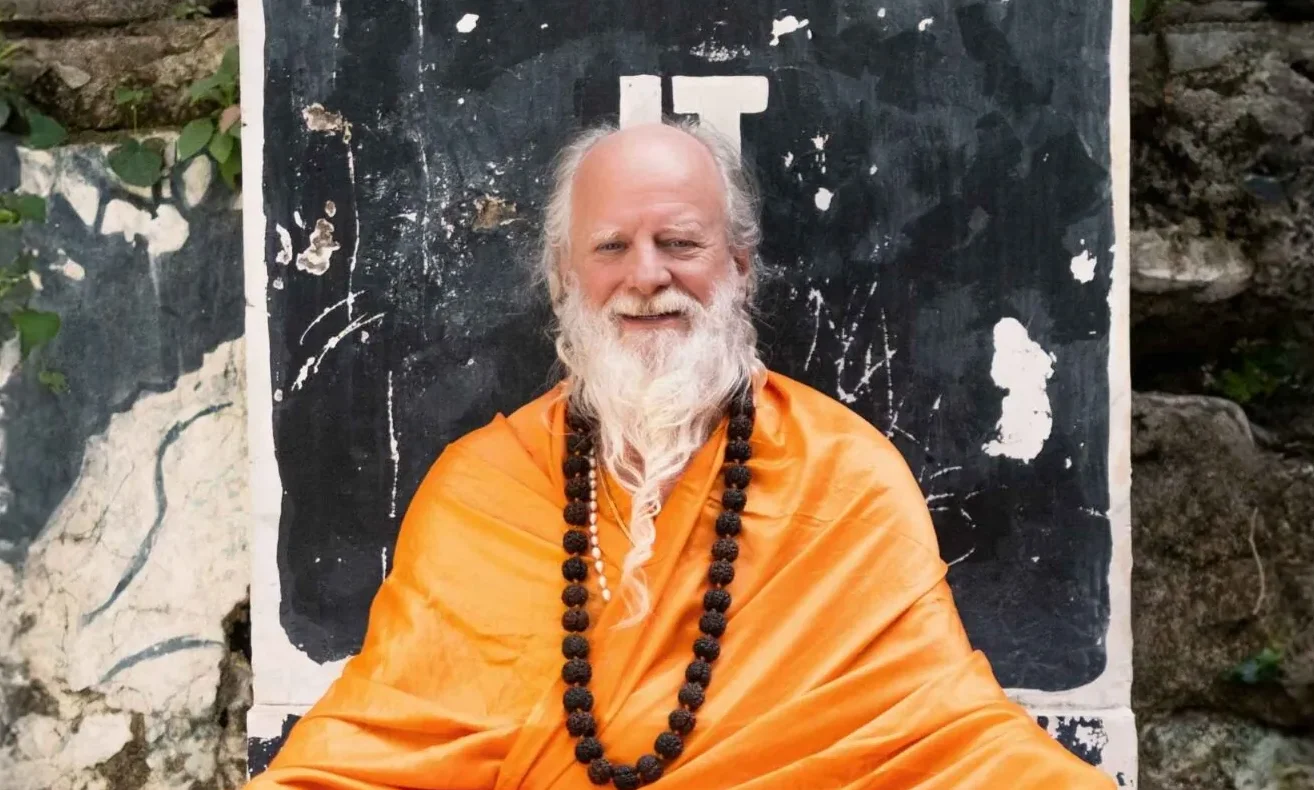
“The most important thing to alleviate the suffering of the world is to stop suffering yourself.”
Thom Knoles
Is it really possible for one person to make a dent in the suffering of the world?
In this episode Thom explains why the most powerful contribution begins with ending our own suffering and aligning with the Unified Field through Vedic Meditation. He traces the way everyday gossip, blame and negativity ripple out into global conflict, and how twenty four hour bliss quietly reverses that trend from the inside out.
Listen in for a radically practical reframing of peace, responsibility and your role in the evolution of consciousness.
You can also watch this episode on YouTube here: https://youtu.be/CpGwe–hZGU
Episode Highlights
01.
Q – How can individuals relieve world suffering?
(00:45)
02.
A – Ending Personal Suffering to Help the World
(01:11)
03.
Living in Twenty Four Hour Bliss
(04:05)
04.
The Seagull and the Stolen Eggs
(07:10)
05.
Where Global Conflict Really Begins
(10:00)
06.
Why War Never Delivers Real Peace
(13:30)
07.
Ending Gossip with Dignity and Silence
(16:49)
08.
Choosing Beauty and Generosity Over Hate
(20:22)
09.
Silent Presence as a Gift to Peace
(23:22)
Jai Guru Deva
Transcript
Can Individuals Relieve Suffering in the World?
[00:00] Q – How can individuals relieve world suffering?
It was basically, if you could offer any way that as individuals we can help to alleviate the suffering in the world. I’m not really convinced that we’ve got to wait to get 1% of the population meditating before anything else can happen. I’m just wondering if you have any words about how as individuals, we can help to alleviate that world suffering.
[00:26] A – Ending Personal Suffering to Help the World
The most important thing to alleviate the suffering of the world is to stop suffering yourself. We can’t wait for somebody else to wave the magic wand and bring an end to the suffering. Naturally, while we’re in the process of a graded program of cessation of personal suffering, what I mean by that is maybe you were suffering 90% and 10% you weren’t, and then gradually you become more knowledgeable, because knowledge eliminates suffering. So now you’re suffering only 80% and 20% not. It’s graded, right? You don’t just stop suffering.
So suffering is a thing that needs to gradually, that means, in grades, be eliminated in ourself, and as the part of us that’s not suffering is liberated, we have to, if we want to think globally, that old saying, we have to look locally. If we wait for…
One thing, I can guarantee you, is never going to work: waiting for somebody to be elected to government to bring an end to the suffering. There’s been false hope pinned on that for hundreds and hundreds of years.
Leaders don’t actually lead. They’re led by the collective. So they pick up whatever it is the collective is up to, and then they reflect that or amplify it. And so you’re a member of the collective, it’s incumbent upon you to find out ways to live your life in 24-hour bliss, and I’m supposed to be the person who teaches that to you: how to live your life in 24-hour bliss. And so how do you know if you’re living in 24-hour bliss?
Well, you feel like some kind of a flower on a tree that attracts honey bees. Everywhere you go, people are coming up to you. Everywhere you go, people are coming up to you because they can sense that you’re not suffering. If everywhere you go, people seem to scatter when they see you coming, then you know you have some work to do.
[03:20] Living in Twenty Four Hour Bliss
So when you have 24-hour bliss, it’s like a light has turned on inside you. And then I think it’s important to have something that you can actually share. And this is why I’m on a campaign to get as many people trained as Vedic Meditation teachers as possible in this body life. As I said the other night, this is not my farewell speech, but my doctor assures me that I have a much younger body than I should have, given my actual numbers of years in this body, but I’d like to train as many people as possible to be capable of radiating life, and then teaching people how to be that way.
So we don’t wait, we don’t wait, Alfred, we just always go ahead.
There’s a wonderful story that used to be a favorite of Guru Deva, who’s pictured here, my master’s master. It’s the story of the seagull. There are lots of seagulls around here. So this seagull is down at the beach, and she lays her eggs in the sand, and unfortunately, a big wave comes and washes the eggs away. And she goes to the other seagull, the father, tells him what happens, and he says, ‘Look, don’t worry about anything. I’ll fix it.’
And he hops down to the edge of the ocean, and he says, “Ocean, it was probably a mistake that you swept the eggs away, and I can understand you’ve got a lot on your mind, being an ocean and all that, but bring the eggs back. And I don’t want problems. You don’t want problems, and there won’t be any problems.” And then he hops back to his wife and he says, “I think we have it organized.”
And the next day, no eggs. He hops down to the ocean and he goes, “24-hours notice, bring back the eggs, otherwise, I’ll dry you up.” Twenty-four hours pass, no eggs.
So he hops down to the ocean, fills his beak with water, hops up the sand, and throws the water on the sand, and then does it again and again and again and again. And a few other seagulls circling around who wonder whether he’s lost his mind. Because, you know, seagulls are normally going after chips and things and not sticking beaks in the water.
[06:25] The Seagull and the Stolen Eggs
“What’s going on?” And he explains it, and they join in. Before you know it, there’s hundreds of seagulls down there, and the pigeons come flying over, and they usually are competitors of the seagulls, and they hop down and they go, “What’s happening here? Is this a private fight, or can anyone join in?” And they said, “Join.” And now the pigeons are doing it, and the seagulls are doing it, and then other birds come, and other birds come.
Now, in the Vedic mythos, there is a king of the birds, a big god called Garuda. Indonesian airways names their airplanes Garuda, Garuda, Garuda. And somebody comes to Garuda and says, “Lord, the birds are all really upset in this one particular place,” and tells him the story and all that.
And there is an intelligence that governs the ocean called Varuna. Garuda is a very, very big bird in the mythos, and he goes to the ocean and says, like the seagulls were saying, “I don’t want problems. You don’t want problems.” And Garuda is so big that if he alighted on the ocean, all the water would just be sucked up into his wings and gone. So Varuna, so Varuna says, “No problem, no problem. We’ll get the eggs back,” and then the eggs wash up on the shore. End of story.
So the moral of the story is, you don’t wait. If you know you’re onto something that’s good, you just go ahead. Just go ahead and you’ll get support of Nature, especially if you’re a meditator. Nature supports you. You find that even some relatively preposterous idea, all you have to do is put your attention on that.
And for someone whose mind regularly, twice every day in meditation, is going into that unbounded field, you identify with that, and then you come back to this. And again next morning, identify with that, and then come back to this. Your intentionality and your capability begin to be adopted by Nature’s intelligence.
[09:15] Where Global Conflict Really Begins
And when Nature’s intelligence adopts you, the amount of change that you can bring is phenomenal. The amount of change you can bring is phenomenal. To get that support of Nature, we have to align with Nature every day. And align with Nature doesn’t mean just thinking things. It means literally stop thinking, step beyond thought and transcend, becoming one with Nature is that that aligns you with Nature, so that your thinking is attuned, and then you can have maximum impact.
So what’s the source of conflict? It starts in home. Some little grousy comment coming in the kitchen, some grousy comment coming in the living room, some little grousy comment coming in the bedroom. You want to know where the wars start. That’s where they start.
They start under a roof, and the vibration of that that goes out, and the unhappiness that’s born of that. Individual humans not being nice to each other, not being considerate of each other. Trying to prove points with each other, trying to cut across the interests of each other. That’s where it starts.
And when you have nations of people doing that, then the tolerance of the nation begins to crack, and it creates collective phenomena of grousing at each other and cutting across the interests of each other. And so it starts right here. It doesn’t start out there.
And the idea that is becoming popular, again, the idea that was very, very popular in the 20th century. If you have complaints about how other collectives countries are behaving, start killing. Kill enough of them. Kill the right ones, or kill in large enough numbers, and all of the unhappiness will end, and you’ll be fearless again.
And we should have learned in the 20th century, after 160 million people were killed doing this, that was the killing century. We haven’t had a long enough time in the 21st Century to match it, but we easily could or exceed it. 160 million people were killed in warfare in the in the 20th century because we learned how to do it industrially, machine guns, nuclear weapons and vaporizing people by the hundreds of 1000s, all in aid of becoming fearless so we could get fearless again. And it didn’t work.
[12:45] Why War Never Delivers Real Peace
And so we see now nations all arming up, getting ready for war, getting ready for war. Everybody’s getting ready for war. Germany getting ready for war, and Europe getting ready for war, and America and everybody getting ready for war. Everybody. And this readiness for war is just readiness to once again experience the futility of trying to kill your way to fearlessness.
You can’t kill your way to fearlessness. You can’t kill your way to peace. It didn’t work. We tried it once already. We spent a whole century on it, and it didn’t work. We have to come up with something revolutionary. Nuclear technology sounds scary, but there’s something deeper than nuclear.
The deeper thing than nuclear is Unified Field. Unified Field technology is more powerful than nuclear technology, and Unified Field technology is exactly what we are harnessing when we practice Vedic Meditation. We’re practicing Unified Field technology. Our awareness is unifying with that field which is the home of all of the awarenesses, all the other awarenesses.
So rather than waiting, we have to do it ourselves. There is such a thing as a kind of resistance to being illuminated or being enlightened. We have each of us, we might say, “I’d love to be one of those enlightened people who has 24-hour bliss. I just need to get some unfulfilled desires out of the way first, and got some more people I’ve got to complain about first, and because I’m convinced that it’s other people who are making me unhappy. When I’m finished with all that I’ll get on with.”
And this is kind of enlightenment denial. You see, the thing is Unified Field right now is your baseline. It’s what you are actually. Being-ness is all you are. You don’t have to become what you are. What you have to do is stop being what you’re not. Stop being what you’re not.
You’re, in fact, the one indivisible whole, universal consciousness field. And every time you behave as if you’re not that, you are stepping outside the boundary of your true identity, and it makes Nature scream. Nature screams when we behave like ignoramuses. And so we have to learn how to stop doing that.
[16:04] Ending Gossip with Dignity and Silence
And it comes up first when we get a temptation to speak ill of somebody. You have this thought of, like having an itch that you want to scratch, and so and it usually, we’re learning cleverly and cunningly how to be intelligent about speaking ill of others.
It’ll start with something like “Not to be negative, but…” you know, it’s like we’re giving a warning. “I don’t want to be negative, but…” and then out it comes.
If we catch ourselves saying something like that, like, “I don’t want to say anything bad about him, but…” then learn how to stop right there. Just don’t let the next words come out, look at the trees or something, and say, “Look at those beautiful trees. I don’t want to be negative, but look at those beautiful trees.”
Because with our speech and our consciousness, we push people down. We don’t realize it, but we’re pushing people down to be that low. We have a lot of power in our thoughts and in our speech, and we push people down to be that low, and then we have to deal with something that we helped to create. It’s like we’ve helped to create a Frankenstein’s monster, and then we’re shocked when we have to deal with it, but we helped to create it.
So one of the things we need to learn and get into the practice of right away is cessation of negative talk about other human beings. Other human beings were babies once, just like you were a baby once, and they grew up. And whatever the forces were by which they were indoctrinated, very similar forces by which you were indoctrinated, they were indoctrinated about some identity that’s non Unified Field, and you also were indoctrinated about some other identity that’s also non Unified Field.
So we need to dissolve that tendency in ourselves, and don’t have to fake it and say things nice about people that we don’t actually mean, but silence. Silence is good. So really good thing learn to become the master of your silence. To learn how to master your silence is an enormous mastery.
If we’re impulsive talkers, and somebody says, “And what about so and so?” And you feel like jumping in and like a gang beating somebody up, you’re going to dive in there and say, “Well, you think that’s bad. You didn’t hear this bit yet.”
[19:37] Choosing Beauty and Generosity Over Hate
I was sitting on a bus, and there were a couple of women, and it could have been men, but they just happened to be women, and they were sitting right in front of me, and one of them says, “Have you heard about”, and there was a name, Susie or something, and “No, no,” says the other one, and then the other one says, “Come on, let me have it. Tell me everything. Don’t hog the hate.” Don’t hog the hate. Get some of that hate out here. Let’s push her down together.
I thought it was actually quite a knowledgeable way of speaking. She knew what she was doing. You know, “Let’s have a little hate fest here.”
We have to learn to be more dignified than that. It’s not dignified, and we have to learn how to be more regal than that. You’re regal deep inside because you are an extension of Unified Field consciousness. And so we need to move with that kind of royal mentality.
Not imagining that we’re entitled to things to which we’re not entitled, not that, but dignity. Dignity, elegance. We have to get in that habit, have to make ourselves, we have to become alert to negative thoughts, and a very good thing, when you you find yourself about to go there, is there nothing around you anywhere that has any beauty in it?
There’s always beauty somewhere. You could look at these beautiful oak floors that are in this ancient building that we’re sitting in and just look at that and the way that they put the dowlings in instead of nails, and the amount of craftsmanship that went into the making of this floor. Nobody makes floors like this anymore.
And there’s somebody in the room who you want to feel like hate for, look at the floor instead. It’s a beautiful floor. It’s incredible floor. And what did it take to have different people on the council, the Waverly Council who preserve this art deco building that we’re all sitting in? Yeah, there’s somebody who really annoys you in the room. Check the floor, check the… think about what it took to put you in this beautiful place.
[22:37] Silent Presence as a Gift to Peace
Start paying attention to the beauty that’s around you. It’s all around you, everywhere. You only have to look for it; it’s easy to find, and it feels so much better than diving down into making somebody else something “Other” than me. “Other,” capital O, “Other” with quotes around it. The not-me, the not-me thing.
Because the not me is really just a very cheap way of trying to make the Me supreme. “I’m the great one who adjudicates who is okay and who is not okay.”
And if in your life, you find that there are a very tiny number of people who are okay, and mostly everybody is just damned annoying, or worse, there is something wrong with you, you need to cure that, because that’s not how things are actually.
So we need to awaken our generosity of spirit, or look at the floor and look at the beautiful trees and listen to the currawongs and the magpies and look at those beautiful waves coming in with the spray flying off of them this morning, it’s so fantastic.
We can always find an alternative to being negative. We can always find an alternative to it. It’s a habit that we need to break. It’s one of those habits we need to break. And we don’t have to be fake positive. We can be silent. Fake positive is no good either. That’s just fake but we can be silent and observant of beauty.
Be silent and observe beauty, and you’ll have a much better, you’d be making a much better contribution to the peace of the world by doing that.
Yeah, good question, Alfred. I can always rely on Alfred to ask a good question.
