
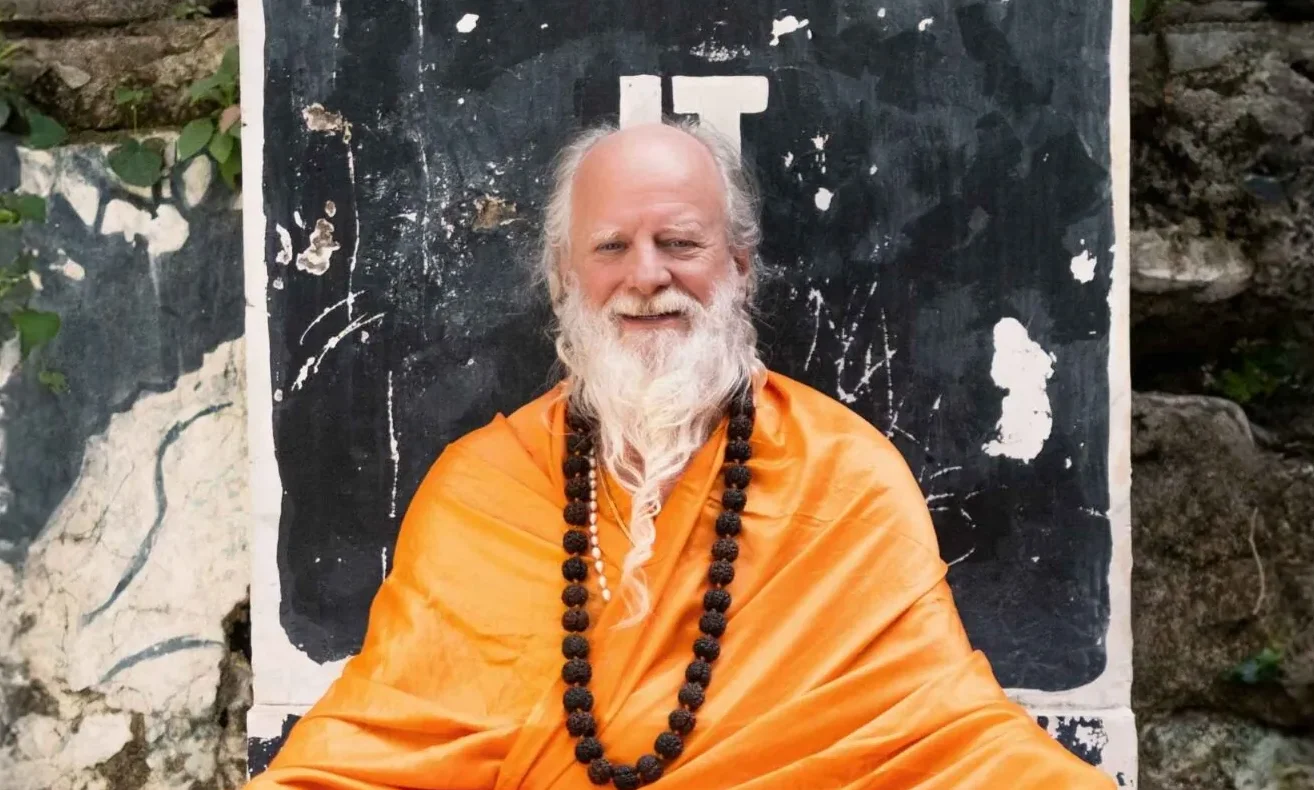
“Evolution and progress are primary. Survival is a byproduct.”
Thom Knoles
What if survival is not the starting point but the byproduct? In this episode, Thom explores why progress and evolution must come first, and how “Big Consciousness” turns survival into a natural side effect rather than a desperate project. Along the way, he unpacks the Committee on Darkness, the difference between dog consciousness and elephant consciousness, and why hesitation makes Nature scream.
You will also hear how prevention, creative intelligence, and everyday social interactions become the measuring rod for your state of consciousness.
You can also watch this episode below or on YouTube here: https://youtu.be/GaFl_qWSyCI
Episode Highlights
01.
Progress is Primary. Survival is a Byproduct
(00:45)
02.
Stepping Out of Survival Mentality
(04:44)
03.
The Committee on Darkness
(07:33)
04.
Use the Light to Clean Up the Mess
(11:03)
05.
Q – How can we avoid triggers of anger, rage, and old traumas?
(14:31)
06.
A – Elephant Consciousness and Dog Consciousness
(15:03)
07.
The Terrible World
(17:35)
08.
Q – How do we know if our choices lead to progress?
(21:56)
09.
A – Nothing Makes Nature Scream Like Hesitation
(22:11)
10.
Decisiveness Yields High-grade Information
(23:49)
11.
Q – How can we self assess our states of consciousness?
(27:20)
12.
A – Normalizing higher states of consciousness
(27:52)
13.
The Measuring Rod is the World Around You
(31:02)
14.
Q – Do we have to feel pain to care?
(34:58)
15.
A – Prevention, perception, and creative intelligence
(35:50)
16.
What is Your Secret?
(37:59)
17.
Study of the Problem is Not the Answer
(42:01)
Jai Guru Deva
Transcript
Survival Consciousness vs Progress Consciousness
[00:46] Progress is Primary. Survival is a Byproduct
Thank you for listening to me. I am Thom Knoles, and this is my podcast, The Vedic Worldview. Today, I am going to talk about the relationship between survival and progress, a very, very important discussion to have and to metabolize.
So first of all, we will chop the vegetables, and then we will lay them all out, and we will cook them, and then we will consume it and metabolize it. The vegetables are the issue of survival versus progress, and one of the things that happens in the decline of a culture or civilization is getting these two things mixed up in terms of priority. Everyone thinks, not everyone, not me, most people think that if only you can survive and have the basics.
What are the basics? Perhaps shelter, perhaps adequate food, perhaps clean water, perhaps sufficient exercise, perhaps a degree of education that you can then afford and be in a position to start progressing. And this is absolutely dead wrong, that survival is the baseline and progress is the luxury that you get to engage in once you have survival arranged. But in fact, it is exactly the opposite of this.
There is no species anywhere on Earth or in the biosphere that displays this tendency. The demand is progressive, change first and then survival is granted. Evolution is required as a baseline. If we do not progress, if we do not engage in progressive change, if our sequential elaboration is not that of evolution, then we get labeled as irrelevant. And even Nature will use its operators to bring about our extinction, because only that gets to survive, which has made itself relevant by evolving.
So evolution and progress are primary. Survival is a byproduct. Survival is a byproduct. There is no species or anything on Earth which is guaranteed survival, or has some divine right to survival, or has some basic laws of Nature right to survival, or even from a humanitarian perspective, has survival as its right.
What its right is, divine, humanitarian nature, or however you wish to angle this thing, its right is to evolve, to progress. To the extent that you progress, then exactly to that extent, in direct ratio to the extent to which you progress, you will be granted survivability.
So survivability is a byproduct of progressive change of evolution. It is not the other way around. You are interested in surviving, I presume you are, then the answer is, there is something to do besides patching together the basics. We have to begin the process in whatever way we can. Look left, right, up, down, backwards, forwards, in every direction. How can I, even in whatever slight way, embody progressive change?
[04:44] Stepping Out of Survival Mentality
Making an appeal for survival is a failing strategy. Being able instead to seize the opportunity to progress, this is what is going to bring about survival. And so it is an exact ratio.
So we have to put our attention on progressive change. Attention on progressive change means you transcend where you are. What does transcend where you are mean? In Sanskrit, we say Nivar, Nivar tatvam.
N-I-V-A-R tatvam. Nivar tatvam, it means to go where you are not. Experience that which you are not experiencing. Move out of the realm of the experience you are having and have another experience instead of that. Nivar tatvam, transcend where you are.
And so if you are thinking, transcend thinking, step beyond thinking. “I am trying to think how I can survive. I am trying to think how I can survive.” Stop doing that. Stop doing what? Thinking. Go into your transcendental state and experience Being.
When you experience Being, you become One with that underlying evolutionary force, and you become an agent of progressive change. Brilliant ideas will pop into your head. All kinds of ways of your individuality being used as an agent of progressive change will embody you.
And so we have to find ways of stepping out of mere survival mentality. “I need to survive,” is a guaranteed way of not surviving.
“I need to progress,” is a guaranteed way of generating the byproduct, which is survival. So survival is based on progress, not the other way around.
Progress is not a luxury that you have once you have managed to survive. Survival is a byproduct that is granted to you based on your making yourself relevant to the force of evolution. The force of evolution is an inexorable force. I love that word inexorable. It means uncompromising. It is an uncompromising force, the force of evolution. It is embedded in everything.
And so when you transcend your individuality, you step beyond individual constraints, you are entering the world of solutions. My master, Maharishi Mahesh Yogi, had a banner above the building in which he resided for nine years in Seelisberg, Switzerland, and the banner, as you came in, had written in English, “Welcome to the solution to all problems.”
[07:33] The Committee on Darkness
This is the world of solution, and Maharishi’s number one thing, he would say, “Analyzing the problem…” So let us think for a moment in an analogy which, again, comes from Upanishads, one of the fable storytelling methods of the Veda is a body of knowledge called Upanishad. Upanishad means a sitting at the feet of a master. Upanishad, upa-nishad Sitting at the feet.
In the Upanishads there is a story, and I will summarize it for you, it goes on for many, many pages, there is a dark room. Somehow the room got pitched in darkness, and there is a group of people sitting in the room, and they discover problems from the absolute darkness. For example, when you walk you hit your knees on furniture and it cracks your knees open, or you bump into each other, or you do not know who it is you are dealing with, and so no way of identifying a person until they tell you their name or whatever. And you can imagine the problems of darkness, floundering around, groping in darkness.
And so somebody has a bright idea to convene the Committee on Darkness. And the Committee on Darkness gathers round, after they find the table, they finally gather around the table, and they come up with the proposal to study the darkness. Study the darkness and study the problem and study the problems that come from the darkness that is extant.
And in this Committee on Darkness, they come up with all kinds of things. “The real problem with darkness is you have a bad attitude to it. And so let us create a better attitude. We need a motto, Darkness is beautiful. And so we are going to get everyone to memorize this motto, Darkness is beautiful. It will help the psychology of being in the darkness.”
“We need to have Braille badges so that everybody can identify everybody else. And so we need to get the Braille badges.”
“We need more first aid kits for all the broken knees from walking into furniture.” And so on and so on and so on.
First Aid Kits and badges and new mottos, and somebody says, “I have an idea. We will open up the windows and we will push the darkness out through the window.” They try that. Nothing happens. It does not work. And so the Committee on Darkness seems to have finally reached its last days of relevance, and suddenly into the room comes walking someone who did not know about the dark room, and they reach their hand in, and they switch on the light, and everyone’s eyes are dazzled. You know, “Oooh, light.” Like that.
[11:03] Use the Light to Clean Up the Mess
And in that light, what does light do? Light is that that connects the Knower with the Known. When you have a connection of the Knower and the Known, you have the Knowing, which is provided to you by light, then you do not misconnect, or you do not disconnect with the Known. You do not walk into furniture if you can see it coming, You are not constrained to having these disconnected relationships with the object world.
So the subject and the object get united through light. Light means consciousness. Once light has come into the room, all of the previous solutions now are obsolete, but there are people on the committee who invested a lot of time and energy in those previous solutions. They may not want the light on. They might want the light turned back off again so that they can get rid of those Braille badges and get everyone doing the motto, Darkness is beautiful and all of that,
But light really does bring the solution. Now, one of the things when you illuminate a room, after a long time, you discover what a mess the room is in.
So now we are going to step out of our analogy and dive into the reality of life, analysis of problem, study of the problem is not a solution. The solution is transcend the problem. You bring in a second element. Darkness is one element, the second element is the light that removes the barrier causing effect of the darkness. When you introduce the second element, the first element no longer is an obstacle. It is not problematic.
But once you illuminate the room, suppose you are practicing your Vedic Meditation twice every day, and your consciousness awakens, and you let go of the futility attempting to push the darkness out the window and things like that, you realize this, but you also realize another thing, a mess got created. Messes got created when you were living in darkness, and they have to be attended to, as well. As meditators, we do not just rest on our laurels that, “Oh, I am a meditator now. I can see beyond the problems.” We might have left a mess behind us.
It is important for us to use the light to straighten up the mess, do what we need to do, get involved in those active things to get our life into order, and to make amends with all those whose lives we may have impacted when we were living inside the dark-room mentality.
So progress and survival, progress and survival. Progress, transcend where you are. Challenge the assumption. Transcend where you are, and then survivability is granted to you in exact ratio to the degree to which you are relevant to progressive change
[14:31] Q – How can we avoid triggers of anger, rage, and old traumas?
In the current state of the world, there is a lot of anger, a lot of rage, a lot of injustice. It seems to be a lot of triggers from like old traumas, and so a meditator that has been happily moving along through life and then being triggered into some sort of rage that has triggered something in them. What can you offer in terms of that?
[15:03] A – Elephant Consciousness and Dog Consciousness
You see what happens when an elephant enters a village? All dozens of dogs come barking from everywhere, but the elephant does not mind. He is just happy some dogs are enjoying barking.
Problem is a problem when you are little. If you are one of the yappy dogs and all the dogs are barking, you want to bark with them and be sure that they know that you can bark and bite as well.
But what if you are an elephant? What can a dog do to an elephant? Nothing. I watched this in India. This was my project. I had to go in and get the vegetables with the little burro and the little cart, and I went across the bridge and went 10 kilometers to the other side of the river. And my job was to report to Maharishi.
One of my jobs was to report to Maharishi, what I saw, and one of the things I saw was elephants helping the timber getters, is what they called them, the men who were cutting trees and sawing them into big logs and putting them in the river to be picked up out of the river 100 kilometers further down for sawing in the sawmills.
And the elephants would arrive, and they would work willingly, without any human being intervening on them. They knew exactly what to do, pick up the log, take it over to the river, throw it in, and they would have their little baby elephants trailing along behind them.
Sometimes the big male elephants and the female elephants… some people think female elephants do not have tusks. In fact, they do. Some of them do. And this big tusker female came walking with a log and clamped down with her trunk, walking along and about to throw, but all these dozens of dogs came, and at one point the dogs, one dog, was really showing off to all the others.
And so when she lifted up her giant foot, which is this, a big round [puts arms in a circle in front] she lifted up her giant foot to take the next step. The dog got underneath the foot and was barking at the foot, and then looking at all the other dogs to be sure the other dogs knew. And she just waited with this half a ton log sitting on her tusk. She just waited for that dog to finish showing off, and as soon as he finished and was licking his chops and walked away, she put her foot quietly down onto the ground and continued walking.
[17:35] The Terrible World
So the lesson is, it is not the dogs, it is how big you are. What are you? Not, what is happening?
I have been hearing about the terrible world since… I remember when Kennedy was assassinated. I remember the Cuban Missile Crisis. My father was involved in it. That was about 1962 and the Cuban missile crisis was around 1961 or so. I am an ancient old man, and everyone was saying, “Oh, the terrible state of the world.”
Nikita Khrushchev from the Soviet Union had got up in the United Nations and took off his shoe and began pounding it on the podium, and pointed his shoe at the Americans and said, “We will bury you.” That was a pretty, it was a pretty exciting time. And then after that, the Cuban missile crisis and the Bay of Pigs, and then the… maybe the other way around, and then the assassination of JFK.
And then the later 60s came. JFK’s brother got assassinated, Martin Luther King got assassinated. And everybody, every year, has been saying to me, “Now, Thom. These days, when things are so terrible as they are…” I have been hearing this “These days” story every year my entire life. That is a long life. I have never heard a year when people have not said now these days when things are so terrible.
This is dog talk. “It is so terrible [makes barking noise]. It is all so terrible.” You know, the dogs are all convinced that there are just dangers everywhere, day and night, so they are all barking their little heads off.
Elephants do not bark. Dogs bark. Elephants walk. Elephants walk with royal pace, with royal grace, and let all the noise go on down and… you know. So happy people are enjoying worrying about these days, these terrible days. Every day has been a terrible day my entire life, if you are a dog.
Do not be in dog consciousness. Be in God consciousness. Reverse the words around not D-O-G, G-O-D, you know God consciousness. Be the elephant, be the Big Consciousness. Get your consciousness big.
You get your consciousness big, and then make it into a contagion. Everybody will become envious of you and want to get Big Consciousness like you, because, you know, you will hear the latest news about how somebody is going to interrogate you at the immigration place when you go in, just like they did to me when I came from Australia last time. I just had fun with those people. I was the elephant.
And so you can either sit around and bark or you can get your consciousness big and be an effective interactor. And I recommend you be an effective interactor. Do not be a Barker. So Big Consciousness is the answer.
Big, it means let your creative intelligence swell to the maximum possible for the optimized human brain. We did not get the little dog brain. We got the big human brain, the 100 billion neuron model. We got the 100 billion neuron model brain, not the little brain. Use our full creative intelligence. Lack of use of full creative intelligence is what makes dumb people get into office.
If you are worried about really dumb people being in office, it is because you and your neighbors and everyone else created a golden path straight into the office. Whatever the office was, you created it. So do not bark about it. Get big, get Big Consciousness and be the exemplar, be the example of that which you want the world to change to. Barking does not help. It does not work. Elephantine consciousness works. Jai Guru Deva.
[21:56] Q – How do we know if our choices lead to progress?
When survivability of our individual life is in question, how do we know that out of all the choices we are presented with, the actions that we choose lead to the progress, not to the regress.
[22:11] A – Nothing Makes Nature Scream Like Hesitation
We know that actions lead to progress when things get better. If things get worse, then it was not a progressive decision. And there is a little trial and error in this, you know.
If you got a flat tire, and you decide that the solution is to kick the tire and the tire did not fill up, then you do not have to kick it a second time. Now you learn that did not work. And if you start pumping up the tire without patching the hole, and it all goes deflated again, then you realize pumping the tire without patching the hole did not work.
So we have to start on something. We do have to be decisive, and being decisive starts the process of trial and error. But would you make an error? Just shift off of that real quick.
We are running along, and we trip and fall. We do not sit and go, “Okay, that was the rock. That was the mud, the person who watered the grass, it ran into the hole. It got mud on my clothes,” all of that. We just get up and go, take off, keep running. Do not sit around analyzing how I got there and there, the mud, the rock, the, “If I had only not worn my Birkenstock, but I was wearing my special Navy SEAL shoes, then I would have been okay,” all that. It just… keep moving. Keep moving.
And so we get decisive. There is nothing that makes Nature scream like hesitation.
[23:04] Decisiveness Yields High-Grade Information
You all know this from the menu moment. The menu comes to the table, you are dining with friends, and there is always one friend who just cannot make up their mind. You know, certain people get to the table as soon as they land, before their butt hits the seat, they already know what they are ordering, and they are hungry, and everybody is hungry, and it is the same menu for everyone.
But there is always somebody at the table who is like, “I do not know, waiter, can you come over here? What is your favorite dish?” And the waiter has heard this question so many times, and the waiter says, “My favorite dish is the special tandoori shrimp.” And you go, “I do not think I will be having that. Anything else your favorite?” “No, I told you my favorite dish.”
And meanwhile, everybody at the table is trying to think of how they could be better off with their hands handcuffed behind their back so they do not strangle anybody. And then the person finally, after hesitating for five and 10 minutes going over the menu, they finally commit to an order, and then as the waiter is walking away, they call them back. “Oh, I changed my mind. I will have the tandoori shrimp.”
No, if it makes us scream on the human level, it really makes Nature scream hesitation. When there is the confronting of a moment that calls for interactivity, it requires you to interact with the demands of the environment. Be decisive, make a decision quick. If it is the wrong one, you find out quick it was the wrong one, and you make another one. And if that is the wrong one, you find out quick, and you make another one.
And you are going to hit the right decision, as long as you are decisive, because being decisive yields high-grade information. Being hesitant involves a lot of speculation. Speculation is very low-grade information.
“Oh, maybe I will have the tandoori shrimp. But are the shrimps big, or are the shrimps small? Maybe they are big. Maybe they are small. Maybe the tandoor is not really a tandoor. Maybe they just put it in the microwave. Maybe this, maybe that, maybe this, maybe that.” And the whole world is waiting.
The whole world is waiting, and you are getting no new information. If you get some small, bad shrimps on the table, now you know, “No good. Take it back. I want the next dish.” But sitting around speculating about what it might be, what it could be, what somebody else thought. Speculation, low-grade information.
Decisiveness, high-grade information, fast. Get it right, you know you are right. Get it wrong, you know you are wrong, you change. Get it right, you get it right. Get it wrong, you know you are wrong, you change. No big deal. Hesitation, Nature is just marking you with a great big I. You know what I means, irrelevant. I, you are on your way to extinction. Decisiveness is good.
[27:20] Q – How can we self assess our states of consciousness?
So we talk a lot, and we study a lot of the different states of consciousness, and our practice kind of allows these states of consciousness to begin developing in a way that is, that we can normalize it. And so when we start normalizing certain evolved states of consciousness, it is kind of hard to know what state of consciousness you are in. So could you talk a little bit about that versus enlightenment denial?
[27:52] A – Normalizing higher states of consciousness
Yeah, not knowing what state of consciousness we are in is a natural sign of being in a relatively high consciousness state. You are right that you normalize the new consciousness state you are in, and it happens incrementally, day after day after day after day, as you keep practicing your meditation morning and evening, and you evolve naturally. Then incremental change occurs, and it is so incremental that it is hard for you to tell.
So just to use an example, here we are speaking fluently in English. But there was a time when you were about two, maybe one and a half to two years of age, where whatever your mother tongue was, you struggled to come up with the right words for things.
I remember when one of my little children was videotaped, I still have the videotape, saying his first sentence, pointing at a glass of empty glass, and saying, “I wah wah wah.” “I wah wah wah” meant, I want water, but it was I wah wah wah. Now that child is super eloquent. Now, really more eloquent than me, and you know, just absolutely a genius.
How did that happen? You sit and talk, and you keep talking, and eventually you are fluent, and you do not even know how you got fluent, and you do not know that you are fluent, and you do not even realize you are talking. You are having a thought, and you are doing this thing with your voice, like, “Blah, blah, blah, blah, blah,” and somebody else is going, “Mm hmm, mm hmm, mm hmm,”
Your thought is going into their head and awakening them, making these funny little sounds that you can make with your vocal cords [makes mumbling sounds], and they are going, “Oh, yeah, good point. But what about this other subtler point?” And you are listening to them and processing it all.
It is astonishing, and you do not consider it a major, major achievement. You are not going to get a headline in a newspaper that two minds communicated over coffee, some really subtle ideas, because everybody is doing it all the time. And so even though it is a magnificent communicative state of consciousness that you have arrived in, you do not even know you are in it.
I am sure, you know, all the dogs and the animals are just looking at us and doing their heads like [makes mumbling noises], and they are all just like, “Whatever. Where is the food?” No idea. They have no idea we are communicating the subtle distinction between survival and progress. All they hear is [makes mumbling noises] and they keep doing that, and eventually one of them wakes up from it and gives us some food and water.
[31:02] The Measuring Rod is the World Around You
When we are arriving in a new state of consciousness, we are arriving in a new state of capability, and we are not sure we even have it. The only way to know what state of consciousness you are in, and if it is any better than that of somebody else, is your memory how much you used to suffer compared to how much you suffer now and others.
So where are we with all this? To find the contrast that is necessary for one to assess one’s progress, we have to be social. It is a very interesting thing. It means you have to spend time around other human beings who are less capable than you.
You see somebody who gets all upset about one word that came out, and for three or four hours they are working themselves into a lather over this one word, and they may have even heard the word wrong. They might not have even heard the correct word that was spoken. And from your perspective, if the shoe were on the other foot and you had heard a word like that that appeared to be so pivotal, you absolutely would not react in the least the way somebody else is reacting.
And we are happy about this comparison, because it is from this that we can see the state of consciousness we must have arrived in as a result of meditating twice every day. It requires socializing. We have to be around other people who evidently have not been progressing at the same speed as we have. This is where you find contrast.
I find it in airports more than any place else. I go to airports a lot. I fly commercial on airplanes all over the world, and when things are going well, you see a look on people’s face. They have a kind of a stunned and frightened and freaked out look, as if an earthquake has just happened, or as if somebody has just shouted fire. That is when things are on time, or as if they have just heard gunshots.
And people look really sick, and, you know, they look not well, and there are hundreds of them all around me, and I just think to myself, “This is why I teach meditation in the world. It is this look on the faces of all these people walking around in abject suffering and misery, and they are on their way, probably to meet family members somewhere or to have a vacation or a holiday, and yet they look like somebody has just announced to them they have to go to the electric chair.”
And so where do we find our heightened state of consciousness? When you move around society and you see how much society is suffering all around you, it makes you realize what a good state of consciousness you have arrived in. And the only one thing you are doing differently to them, they are eating food every day just like you. They are drinking water every day just like you. They are doing most of the things they are doing are just like you.
There is one thing you do that is different to them. You sit on a chair twice a day with your eyes closed and step beyond thought and release all the stresses in your body and then come out. So the measuring rod is the world around you. That is the measuring rod of your consciousness state.
[34:58] Q – Do we have to feel pain to care?
I read a book of a Mexican writer that is about the forced disappearance of a lot of people in the country. And she had a quote that, it is the thing I want to ask you about, where people were asking her, “Why do you write about this? Like it is, I do not want to read this book, because it is painful.” And she replied, “If it is painful, it is good because it means you care.”
And so I was wondering if you could elaborate on kind of a follow up on Cam’s question on the things that are going on in the world, and the difference or nuance between things that happen where we empathize and want to do something about it or indifference and like not wanting to feel the pain of those situations.
[35:50] A – Prevention, perception, and creative intelligence
See, the thing is, we do not have to feel pain, If we have to wait until it is painful before we care, we are pretty dumb. Like somebody lights a match on my toe and I am watching, and right now it is just burning through the callus, and it is not painful yet, and I can smell the burning flesh, but I am going to wait until it is painful before I actually decide that I care. It is not very intelligent.
It means dull consciousness. I have to have pain before I care? Yes, of course, it shows that you care, but it is a little late. Why? Why wait until pain comes? You see something, if you catch it early, you see the future in the making, then you avert the danger before it comes. Now you really care.
And there is a very odd thing about prevention. It is a very strange fact, if successfully you prevent something from happening, you cannot ever get any credit, because there is no proof that you prevented anything, because it never happened.
If you have to wait for a terrible thing to happen, and then not only you waited for it to happen, but you waited for it to give you pain before you had a sufficient critical mass of caring enough to get your toe out of the flame. This is a very… this is the kind of, use the word stupid, way that our society has been working for too many centuries. Let us wait until pain comes, and then that shows we care, and then we will do something about it.
Why do we not prevent? One of the reasons why we do not prevent is because we do not have acute enough perception to see what is coming. And so then things happen, all kinds of things happen right under our nose, because we were too dull in our perceptual capability to see what was coming.
[37:59] What is Your Secret?
As somebody who leads a life where they have minimal problems, even though they are fully engaged people, we should be interviewing those people and saying, “How do you get this life of minimal problems? There are so many people who have lots and lots of problems, who are engaging in all kinds of ways. You seem to be somebody who, even though you are fully engaged, moving all around the world and everything, you never have any problem. What is your secret?”
But we do not have books about those people. We have books about all the people who failed to see the danger coming and who got trapped in the danger, and then you have to go in and try to reconstruct everything and on that basis, and what is the whole idea of that? It is to see if you can prevent it. But prevention must not be something that you construct through the rear-view mirror. “From the rear-view mirror, I can see what went wrong, and now I am going to try to reconstruct the future so that that thing does not go wrong again.”
People have been trying this for centuries, and it is not effective. What is effective is having such great preventative capability that there is no story. There is no story.
I was on a federal grand jury. This is one of those now-it-can-be-told stories. It was a buried story for a quarter of a century. I was on a federal grand jury for the 9/11 massacre in New York City. And in that federal grand jury, we indicted certain people who were known to be either involved in the conspiracy, or even somebody who learned how to fly a plane and never learned how to land it, but he learned how to fly it.
And this particular individual had a room loaded with guns and explosives and all kinds of things, and also had a computer when, after the massacre occurred, he never got on his plane, but the massacre occurred, the authorities went into his room, but they were not allowed by a particular judge to open the computer to see what it had on it.
Later on, there was permission granted, and the entire plan was on that computer, right down to who lived at what address, what date, how they are going to get to the airport they are going to get to. Now, it made me think that, “What if that computer had been discovered before the massacre? What if all those people had been stopped before they even left their house after they finished their breakfast in the morning. What if? What if? What if?”
Well, the two towers would still be sitting there today. The thing of 9/11 would never have happened. We would not even know what 911 meant. We would think it meant the emergency number in America, 9/11. What if? If, successfully, it had been prevented, nobody would be able to say, “I prevented 9/11,” because everyone would say, “What was 9/11?”
If 9/11 never happened and all the news was that a few people were arrested in their homes in Boston and New York before they went off to do something they intended to do but never actually did, there would not be any glory. You see, there is no glory when you prevent. That is what we want. We want zero glory. Lots of prevention means zero glory.
So many of us are kind of, in our heart of hearts, because we have led a life of failing to prevent things, we kind of want the glory of trying to call out that which caused a bad thing to happen. “I got the glory of calling out the bad thing that should not have happened.”
[42:01] Study of the Problem is Not the Answer
What about the prevention? That should be a more glorious profession, the silent prevention. How many things have been prevented by super-conscious people? You will never know. Was the world saved from thermonuclear destruction by somebody? Probably, but you will never know. You will never know. Was the world saved from all kinds of terrible things that, once upon a time, were about to happen but never actually happened because somebody prevented it? You will never know.
All we know about in our ignorant society is where people fail to prevent things. That is what we know about. Failure to prevent is our history. Failure to prevent. World War One happened, we failed to prevent it. World War Two happened, we failed to prevent it. Everything that happened was a failure to prevent.
Why are we not putting our attention on prevention. And prevention does not have anything to do with calling out the bad guys of the past. It has to do with awakening full creative intelligence in the human condition. We need to put our attention on that that really is full education of the human. Full education of the human means full education about what your full brain potential is, what your full creative potential is, what your full creative capacity is, rather than being reactive to a world that went wrong because nobody prevented anything.
We need to be proactive, and we need to awaken the brain’s full potential and prevent all the bad stuff. Prevent, prevent, prevent, prevent. Racing around trying to right all the wrongs. There have been wrongs happening ever since Attila the Hun. Attila the Hun who killed millions of people, and we still have not corrected all those wrongs from Attila the Hun.
Then came Genghis Khan, 800 years later, we still have not corrected all the problems that Genghis Khan created. And then came the invasion of India by the moguls, the descendants of Genghis Khan. We still have not corrected all the wrongs that were done. Then came the British. We still have not corrected all the wrongs.
But are we doing anything about prevention? We seem to be. Because of our use of 2% of our brain power on average. we seem to be fixated on reactivity about the past, and we call ourselves activists when we are reactive. We do not call ourselves activists when we are actually preventing. It is a very… it is a failed strategy. It is already got failure stamped on it.
What we need to do is awaken full potential and avert dangers that have not yet come. Avert them. Study of the problem is not the answer. Study of the darkness is not the answer. We have to turn on the lights and eliminate the darkness. That is it.
