
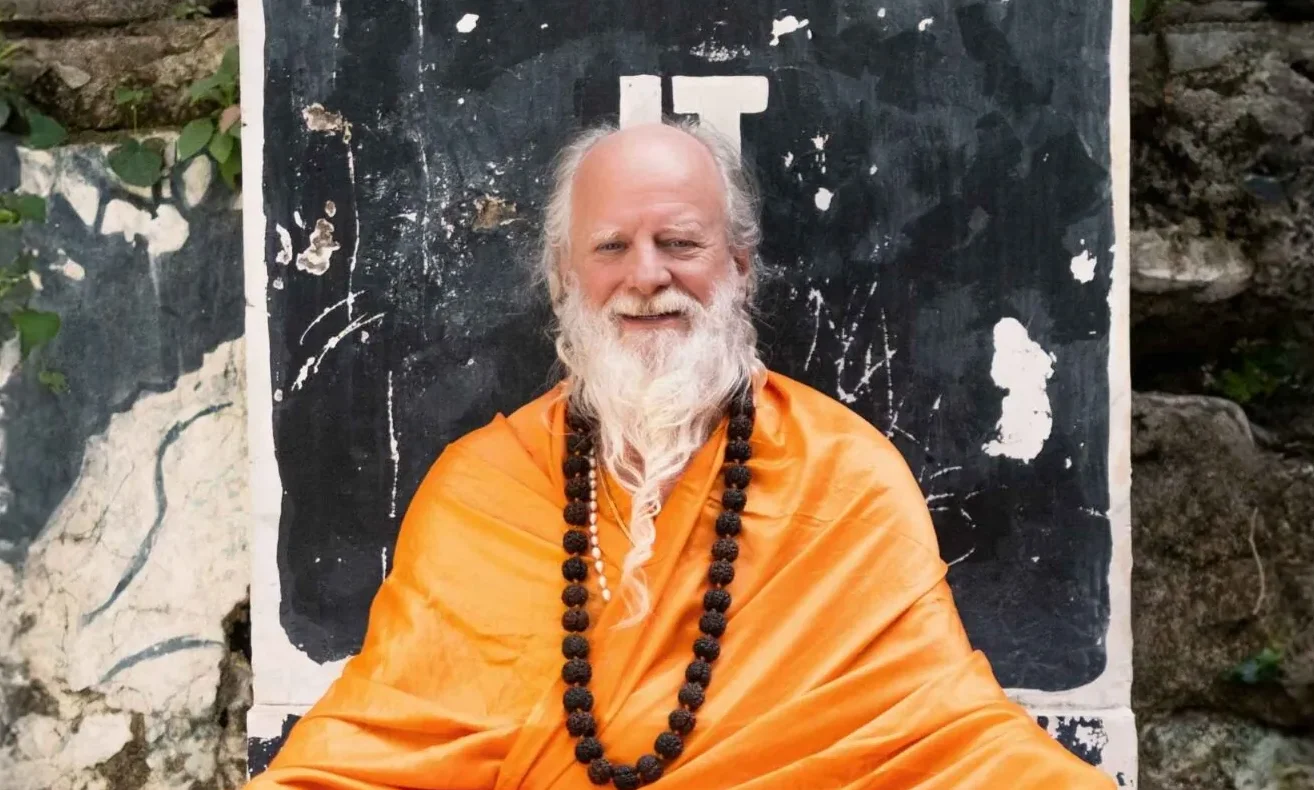
“Life in Cosmic Consciousness is a life where you’re fully engaged, you’re enjoying everything.”
Thom Knoles
Body death causes a lot of fear for most people. It’s a subject that’s been speculated about since we first sat around campfires together millenia ago.
In this episode, Thom gives a comforting explanation of the Vedic worldview on death, including the possibility that heaven is not something postponed until after death, but something that can be lived now, through Cosmic Consciousness.
Rather than framing life as a test for some future reward, Thom lays out the Vedic perspective that the real purpose of life is integration, bringing Unbounded awareness into embodied daily living. This is a profound reframing of death, meditation, sleep, and enlightenment itself.
You can also watch this episode below or on YouTube here: https://youtu.be/mH5UrD6DSNI
Episode Highlights
01.
I Guess It’s Going to Happen to Me Too
(00:45)
02.
Watch Out What You Think About
(04:25)
03.
A Much Simpler View
(06:45)
04.
Experiences of Unboundedness
(10:21)
05.
An Irishman Goes to Heaven
(14:24)
06.
On Death and Dying
(17:52)
07.
In and Out of Unboundedness
(21:45)
08.
Cosmic Consciousness: The New Normal
(26:52)
09.
Heaven on Earth
(31:45)
10.
Would Cosmos Like Some Toast?
(36:15)
11.
Heaven is Body Dependent
(41:01)
12.
Q – What is the Sanskrit work for conqueror of sleep?
(43:28)
13.
A – Gudakesh
(43:32)
14.
Q – Does the night shift ever normalize?
(45:08)
15.
A – The Beginning of Abstraction
(45:12)
16.
The Dangers of Blackout Sleep
(49:56)
17.
Let’s Sleep On It
(54:23)
Jai Guru Deva
Transcript
What Happens When the Body Dies?
00:45 – I Guess It’s Going to Happen to Me Too
Thank you for listening to my podcast, the Vedic Worldview. I’m Thom Knoles.
All over the world, there are ideas about what happens when your body dies and what happens when you’ve lived… whatever, you’ve lived a few decades, right? It takes an entire decade to learn how to stop slopping food on yourself, up until the age of 10 or so. That’s about the time all that stops and to be able to adequately speak some kind of a language that other people understand so you can make it known what you’re experiencing, what you wish to experience, and so on. 10 years.
Then you have another 10 years where you’re learning how to commune with other people, learning about the world you live in or so. And now you’re 20, and then you have about another 10 years where you’re figuring out what your relationship is with all the other humans around here. And maybe getting a little bit more education, and figuring out how to become self-sufficient, so that when you need food. You don’t have to ask anybody, you can make it happen yourself. And if you need shelter, then you’ve got shelter.
Now you’re 30, and then you’ve got another 10 years where you’re doing more figuring out about what your relationship is with the next generation. Are you going to be producing or not producing, and if so, with whom and how and what and when. And keeping the whole kind of lifestyle and career in place. And then as we continue growing, as we build layers of self sufficiency, we begin to wonder what it’s all about, because the body just keeps getting older.
And you might notice that the death rate on earth so far is 100%. You hear about old aunties and old uncles and grandparents and great grandparents who pop off and they’re not here anymore, and it begins to make you wonder, “I guess that’s going to be happening to me too, and so what comes next?” It’s a very obvious question. It’s a really obvious question, what comes next? What happens after this body dies?
And if you ask that question in an open format, for example, if you were to go on television and say, “I would like all of the million viewers to send me their reactions about what happens after the body dies,” there’d be 1000 philosophies presented to you.
“Well, it all depends on what you did. Did you do this during your body life? Did you do that? What did you think about? What did you believe in? What did you make yourself believe in? To what degree did you believe in a thing?” Not just did you believe? Did you believe to the kind of 60% level, the 80% level, the 100% level. So based on what you decided you believed in, that’s going to change what happens after your body dies.
And almost all of the people who make these recommendations and suggestions to you are convinced that all of the other ones are wrong. So if there were 1000 suggestions about what’s going to happen after your body dies, the one who’s suggesting a particular thing to you reckons that the other 999 are all going to have some miserable experience after their body dies, in some cases, forever and ever and ever. Forever and ever, longer than the whole universe has existed.
04:25 – Watch Out What You Think About
And so then, what’s the Vedic worldview? What happens? What happens when this relatively short lived, squishy matter that we’re all sitting in right now that has to… you have to feed it, and then you have to get rid of the waste material, and you have to drink water, and then you have to get rid of the unused water. And you know, you spend 10 decades doing that, if you’re fortunate, and it’s all over with, what happens?
Does consciousness just blink out? Jean Paul Sartre would have said, “Yes.” Albert Camus, who was a student of Sartre, would have said, “Yes, it just blanks out.” Kurt Vonnegut, the great American novelist who was an existentialist, would have said, “Everything that you’ve got, you’ve got right here, right now, enjoy it while you can. Just try not to hurt anybody so you don’t get a bad conscience.” I knew Kurt very well. He was a meditator.
So what is it that happens? And then you have all of the different religious groups saying, “Oh, watch out, this is going to happen. That’s going to happen if you look over there, that’s going to make you suffer forever, for eternity. If you don’t look over there, even though you want to, then you’ll be having this other experience for eternity.
And a lot of the experiences that are presented to you sound kind of boring to me. Like sitting and just enjoying wonderful light and grace forever and ever and ever. No walking around, no going out for coffees. No, enchiladas when you’re hungry, Yes, just like you just sit there. Maybe you have little wings on your back or something, or you have a little harp that you’re playing or whatever, forever and ever and ever.
And the alternative is some religious understanding, just your corporeal body burning and burning for while you scream until it’s gone, and then you get another corporeal body three minutes later, and that one burns and burns and burns, and you scream forever and ever, longer than all the galaxies have ever existed on the Earth and so on. So watch out what you think about.
06:45 – A Much Simpler View
So what’s the Vedic worldview on all of this? It’s a much simpler view, much simpler. Those of us who practice Vedic Meditation, we actually get to have an experience of what it’s like to be without a body. Sometimes in our practice of Vedic Meditation, we’re sitting comfortably, you don’t have to sit like I’m sitting in this pretzel position, you can have your legs down on the floor, and you’ve learned a particular technique where you use a specific kind of mantra in a very specific, effortless way, and it causes the mind to settle down to quieter and quieter layers of thinking.
And when you become sufficiently deep, that is to say, in your least-excited state, you begin noticing something. And this is actually, and quite new practitioners of Vedic Meditation will report this. They’ll say, “I could feel my hands if, say, a fly landed on my hand, but in the absence of any overt simulation, I couldn’t feel where my hands were. It was like my hands were gone. Now, if I wiggle them a little bit, there they are.”
It’s not like true numbness in scientific terminology. In the language of a physiologist, we would call it antikinesthetic paraesthesia. That means, in the absence of overt stimulation, there’s virtually no sensation. It’s not true anesthesia, it’s not numbness.
And then sometimes meditators who’ve been meditating a little longer than that, will say, “The boundaries of my body seemed to disappear when I was meditating, even though, if I do this or wiggle a little bit, I can immediately feel the boundaries of my body again. But when I’m in that very, very deep state, I can’t really feel my body anymore.”
And then, with a little bit more practice, sometimes the mind will start to experience this expansiveness. “It’s as if my mind has become as big as this room that I’m sitting in. It’s no longer contained inside the boundaries of my head.”
These are more and more progressively, not really terribly advanced experiences, maybe a few months, three months, four months, five, six, seven months, less than a year, usually, somebody will report having an experience of unboundedness.
They don’t feel trapped inside their body. It’s not that the inner experiencer is departing from the body like a kite and going off somewhere with a little string attached to it. It’s that from here, from the central point, the “I” appears to be expanding outward, and identification with all the individual things is less of a trend.
So if a door slams, or you hear a sound, or you hear a motorcycle go by, or a neighbor start playing Led Zeppelin or something, you right away can hear that, but it might bring you back into the boundaries again and think, “Oh, I must have been really deep or very expanded, because I kind of forgot where I was. Was I sitting and meditating on the couch? Was I parked in my comfortable car outside the house having a meditation before I came home from work that day?” Because you can practice this meditation anywhere that you can sit safely and comfortably. “Was I riding in a train?”
10:21 – Experiences of Unboundedness
This experience of a few moments of Unboundedness… and what is that? Well, when somebody’s body is dying, this is our perspective on things. When somebody’s body is dying, whether they meditate or they don’t meditate, they begin to experience Unboundedness.
I’ve had the great good fortune of sitting with, I’ve kept count, about 38 people while they’re in the process of dying. I haven’t reached 40 people yet. Some of these people I knew very well. Others were students of mine, or the mothers or fathers or aunties or something of a student of mine. And the description is, “I can’t feel my hands. If I move them, I can feel them, but I don’t feel like moving them.” Maybe they’re in hospice, maybe they’re in hospital, maybe they’re at home comfortably. “I can’t feel my hands. I can’t feel my body.”
Now, in an experienced meditator, the feeling of that at the time when eventually the body dies, because all these bodies are going to die, right? The experience is, “This is really familiar.” To someone who’s never meditated, the experience is nothing short of terror. “Oh no, I can’t feel my hands. Oh no, I can’t feel my body. Oh no, I’m going into an abstract dream-like stage of thinking. Oh no, oh no, oh no,” and then grasping to come back into the body again. Grasping to stay. “Just don’t let that thing happen. Don’t let it happen.”
But the meditator who’s practiced 730 times every year, 365 times, 365 days in a year, times two, 730, and you’re sitting willingly, loving it, sitting in your chair. “Oh, I can’t feel my hands. Fantastic. I must be really going deep here. Oh, the bliss is coming. Oh, the edges of my body are indistinct. I love this technique,” and then the mind expanding out and expanding out. “Oh, I love it. Love it. Love it.” Been there so many times, right?
730 times a year, literally sitting there, letting your heart rate drop down to the lowest possible heart rate, your breath rate dropping to the lowest possible breath rate, practically flat lining, and just hovering in that state, loving it. What has happened> That which is inevitable for everyone, has become, for the meditator, a familiar experience. It’s familiar so when eventually the body has to go, it’s like going into a deep meditation.
Now this gives us meditators a clue about what happens to people when they go through all the “Oh no” and everything, and they end up without a body. As a meditator, we’ve been there even if we’ve only meditated a few months. We’ve been there hundreds of times. The “I’m without a body” thing. We’ve been there hundreds of times.
Not only is it not terrifying, it’s kind of desirable. Once you actually let go, you’re in quite a desirable state. Your consciousness is free. It’s experiencing free-floating-ness, and all it’s doing is moving in whatever direction provides the greatest charm. There’s no body involved anymore. Body’s gone.
And by the way, you don’t care. Once you let go of the thing, it’s actually a relief. And because there can’t be pain unless there’s a body, there can’t be suffering unless there’s a body. So there’s no pain, there’s no suffering, there’s just this capacity to wander in the consciousness strata. And there are worlds after worlds after worlds after worlds of consciousness strata and the mind tends to move in the direction.
14:24 – An Irishman Goes to Heaven
You know, we have a saying in English: Birds of a feather flock together. The consciousnesses that have affinity, tend to flock together with other consciousnesses of their same kind.
So for example, if you were an Irishman from the stereotype versions of Dublin, who loved to go out on a Friday night and get into a knuckle, and your idea of fun was to have a drunken brawl on Friday night. But one of those Friday nights, somebody broke a bottle of Guinness over your head, and you didn’t make it through the night and ended up with no body, what would you experience?
You’d experience a heaven filled with other people just like you. All of those who are in the same state of consciousness go to and hang out in the same layers of consciousness. For you, that’s heaven. And if you got a little glimpse of other people’s more quiet, you know, serene heaven, you’d think it was super boring, and you would consider that to be hell.
And so one person’s heaven is another person’s hell. One person’s hell is another person’s heaven. So like that, consciousness simply has freedom, complete freedom, because body’s gone, no more need for making bookings on airlines or trains or driving, you know, riding around in Ubers or anything. Consciousness is completely free to explore all of the realms that are available. And world after world after world of realms are available, and eventually a time comes where it’s time to regain the integration which is supposed to happen when we have a body.
So in the Vedic worldview, we come back. We come back, this old-fashioned word, which comes from Latin re-in-carnate, Carne, we know. I’m in Mexico right now, so we all know what carne is. Back into the meat. Reincarnate. You go back into the fleshy body. You find yourself in the little baby body of your choice.
And you do choose. There’s a menu. It’s not that you will only have one choice. That wouldn’t be choosing. There’s a menu of baby bodies that could come into being, and you even have some influence. And then the getting together of the parents. You know, you can pull some strings and say, “Okay, do the baby-making cuddles now. You know you want to. Come on, come on. Good, good, good. Make the body for me.”
And then you have the capacity then to move into one of several bodies that you can decide upon based on a kind of menu that has to do with unfinished business. It has to do with your spiritual family. It has to do with all kinds of things, but you’re to come to the Earth and do what we call integration. And what is integration?
17:52 – On Death and Dying
This is the unique Vedic worldview in your lifetime. To what extent can you integrate the Unboundedness with living inside of a fleshy body in the boundaries? That’s enough to say, well, any meditator with even a few months of practice going on can, with eyes closed, sitting in meditation, go into the beautiful, deep inner silence and sit in that transcendent, or quasi-transcendent state. That’s easy.
But then when you get up from the chair and walk over to the door, the activity of movement, and you know, maybe having to answer your phone or whatever else you’re doing overshadows all of that backdrop of the inner bliss that you could touch on in meditation. It was highly conditional bliss. Very, very conditional.
“I could be in the bliss so long as I didn’t do this, [scratches nose]. My nose itched. I was in bliss, but then I had to scratch my nose and my hand moving made it all go away.” Or, you know, “I was sitting in the living room doing my meditation, and I’m experiencing the bliss, but my neighbor likes to play rock music, and the rock music starts up, and now, oh, because of the rock music, I am not… the attraction to the bliss is overwhelmed by the distraction of the sounds.”
And so it’s not a stable state yet, and at the end of the session, no matter how deep you went, if you have to walk over to the door, it tends to be overshadowed by that.
So we have an analogy in Vedic Meditation of dipping a white cloth in the dye. It actually comes from Chandogya Upanishad, in case you want to look it up.
You take a white cloth and you press it down into the dye. And people who read this document who aren’t aware of its full meaning, they think it’s some ancient document that’s telling people how to dye cloth. It’s an analogy. It’s an analogy.
You take the white cloth, this is your consciousness, and you push it down into and in the Upanishad, it says kesharia. Kesharia means saffron. You take saffron, you know, the little stamens from the saffron flower, you crush them up and boil them in water, and it turns into this thick, soupy saffron-colored dye. It’s dye, if you’re going to use it as dye, otherwise, it’s just watery saffron stuff. Right?
When you push the cloth into it, it becomes dye because it absorbs into the fibers of the cloth. Now you pull out your cloth dripping wet, and you have beautiful kesharia, the color of saffron. You take it dripping wet, and you do something that is absolutely counterintuitive. You lay it out on some surface with the hot sun baking it. And what happens when the hot sun bakes it? It fades the cloth and fades it, and by the end of a day, it’s not kesharia anymore. It’s a kind of dingy yellow, like maybe ivory, with a little bit of yellow in it, or something.
So, undeterred by this, and in fact, encouraged by it, we dip it again and pull it out, dripping wet, and lay it on the hot, baking sun surface again. It fades a second time, but this time the maximum faded point, it has slightly more color than it had yesterday. So you take it and dip it a third time, a fourth, a fifth, a sixth, and you keep repeating this. Infuse the color into it, bleach the color out of it. Put it into the place that’s colorful, take it out and challenge the color.
Without challenging the color, you’re not going to get. What comes next, which is color fastness. Something about the process of putting the color in and challenging it with sun, causes the color to integrate into the fibers of the cloth in such a way, layers of stable color are being built. A time is going to come where you can put your cloth in the sun all day and it can’t ever fade again.
21:45 – In and Out of Unboundedness
Okay. What does this have to do with meditation and heaven on Earth? You dip into the heavenly place in meditation, and then you come out into activity and talk to people and eat food and do things that you have to do and all that stuff, and it causes the sunshine fading the cloth. It’s supposed to be. This is the way it’s supposed to happen. We’re supposed to engage in activity enough that we actually mute the experience of the bliss that we got in the meditation state.
Undeterred by this, we dive in again the next morning and saturate ourselves in the bliss of Being and then come out and use it up. Use it up. That is to say, be active, engage the intellect, engage the senses, engage the body, all the usual things, and it fades away. So in the afternoon, you dive in again, or evening, saturate again, come out.
And what happens to the meditator? In the beginning days of meditation, beginning few years of meditation, my inner bliss state is highly conditional. I have to sit still, but with practice, I begin to notice at the end of my meditation, when I open my eyes, a day is going to come, and it’s a glorious moment when every meditator experiences this, it’s time for me to come out from my meditation. I let go of the stimulus for meditation, the mantra, and I come out.
My eyes are open, and yet, as long as I don’t move, I can move my eyes, maybe, but as long as I don’t move anything else, I still feel like I’m in the deep bliss. “I feel like I’m in… oh no, here comes a fly. It’s going to land on my nose. Okay. Oh, now the bliss is gone. I got the fly away from my face, and the movement of my hand made the bliss go away. Oh, I’ll do it… there’s always tomorrow.” There’s the next meditation session. I have to go to work now and get my things done, and forget about all that, which you do.
Next time you meditate, it’s time to finish your meditation. You open your eyes and come out and the bliss is there with eyes open, and you have to get over to the door, and you begin to sit up to do that. And the movement of getting up from your chair, the bliss comes with you, and maybe it’s there for one step, two steps, three steps, four steps, Unboundedness inside the boundaries of a human body with eyes open.
That which, once upon a time, was purely transcendental now is no longer transcendental. Transcendental means beyond. It’s able to be experienced here with eyes open while moving, but by the time you get all the way to the door, it’s gone. So you keep dipping the cloth and fading the cloth. Dive into the meditation state, come out and use it up. Dive into the meditation state. Come out. You are stabilizing the backdrop of Unboundedness.
A day is going to come where you’ll get to the door, outside, the door, down the stairs, out to the car, and it won’t wear off until just before lunchtime. The bliss, the Unboundedness, stays with you for hours before fading away. And then gradually, gradually, gradually, it’s there 24 hours a day, even in the night, when you’re sleeping, lying in the bed.
You know you hear the usual sounds that your body makes [makes guttural sounds], all that stuff. Your body makes noise, and you don’t know what your partner knows about it, but now you start to become aware of the noises your own body is making. This is a new thing. “I didn’t know I was so noisy. What’s happening here?”
26:52 – Cosmic Consciousness: The New Normal
The Unbounded awareness is now taking over. The sleep state taking over the waking state is relatively early. I can experience Unboundedness while I’m engaging in activity that comes relatively early, but for the Unboundedness to conquer sleep. The conquering of sleep is called Gudakesh in Sanskrit. Gudakesh, the conqueror of sleep.
When that happens, that something that ordinarily would absolutely knock you out… you don’t even know you’re snoring. Everybody else knows, but you don’t know. Now, suddenly you’re kind of faintly awake while you’re sleeping. Not insomnia. Super content, resting very, very deeply, but you can kind of feel, “It’s time for me to roll this way.” You can feel, “Does the bladder need emptying? Maybe I need to go?” You can feel, you can hear the little sounds that you’re making. All that stuff.
You are awake while you’re sleeping. Your body’s asleep, but your consciousness is awake, and you’re starting to normalize this Unboundedness. For you, the Unboundedness, no longer that Unboundedness going on during boundaries, no longer is it novel. The novelty of it disappeared ages ago. It’s not a novel experience anymore.
It’s the new normal, and the new normal is a state where you can’t really tell that you’re in that state. We call this state Cosmic Consciousness, all inclusive awareness. And there’s a lot of evidence. From the perspective of others, there’s a lot of evidence that you’re in Cosmic Consciousness, but you yourself don’t even know. Because you’ve normalized it, the novelty of it is gone.
But when you notice it is when you’re around other people and they are describing or having their experiences, whether they describe them or not, they’re having them, and you notice the difference between you and them. You feel like invincible. You have a kind of Invincible capacity to be stable, to be adaptive.
You’ve stopped wondering, “What should I be doing? What should I not be doing?” There’s no wondering anymore. You find yourself spontaneously engaging in action which appears to be the right action, whether you give it deep thought or you don’t give a deep thought, you find yourself spontaneously leaning into whatever it is that turns out to have been the spontaneous right action, fulfilling the need of the time. And you’re just living your life like that.
Your consciousness is unbounded, but you’ve normalized it so it doesn’t feel like a novel state. You’re not walking around all the time thinking, “Gee whiz, I’m experiencing Unboundedness while I’m walking. I’m experiencing Unboundedness while I’m talking.” You know that it must be true because of the contrast that you’re having with everyone around you. They wonder things and you don’t wonder anything anymore. They wonder, “Should I do this or should I not do that?” And you kind of look at them and you think, “If I were in your shoes, I wouldn’t be wondering anything. What is there to wonder about?”
There’s only one thing to be done at any given time, whatever that is, it’s the most frictionless and obvious thing. There are no more choices. One doesn’t have to choose. “Okay, what’s the more charming? This or this?” You are spontaneously behaving with relation to charm, and you’ve done it so much spontaneously, you’ve forgotten that you’re doing it, except that you don’t find choices appearing anymore. There are no choices.
Someone says, you know, “Would you rather go to Argentina or go to Mexico City?” And you just say, “Mexico City?” It comes out of your mouth, and you think to yourself, “They presented me the choice, evidently, but I didn’t really choose anything. I just found myself saying, Mexico City, and here I am.”
So life in Cosmic Consciousness is a life where you’re fully engaged, you’re enjoying everything. You notice that you’re different to other people.
31:45 – Heaven on Earth
If somebody else, this is a thought experiment, if somebody else could get inside your head, they would think they were tripping or something. There’d be this vast Unboundedness living inside of the body, and that’s what you’ve become. But you’re so used to it, you don’t even know anymore. You’re just living life in the usual way. But you don’t find there’s choices anymore. There aren’t choices. There’s just the one really obvious, frictionless way to go all the time, 24 hours a day. This is heaven on earth.
From the Vedic perspective, heaven cannot exist without a boundary, without body. Heaven. The heaven so-called that you experience when the body is gone, which is just Unboundedness, it’s too free. It wants container. It wants to demonstrate itself in a container.
One great analogy my master used, you take a glass of water, and here is a lake of beautiful, pure drinking water, and you submerge the glass of water and it fills the glass. Now you have a glass full of water under water inside of a lake of pure water. Pure water inside, pure water outside. The only thing that’s separating the water that’s inside and outside is the walls of glass. The water inside and the water outside all identical.
This is Cosmic Consciousness. You can’t tell the difference between you and the Cosmos. It’s all one thing. It’s all unified. You do have a body, and it’s kind of curious. It’s fascinating that there’s a body.
If you took the glass of full glass of water that is under water, inside the lake of pure water, and you move the glass around, it can’t get less full or more full. You could turn it upside down like this, and the water can’t come out, because it’s all contiguous water everywhere. So you can turn it, you can do this [moves hand around]. You can do that. You can do that.
Now, what happens if this glass is the human body? Let’s take Maxwell’s little silver hammer from The Beatles song, and we go smash, and the glass tinkles away and falls to the bottom of the lake. What happened to that consciousness that evidently was defined by that lake of water? That consciousness before and after, the glass is the same consciousness. The glass didn’t make it what it is, but it’s kind of novel, sort of entertaining, and it’s enjoyable to have a full glass of water inside of a lake of water.
It can’t empty, it can’t fill. It’s always full. It can never get empty. There’s a boundary, and it’s a kind of a ticklishness. This is the idea of heaven on earth. Cosmic Consciousness is just like that. You find yourself, you can sense yourself being everywhere. And what it is you zero in on is whatever it’s obvious to zero in on.
You can certainly zero in like wide end of the funnel can easily look down into the narrow end of the funnel and experience the narrow end of the funnel. It’s all one thing, wide and narrow is all Me-ness. “I’m all this. This is me.” It’s wide end of the funnel, cosmic, and narrow end of the funnel. It’s all available at all times. There’s never a moment where I’m stuck in the wide.
In the early days of meditation, we can go into the wide, but we can’t be in the narrow end at the same time. If you go to the narrow end, you lose the wide. When you come out of the narrow end and go to the wide, you’re in the wide, narrow is gone. If you go into the narrow, the wide is gone. But as you move back and forth over and over again, it all turns into one indivisible whole thing. You’re experiencing all of it at the same time, and it just feels normal. It just feels absolutely normal.
36:15 – Would Cosmos Like Some Toast?
So if somebody says to me, “Thom, are you hungry for your morning toast and tea?” I’m not going to say, “You know you’re talking to the Cosmos? Cosmos doesn’t need toast. Oh, maybe Cosmos would like some toast.” There’s nothing like that going on. You just you feel like you’re the regular you, except you’ve been jolly for a lot of years.
As years pass, and that we call this enlightenment, as years pass in that enlightened state, you notice something. You have this average that other people don’t have, because you can’t help but look around, right? You see other people like “Boo hoo” and “Whoopee” and you know, whatever, and you just have this kind of lovely evenness. There’s a lovely evenness that’s just going on all the time, and you notice it.
And of course, other people notice it. They notice you’re different, and that’s why they ask your advice about things, because you don’t look as though you’re filled with all these ups and downs. You’re not on the roller coaster anymore. You’re just kind of like on this beautiful even keel. So Cosmic Consciousness is heaven on Earth.
Heaven on Earth is ridiculously simple to get. You look up your local teacher of Vedic Meditation, easy to find via my website, thomknoles1dev.wpenginepowered.com/.
It never ceases to amaze me that so many people listen to my podcast, and I meet them sometimes and they’ll say, “Oh, I love your voice. You’ve got such a great voice. Thank you very much. Yes, I love to lie down in bed and listen to it at night when I’m falling asleep.” “Did you learn Vedic meditation yet? Or are you just using this as an insomnia pill?”
You know, there’s something that’s supposed to come out of this podcast, which is, somehow, I don’t know how you get inspired to learn Vedic Meditation. It’s really… my podcast is the world’s longest introductory lecture for learning Vedic Meditation. Hundreds and hundreds of hours of me hopefully being an inspiration to you to actually click on a link somewhere, find out where the local teacher is and actually get instruction in this thing that I’m talking about. Begin having the experience, otherwise, you know what the Veda says about itself in the 10th mandala,
Richo akshare parame vyoman yasmin deva adhe vishwe nishedhu. It says that all knowledge of the Veda is embedded in your own consciousness state: Richo akshare parame vyoman.
And everything that’s divine also is embedded in your consciousness state: yasmin deva adhe vishwe nishedhu.
Then it goes on to say, Yastanna veda kim richa karishyatiya, which means, for those who don’t have the transcending experience, the whole of the Veda is nothing but flowery words. It’s just beautiful, flowery words.
And then it goes on to say, yaita, it tad vidus ta ime samasate: but for those who know how to experience the transcendental field, all knowledge awakens in their life and gives them balance.
So it’s right there in the Veda itself. Veda is nothing but flowery words if you don’t learn how regularly to transcend relativity and experience the underlying consciousness field.
So there’s an inspiration heaven on Earth, and this is unique to the Vedic worldview, having traveled the world and having spoken with theologians of every of every kind, invariably, I find one common theme, heaven is body-death dependent.
There’s variations on the idea that being life in a body is the irrelevant thing. It’s the examination ground. It’s the testing ground for whether or not you’re going to get in heaven one day.
41:01 – Heaven is Body Dependent
But this is not what it’s all about. Being in a body is not what it’s all about. Uniquely the Vedic worldview, unique in the world, the Vedic worldview states heaven is body dependent. It is not body-death dependent.
You have to live the Unboundedness inside the boundaries of your body and in life and living. Heaven while eating toast, heaven while doing work, heaven while jumping out of an airplane with a parachute. Heaven all the time. Heaven, heaven, heaven. Heaven inside the boundaries. Heaven on Earth, heaven on Earth.
And so heaven on Earth is the unique offering of the… unique proposition of the Vedic worldview. Every other worldview requires your body to die.
You might be enjoying your life or whatever, but you know this is nothing but a misery, and this is the field of suffering, and all the misery and suffering will go away once your body dies, if you believed the right thing. And you didn’t do this, and you did do that, and well that.
The Vedic worldview is the only one that says you can experience heaven while you’re in your body, and then when you bring the heavenly consciousness state, the Unboundedness, into a body and live it, that’s heaven on Earth.
What happens after the body dies? You break the glass. It’s already merged with all the water underneath it, no new merger takes place. In Cosmic Consciousness, when the body drops away, no new merger takes place. You were merged already for years, hopefully, while you were in your body merged with that Cosmic value.
Just the glass disappears. The contiguity of the water inside and outside remains. The contiguity of the water was always contiguous.
So heaven on Earth. It’s fun to be cosmic and be in a body. That’s the bottom line.
Jai Guru Deva
43:28 – Q- What is the Sanskrit work for conqueror of sleep?
Guruji, can you repeat the Sanskrit word for conqueror of sleep?
43:32 – A – Gudakesh
Gudakesh. Gudakesh. G-U-D-A-K-E-S-H, gudakesh.
It appears in many places, but one of the most prominent is in the Bhagavad Gita, the central chapters of the Mahabharata, written by my namesake, Vyasa.
Conquered sleep means body’s still sleeping. Body definitely sleeps, but the consciousness isn’t extinguished by the phenomenon of a body sleeping. Consciousness can continue. It’s not like real active consciousness, E equals MC squared or something. Oh, it could be that.
But it’s the just very quiet backdrop awareness such that that person with their body fully asleep, that sound came that immediately alert to it, because they’re not dead to the world. So thin sleep. Thin sleep. Very restful, but thin, meaning you notice things in the night, and you can notice you can sense time passing. You can sense time passing.
The night is… I call it the night shift. There’s all these experiences occurring all through the night. The body’s asleep, but there are all these experiences occurring, and you’re experiencing them. There’s no blackout anymore. Blackout gone. That’s the conquering. No more blackout.
45:08 – Q – Does the night shift ever normalize?
Guruji, does the night shift ever normalize?
45:12 – A – The Beginning of Abstraction
Yeah, the night shift, meaning, just to be clear what it means. It means, you know you’ve laid down on the bed and you know you allow the sleep, you invite the sleep state to arrive. We all know, every night we do this, we kind of forget that we’re doing it, but that’s what we’re doing.
We set up all the initial conditions. The covers are just right, and the little teddy is just there, everything perfect. We might have finished playing our little lullaby, or whatever these are. I’m just joking, but we set up whatever the initial conditions are that tell us and tell our brain that we’re inviting the restful sleep state to come, the horizontal rest state. The horizontal rest state, and I’m inviting it to come.
And then what happens? It begins to come in the form of abstraction starting. Abstraction begins. And how do we know abstraction? When you’re in the abstraction, you don’t know you’re in the abstraction. It doesn’t seem abstract when you’re experiencing it, but a little breeze blows and it makes the blinds go, click, click or something, and you get that little click sound, and you think, “Oh, that was a really abstract thought I was just having. I must be falling asleep, right?” You can all relate to this.
