
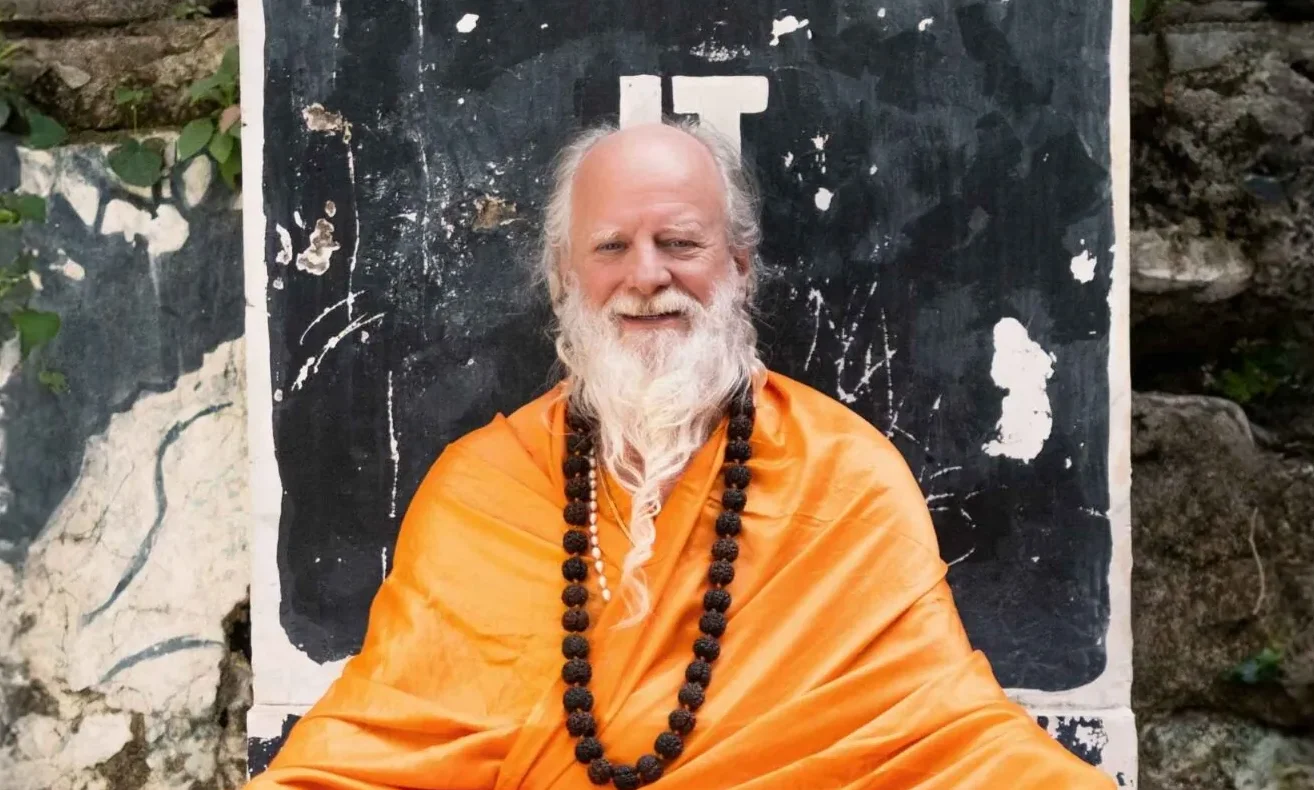
“Baseline happiness loves going to work.Work becomes itself a means of expression of happiness.”
Thom Knoles
Work-life balance has become a buzz phrase in recent years, especially since the intrusion of smartphones began edging their way into so-called “free time.”
In this episode, Thom explains why free time and work aren’t necessarily exclusive of each other, potentially making work-life balance unnecessary.
Episode Highlights
01.
Routine Work has Been Around Forever
(00:45)
02.
What Do I Do?
(03:18)
03.
Vedic Meditation – A Major Dose of Unboundedness
(05:28)
04.
A Neuroplastic Brain
(08:26)
05.
Work Becomes an Expression of Happiness
(12:26)
06.
A New Style of Functioning
(14:58)
07.
Q – How Do You Work Surrounded by Stressed People?
(19:14)
08.
A – Find Somewhere Else
(19:42)
Jai Guru Deva
Transcript
The Vedic Approach to Work-Life Balance
[00:45] Routine Work has Been Around Forever
Jai Guru Deva. This is the Vedic Worldview, and I’m Thom Knoles. Thank you for listening. I often get asked about the balance between work and work-life and lifestyle and all of that. And really what we have is a fundamental quandary that’s always visited humanity about the relationship between routine work, which seems to be essential in order to power civilization, and the ability to be, whether or not one should be bound by that.
So, the difference between unboundedness, not being bound and routine work. And routine work is one of the ways in which Nature works. We think of it as, “man made” or the result of the Industrial Revolution and all of that, but routine work has been around forever.
I have right here in my cabin evidence of it that is 1,200 years old. A metate. Metate is the name given by the Hopi tribe to a piece of stone that has been carved specifically for grinding corn on and the corn grinding that happens on the metate with a grinding stone and the corn niblets are put there, dried out, and you can see years and years and years, decades probably, of corn grinding that happened.
You can just imagine it. And the routine of having to get up to cultivate the corn, to harvest it, to grind it, and then to turn the masa into various kinds of meal to create food from and all of that. Routine work.
This is routine work. It’s been going on forever and ever. Chop wood, fetch water, has been going on since the dawn of time. So this is not an Industrial Revolution invention, although, we do tend to overload ourselves with more mechanistic kinds of behaviors.
[03:18] What Do I Do?
And then to have freedom, we have to have a blend of freedom. If all we have is freedom all the time, then basically nothing mechanistic ever gets done.
I drive a beautiful car that’s 15 years old or something like that by now, but I love it and it runs beautifully. And the reason it runs like a clock or a watch is because some brilliant automotive engineers made it that way. And it’s the product of an assembly line and it’s the product of years and years of people doing repetitious tasks over and over and over again.
And we have to confess that when we look at the world and the world all around us, all of the things that we enjoy most come from the willingness of human beings to kind of put their nose down and their tails up and do routine work.
So routine work is a boundary, and then there is Unboundedness. And in order to create balance, what we have to do is have a really good dose of Unboundedness and then we have to stop separating the two. The idea that I’ll go on a holiday or as everyone else besides Americans call is a holiday, Americans call it a vacation. “I’ll go on a vacation or a holiday and I’ll have a completely different experience.”
Well, probably you won’t. You’ll find that you go away and you take a lot of your work worries with you, or you overdo the vacationing or overdo the holidaying.
And sometimes people are so adapted to the routine work that when they do have some free time, it’s problematic. Having free time and freedom when all you know is the habit of routine work like, “What do I do?”
[05:28] Vedic Meditation – A Major Dose of Unboundedness
So when we practice Vedic Meditation, we give ourselves a major dose of unboundedness for 20 minutes, twice a day. It’s the opposite of focus. It’s the defocusing.
Focus means… it’s like the holy grail of the western world is focus. Can you focus? Focus sounds like a really great word until we analyze it. Focus means exclusion. Are you able to exclude everything except the one thing that’s right in front of you? If you are able to do that, you’re hailed as a great champion of focus.
But focus actually is, because we do far too much of it, is the cause of an enormous number of psycho-neurological problems, including, in my opinion, the rise in dementia, and also the rise in various kinds of neurodivergent brain habits that, where Attention Deficit Disorder and Attention Deficit Hyperactivity Disorder are, in my opinion, caused by an over application of the holy Grail of focus.
And the human brain does crave unboundedness. But it can’t get unboundedness just by watching TV or by hopping in a car and driving off somewhere or getting in an airplane and flying off somewhere.
That’s not really true unboundedness because, generally, when you are doing those things, and there’s nothing wrong with doing those things, but they don’t really supply unboundedness because you have to think to yourself, “Well, this is gonna cost that. That’s X number of work days. This is gonna cost that. That’s another X number of work days.” And you’re always trading off your vacation time against what it’s going to cost you in terms of doing even more routine work.
And so then the conundrum is solved by us diving into true Unboundedness. And true Unboundedness means we go beyond the field of thinking entirely. In Vedic Meditation, we practice a technique that is designed to cause the mind to step beyond thought and experience Being. Pure Being.
Being as opposed to thinking and action, and just a little bit of that, even a few seconds or a minute of it out of the 20 minutes that we meditate or moving in the direction of it, which is relatively unbounded, but then absolute Unboundedness, when we have a moment where all thoughts just evaporate. Consciousness standing alone, Consciousness is able to experience its extent.
[08:26] A Neuroplastic Brain
When that’s done every morning and every evening systematically, regularly, and we turn that into an applied habit, then what happens is our brain enjoys it so much, there’s an element in the human brain called neuroplasticity. Plasticity means the capacity of the brain both to mold itself anatomically, but also in terms of its learned behaviors, for it to learn how to exploit new inter-neuronal connections in order to take on and incorporate something into the brain function that is useful.
When we practice Vedic Meditation and we experience the bliss of transcendence, the bliss of stepping beyond thought into Being, it’s extremely neurochemically rewarding. Our brain’s secretion sites begin secreting a cocktail of neurochemicals, neurotransmitters, peptides, and proteins that have an extremely rewarding effect on a central part of the brain called the nucleus accumbens.
And that nucleus accumbens, which is right in the core of the human brain registers that this is a super valuable experience that doesn’t require any exogenous chemistry. With endogenous chemistry, exogenous means from outside you, and endogenous means made from within you, homemade, brain-made, brain-made chemistry, a discovery is made by the brain.
The brain-made chemistry can provide satiety, great level of satisfaction, and the brain wants to learn how to maintain this so the brain begins to exploit new inter-neuronal connections and begins to grow dendrites, dendritic growth.
Dendrites are a little finger-like projections that grow on the neurons, grow on the cells. They’re like a little bit of fur or fuzz. They’re made of neuronal material, but they actually expand into the relatively small amount of empty space in the brain.
Our brain is packed into our cranium with walnut-like folds to allow maximum surface area to be compactified. If you took the human brain and unfolded it and laid it out flat, it would fill an entire living room of the average home. But when you pack it all up and put it back into its folded position it’s carefully compactified and laid inside of your cranium, your skull, in such a way as to provide you with maximum condensed neuronal pack compactness.
And so there’s relatively little space inside there, but when we learn something new, especially something that’s rewarding, a message goes to the nucleus accumbens, which causes it to allow dendritic growth, and dendrites begin to grow inside the brain of the meditator.
You start getting a fuzzy brain. Not fuzzy thinking, but a brain that has a kind of a fur of finger-like projections growing into the interstices. Interstices are the little gaps in between the folds. And what this does is it expands the density of the brain, the size of the brain, and also increases the the regular production of secretion of bliss chemistry, so that when you come out of meditation, your brain doesn’t want to have to come out of that bliss state in order merely to engage in routine work again.
[12:26] Work Becomes an Expression of Happiness
The brain learns how to produce the same style of functioning that occurs while meditating, but not make it exclusive to meditation, to homogenize, to bring together and integrate that style of functioning of the brain that occurs during meditation, to integrate it with the style of functioning that goes into being able to carry out everyday tasks.
And when this process is complete, a new experience occurs in which one can feel a backdrop of Unboundedness at all times while speaking, thinking, speaking, and acting. In that state no amount of activity can overshadow the backdrop of Unboundedness.
So now you have the ultimate goal, which is to have Unboundedness and the boundaries that work entails both at the same time.
Then work becomes, instead of something that creates boredom and the stress that comes from boredom, work then becomes itself a means of expression of happiness. You have baseline happiness, not just psychologically, but also neurochemically and neuronally. And that baseline happiness loves going to work. It actually enjoys being in the boundaries.
When you are able to have something unbounded that can find shape and form, then the Unboundedness likes it. In quantum mechanics and physics, we talk about, the super-symmetric unmanifest quantum field wanting to, and seems to have a tendency to, create receptacles for itself.
So what is a receptacle? When a flat surface, just to use an analogy, a flat surface of the ocean, for example, curves itself into a wave. This is the ocean finding itself inside of an identifiable status and structure. Unboundedness enjoys boundaries and boundaries enjoy unboundedness.
[14:58] A New Style of Functioning
And so instead of having to go back and forth into meditation, and then out of meditation and then into meditation, and out of meditation, we awaken the Totality of this, so that the Unboundedness that occurs in meditation can be experienced outside of meditation. Then you find that, there’s a new style of functioning.
When we refer to stress, stress is most easily identified by the phrase that’s rather hackneyed, but it’s there and it’s a physiological term, the fight/flight, fight/flight condition, where we are in a binary reaction because we find that the demands of the world are so great that we don’t have left any adaptation energy to adapt to it.
And so, in aid of survival we will either fight, and this is a binary and autonomic response, not one you have any choice over, either fight to get rid of the demand, to make it not there, or flee from it. Even if you have to go into catatonia, even if you have to go catatonic or withdraw psychologically or actually even just not show up for work.
Fight/flight reactivity will always be a vacillation between these two binary poles, either rejecting the demand to kill it, if it’s the demand that’s making you feel the way that you’re feeling, which is maladaptive, or to flee, meaning to withdraw or to move away physically to a different locale. Or if that doesn’t work, in a severe psychiatric state, catatonia.
So the… instead of fight/flight reactivity, as meditators, we’re developing the opposite neuro-electrochemistry, which is what I refer to as the stay-and-play chemistry. Stay-and-play means I can stay and I can play. I have lots of adaptation energy. I have baseline happiness. I have a backdrop of Unboundedness. I can be super productive and it doesn’t feel like work. It feels like play. When work feels like play, then our productivity goes up dramatically.
So it doesn’t mean, I’m not making a suggestion that we should all be working 24 hours a day. We do need to have variety of experience and other elements besides our work contacts need to make contact with us, friends and family and whatnot.
We need to be congenial people and get around a bit, but certainly, if we’re looking at maximizing productivity, being able to do less work and accomplish more, if we are looking to have a more enjoyable experience during work, so that we don’t have to have this extreme separation of work versus play, but we have playful, enjoyable work with our consciousness, with this backdrop of Beingness, then we need to incorporate Vedic Meditation into our daily routine.
And for those of you who’ve already done this, who do practice Vedic Meditation, this explains why it is that you’re able to engage in lots of work and be very productive, and it just feels like you’re playing. It doesn’t feel like hard work. There’s nothing to recover from. You don’t have to finish and then go and recover somewhere.
You’re just constantly recovering while you’re engaging and there’s no stress accumulation because you’re not getting stressed in the first place. So stay-and-play versus fight/flight, that’s the solution.
Jai Guru Deva.
[19:14] Q – How Do You Work Surrounded by Stressed People?
How does that get integrated into an environment where people’s work environment is, you’re just surrounded by people who don’t subscribe to that? So you’re the only, you might have adaptation energy, and you have the ability to have joy in your work, but you are in an innately stress-filled environment with stressed people who are barking stresses at you.
[19:42] A – Find Somewhere Else
Asking for a friend?
Exactly.
Okay. The best defense is no be there. When we find ourselves in an environment where we have baseline happiness we are able to bring our best to every demand. We are able to be interactive and non-reactive.
But we find ourselves in an ocean of chaos, of entropy, and we find ourselves relatively non influential in terms of taking people who are intransigent in their worldview, they show no evidence of worthy inquiry, then I think, having shone our light into the darkness, we want to find a kind of darkness that is actually permeable by our light.
So, to use an analogy, if I’m a lighthouse, and I know that on an average dark night out on a promontory of land sticking out into the ocean, I can radiate my light into the darkness and it makes a difference to the darkness. It causes the darkness to not be as obscuring.
But what if my light is down inside of deep mud, and I’m shining my light as brightly as it can possibly shine, but its event horizon is obscured by the mud? I’m completely surrounded by mud.
I want to be surrounded by something that is actually going to be responsive to my light, and so that’s when we have to begin using our creative intelligence as a meditator to locate ourselves in a place where there’ll be greater worthy inquiry that will come from the inspiration we’re providing.
When our highly inspiring, what should be highly inspiring, activity by any objective scale would be inspiring, but it doesn’t seem to be making a difference, then, in Sanskrit we have these different words. There’s a word mithya, mithya, M-I-T-H-Y-A, mithya. Mithya, if maya, or appearance, the obscuration of a thing that appears to be something else is called maya, M-A-Y-A. Then if that’s considered to be muddy water, then mithya is the mud itself.
And so then, the advice generally when we find ourselves trapped in maya, we want to radiate our way out from there. Come out of that, out of the muddy water. Mithya is considered to be the mud itself, which would be at the base of the pond of muddy water.
And so, you know when there’s zero responsiveness to even our very most creative and best display of interactive engagement with demands, but there doesn’t seem to be any social response to that, it’s best to get off the sinking ship. Find someplace where our best, our best display when we’re in display mode is appreciated. That would be my answer.
