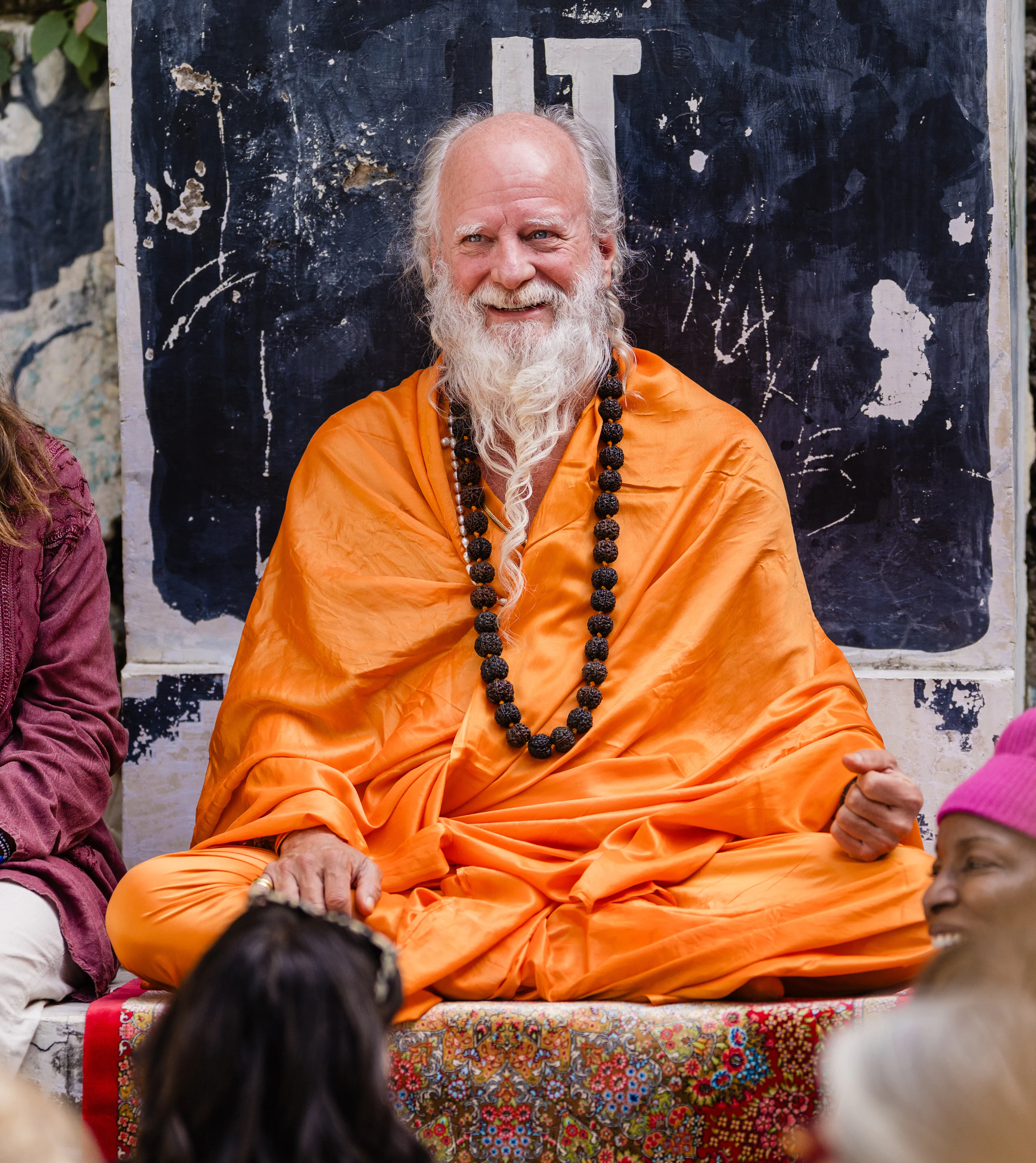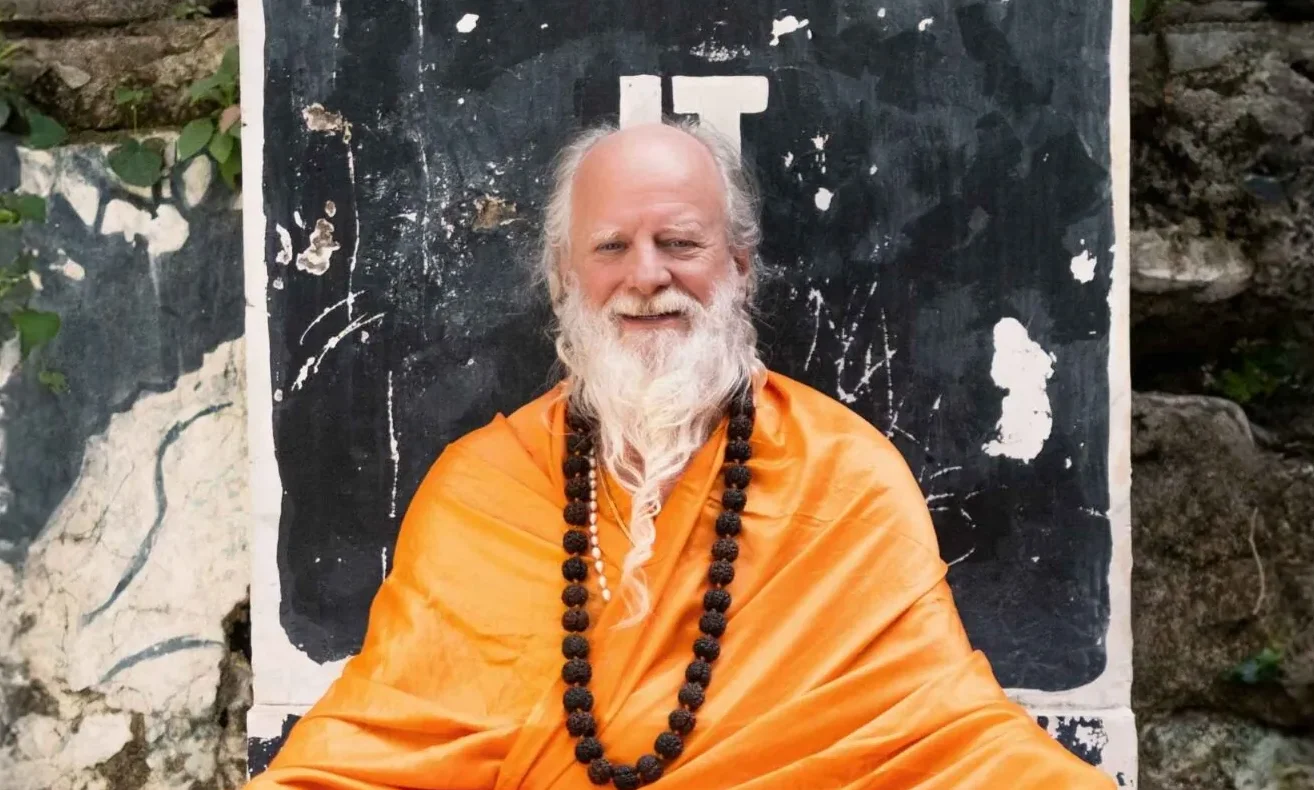
“When Maharishi tells you to do something, you do it. For me, if he said something, whatever it was, I just did it, and I didn’t hesitate.”
Thom Knoles
What if the best advice you ever receive sets you up to walk straight into danger? In this episode, Thom shares why meeting Maharishi Mahesh Yogi personally changed the course of his life, and how following that guidance led him into the middle of political unrest in The Philippines.
What unfolds is a remarkable account of trust, action, and the role meditation can play in cooling collective consciousness during a national crisis. Listen or watch to learn how one instruction became a lived lesson in courage, steadiness, and peace.
Episode Highlights
01.
Meet Maharishi in Person
(00:45)
02.
Do What He Says
(01:42)
03.
A Crisis in The Philippines
(02:31)
04.
Maharishi Sends Me to Manila
(04:26)
05.
Into the Presidential Palace
(06:34)
06.
A Meditation Campaign for Peace
(08:21)
07.
Sixty Thousand People Meditating
(10:49)
08.
A Peaceful Transition of Power
(12:11)
Jai Guru Deva
Transcript
My Maharishi – The Best Advice I Ever Received
[00:45] Meet Maharishi in Person
The best advice I ever received? Easy. Go and meet Maharishi personally. That was the best advice I ever received.
Somebody said to me, “Maharishi Mahesh Yogi is coming.” I was in Washington, DC. He was in Maine, in a place where all the bottled water comes from, Poland Springs, “and go up there and see Maharishi personally. Go and meet him.”
And that wasn’t anything I would have thought of. I was a teenage boy. That was the best advice I ever got. Go and meet him personally.
That’s number one. You want to hear the next 15?
[01:42] Do What He Says
“Once you’ve met him, do what he says.” That was the second best advice that I ever got. Because I did have lots of friends and colleagues and things, and Maharishi would tell them to do something or tell them not to do something, and they would go away and think, “Maybe he’s right, maybe he’s wrong, maybe he’s right.”
For me, if that guy said something, whatever it was, I just did it, and I didn’t hesitate. Right away. And I had lots of amazing experiences. I’ll give you one which is very, it’s one of those now-it-can-be-told stories.
[02:31] A Crisis in The Philippines
I think it was about 1985 or six when The Philippine Islands was in a crisis. The country had been under martial law for many years, and things were not looking good. There were half a million people in the streets, burning tires and protesting.
The army was coming out with their tanks and guns and all of that to suppress the protesters, and all the world media was gathering. Most of you are too young to remember any of this. Some of you might remember it.
The whole world press was there because it looked like there was going to be the start of a really bloody civil war between the people and the regime. And, in fact, it was quite terrifying.
I had lived there when I was a boy. My father was a general in the US Air Force, and during the Southeast Asia nonsense, he was stationed for a while in The Philippine Islands, at an Air Force base there, US Air Force base.
And one of the things I learned when I was a boy, because I spent a lot of time with Filipino kids, I learned some Tagalog, which is the language of The Philippines. There’s the major language, there’s lots of languages, but it’s the one that most people speak, beside English.
And Maharishi had remembered that one little fact from years and years… he met me for the first time in 1968, and he remembered my saying one time, from ’68 all the way to ’80 whatever it was, ’85, ’86, he remembered that I had spent some time in The Philippines.
[04:26] Maharishi Sends Me to Manila
And so he said, “I want you to go to The Philippine Islands.” And I said, “All right.”
And he said, “You’ll use the fact that your grandfather is a senator,” which he was, “and your father is a general,” which he still was, “and you will get an appointment at the palace with the president. And then you’re going to meet him, and when you meet him and you shake hands with him, you’re going to say these words, it’s time for you to go.”
And I thought, “Well, this will be a good day to die.” But I wasn’t in the habit of saying no. And one thing I learned with Maharishi, you never said, “Really?” because there was only one answer to that, which was, “Maybe you’re not the right one for the job.” Or, “Yeah, really.” I made sure I was always in the habit of saying, “Yes, Maharishi.”
Maharishi, at that time, was in Switzerland, and he said, “I’m going to fly there secretly and meet you, but you have to do this first.” And he said, “I’m going to give you 1800 teachers of meditation. They’ll arrive one week after you talk to the president, and so you’ll be able to let him know that you’re planning to bring 1800 teachers to teach meditation in Manila.”
And I said, “And what then?” Then he goes, “We’ll see.” See. That was the context coming in, like it was out here and now it was coming into here. “We’ll see.”
And I said, “Maharishi,” and he would always, if he wanted me to stop talking, he never hesitated. He’d say, “No. Go,” like that was “Stop talking.”
[06:34] Into the Presidential Palace
So off I went, got on an airplane, flew to Manila, and I got the appointment pretty easily because of my family name, and there was the president wearing his Barong Tagalog, those beautiful, big, silky shirts that they wear when they’re doing official things.
And the first lady was sitting on a very silky chair over there. She’s the one who famously had 6000 shoes when the revolution, when the revolutionaries went into the palace later.
And standing next to the president was his defense minister, whose name was Ramos, and all of these people, they were, they had reputations of people disappearing… anyway.
So I walked up some stairs, and there was the president, and I shook hands, and I thought, “It’s a nice day to die.” And he said, “Why have you come to The Philippines?”
And I said, “It’s time for you to go.” And to my absolute astonishment, the president said to me, “I know.”
Can you imagine it? He said, “I know.” He said, “I never wanted this to happen to my country, and I’m in talks with President Reagan about my departure date.” He said, “I’ll be going, but in the meantime, you’ve come here for another reason. What’s that?”
[08:21] A Meditation Campaign for Peace
And I said, “Well, I have these 1800 teachers of meditation, and we want to have a big campaign to get lots of people in Manila meditating, to create a ground of peace so there’s no war.” And he said, “What do you need?”
And I said, “Well, it’s martial law, and so we can’t meet. We can’t have meetings, and we’re going to need a very large space, because we’re planning to teach thousands of people to meditate.”
He looked over at his defense minister, who was armed, he had a pistola right here [gestures to side of torso], and he said… there’s a sport in The Philippines, maybe you know about it in Mexico. It’s called jai alai, where they have like, this banana like thing, and they fling a ball.
He said, “Open up the jai alai stadium for him, it seats 60,000.” It hadn’t been used in eight years during martial law. He said, “You can have this sporting stadium with 60,000 seats.” I said, “Thank you.”
And he said, “Anything else?” And I said, “Well, the cardinal of Manila, he wrote an article that was published in the Manila Times, saying that meditation was bad and that Roman Catholics shouldn’t do it, because the devil and all of that, and it comes from India. And that’s been a problem.”
And he looked over at his defense minister, and then he said, “Tomorrow, the cardinal will write another article, and in that article he will recommend meditation. Anything else?”
I thought, “This knowing a dictator thing is pretty good.” I said, “That’s all I can think of.”
And he said, “Teaching meditation to thousands and thousands of people.” I said, “Yes.” He goes, “I think it’s a good idea,” and then he sent me on my way.
For about a week, I wondered if there was going to be someone carrying me off in the night, but nobody… nobody ever did.
[10:49] Sixty Thousand People Meditating
And me and my colleagues, for the next six months, we taught 10,000 people every month, and we had 60,000 meditators, and we all meditated in that sporting stadium. It was only in the night. At home they had to… At morning they had to meditate on their own at home. But every evening, we opened that place up at 5.30, and people arrived in their tens of thousands, and we would have a group meditation.
And what happened was there was no bloodshed. That was a revolution without bloodshed. The army refused to enforce the rule of law, which was, you know, the martial law.
The helicopter carrying the president went away from the palace, from Malacañáng Palace, and millions of people walked into the palace and took it over. But they didn’t destroy anything. They left everything in place because they thought, “This belongs to the people, we’re not going to destroy it.”
They were angry, but they were quiet in their anger, and they were orderly, and there was a peaceful transition of power.
[12:11] A Peaceful Transition of Power
Now I learned my second best piece of advice was true then. When Maharishi tells you to do something, you do it.
So the first piece was, meet this man personally, best piece of advice I ever got. And then I met him, and he trained me. And there were lots of other situations where he would tell me to do something which I wasn’t too sure that that was the right thing, but I was young, and I wanted to be a good student of his, and so I followed it.
And that was one great example of, I didn’t go there and get executed or buried in a forest or something or fed to the dogs, which is what I feared. I ended up helping to, with all the millions of Filipinos, of course, helped to cool down the collective consciousness so there could be a peaceful transition of power.